
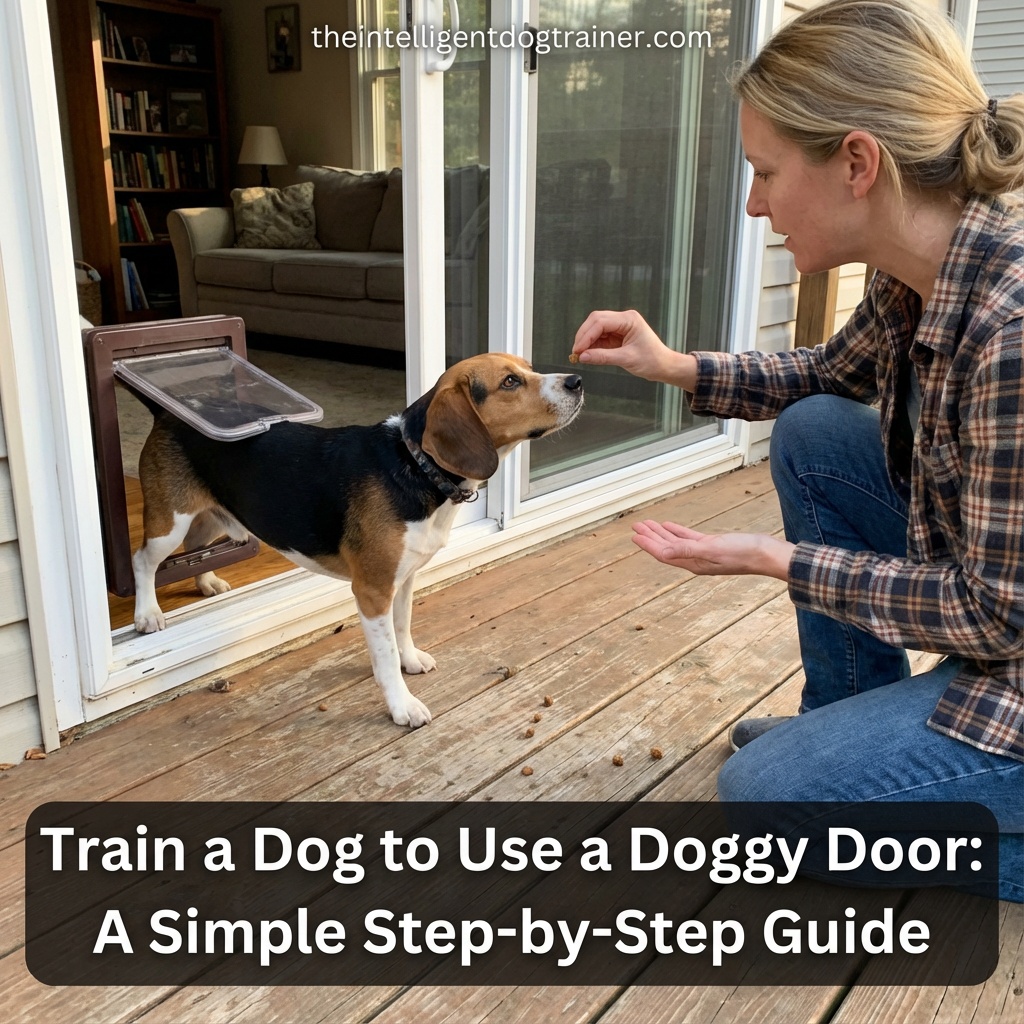
Helping your canine companion master the doggy door is one of the most liberating milestones you can reach as a pet owner. It grants your furry friend a genuine sense of independence while finally relieving you of the doorman duty that so often interrupts a productive day.
Whether you are working with a bold, inquisitive puppy or a more cautious senior, learning to navigate a moving flap requires a specific mix of clear communication and physical coordination.
By breaking the transition into manageable phases, you ensure your dog views the portal as a gateway to freedom rather than a source of anxiety. In this guide, we will explore the most effective ways to train a dog to use a doggy door using science-based techniques that prioritize your pet’s comfort and confidence.
Getting Started with Step-by-Step Dog Door Training
The foundation of a successful transition is ensuring your dog understands the mechanics of the device without ever feeling trapped or cornered. Successful step-by-step dog door training traditionally begins with an open door policy.
Try propping the flap entirely open using sturdy tape or a prop, which allows your dog to see the destination on the other side clearly. This removes the initial physical barrier and allows them to focus solely on the concept of walking through a small opening in the wall.
Experts currently agree that the most effective way to build this habit is through positive reinforcement dog training, a method that rewards the dog for even the slightest curiosity shown toward the frame.
A very common question among owners is: how many days does it usually take to train a dog to use a doggy door? While every breed and personality is different, most dogs master the fundamentals within three to seven days of consistent, low-pressure practice.
During these early sessions, it is vital that you never force the animal through the opening. You might find yourself wondering, should I gently push my dog through the door to show them how it works?
The answer is a firm no; applying physical pressure can create a lasting negative association, leading to a deep-seated fear of the confined space. Instead, stand on the opposite side and call them with an encouraging, cheerful voice.
Use operant conditioning to mark the exact moment they step through the threshold with a clear yes or a clicker.
How to Teach a Dog to Use a Doggie Door Using Treats
Once your dog is moving comfortably through the open frame, you can begin introducing the flap itself. High-value rewards are undoubtedly your best tool when explaining how to teach a dog to use a doggie door once a physical barrier is involved.
Start by holding the flap open just a few inches so your dog has to nudge it slightly to reach their prize. When considering what treats work best for enticing a dog through the flap, opt for something particularly stinky and irresistible.
Think freeze-dried liver or small pieces of plain chicken, which provides a powerful olfactory lure that is hard to ignore.
If you find yourself asking, why won’t my dog push the dog door flap open with their head?, it is usually because they simply don’t realize the plastic is designed to move.
You can bridge this gap in understanding by using the teach a dog to touch command, which encourages them to use their nose to interact with new objects.
By targeting their nose to your hand through the flap, they naturally discover that pressure results in movement. Over several successful repetitions, lower the flap incrementally until the dog is pushing through it entirely on their own to reach the reward.
Helping a Dog Afraid of the Dog Door Flap Gain Confidence
It is quite normal to encounter a dog afraid of dog door flap sounds or the unfamiliar sensation of the material brushing against their back. This sensory input can be quite startling, especially if the flap is heavy or produces a loud clicking noise as it closes.
To train a fearful dog effectively, you should employ gradual desensitization techniques. You might start by letting them eat their meals near the door, then eventually move the bowl to the other side of the flap.
If you are wondering, how can I help my dog overcome fear of the dog door flap?, try replacing the heavy flap with a light piece of fabric or clear plastic wrap temporarily.
This helps them get used to something touching their fur without the intimidating weight of the actual door.
If the hesitation persists, take a moment to analyze the surrounding environment. Occasionally, a dog isn’t actually afraid of the door itself, but rather the scary stairs or different flooring waiting on the other side.
Use classical conditioning to pair the sight of the door with their favorite games and toys. If your dog pauses, avoid the temptation to scold them.
Confidence is built through successful repetitions where the dog feels fully in control of their own movements. Eventually, the distinct sound of the flap will become a conditioned reinforcer, signaling that they have successfully navigated the obstacle to reach the yard.
Effective Electronic Dog Door Training for Smart Access
Modern pet technology has introduced the electronic door, which remains securely locked until it detects a specific microchip or collar tag. Electronic dog door training adds an extra layer of complexity because the dog must learn to wait for the audible click of the mechanism unlocking before they attempt to push.
This requires a higher level of mental stimulation for dogs as they essentially learn to solve a mechanical puzzle. Start by keeping the door in manual or unlocked mode until they are pros at the physical movement.
Once you activate the electronic lock, entice them to wait for the signal. A common query for tech-savvy owners is: what is the best way to train a dog to use an electronic or magnetic dog door?
Focus primarily on the sound. Reward the dog just for approaching and triggering the click of the lock. Once they associate that specific noise with the door becoming pushable, they will quickly learn to wait for the trigger.
This is also the most effective way to address the concern: how do I prevent other animals from using the doggy door? Since the door only responds to your pet’s unique code, it remains a secure barrier against local wildlife or neighborhood strays.
Managing Potty Training with a Dog Door Successfully
A doggy door is a fantastic asset for potty training with a dog door, but it isn’t a set it and forget it fix for housebreaking. You might ask, can I train a puppy to use a dog door before they are fully housebroken?
Yes, absolutely, but you must still provide active supervision. The door should be viewed as an extension of their bathroom routine rather than a total replacement for your guidance.
To house train an adult dog using a door, physically lead them to the portal every time they would normally go out, ensuring they use the flap rather than the human door.
However, keep in mind that accidents can still happen during this transition period. What should I do if my dog starts having accidents despite having door access?
Usually, this indicates that the dog hasn’t yet connected the outside world with being the only appropriate place to go. They may still perceive the door as a barrier they aren’t allowed to cross without explicit permission.
To fix this, spend time outside with them, rewarding every successful elimination. The goal is for the dog to realize that the door is essentially their personal hallway to the bathroom.
Training an Older Dog to Use a Dog Door with Patience
When you are training an older dog to use a dog door, biology and comfort play significant roles. Senior dogs may have stiff joints or declining vision, which can make a dark hole in the wall look quite intimidating.
You might wonder, is it harder to train a senior dog than a puppy? While it may require a few more repetitions, older dogs often possess better focus than their younger counterparts.
To successfully train an older dog, ensure the door is installed at a comfortable height so they don’t have to lift their legs too high. This is important for those managing arthritis.
Consider using a help command and perhaps a support harness to offer physical stability as they navigate the threshold. Because a senior dog’s cognitive processing can sometimes be slightly slower, give them ample time to think through the problem.
If they stall at the flap, try to wait them out rather than rushing the process. With a gentle approach and plenty of verbal praise, your senior companion will quickly come to appreciate the ability to step out for a sunbath.
Successfully teaching your dog to use a doggy door is ultimately a journey of trust and clear communication. By utilizing positive reinforcement and gradual desensitization, you create a seamless transition to a more independent life.
Remember that patience is your most important asset; whether the process takes three days or two weeks, the reward of a confident dog is well worth the effort. Once the mechanics are mastered, the dog door becomes a reliable bridge between your home and the outdoors.