
Guiding your canine companion through the fundamentals of basic obedience is easily one of the most rewarding aspects of pet ownership, and there is no better place to start than the timeless “sit” command.
Whether you are currently managing the boundless energy of a new puppy or bonding with a quiet rescue, learning how to teach a dog to sit creates a vital bridge of mutual trust and clear communication.
This essential skill often serves as a polite “please” in the world of canine manners, helping you navigate social situations with ease while curbing less desirable habits like jumping.
Throughout this guide, we will explore the most effective ways to refine this behavior, ensuring the training process remains a bright spot in the day for both you and your four-legged friend.
Understanding the lure training method for dogs
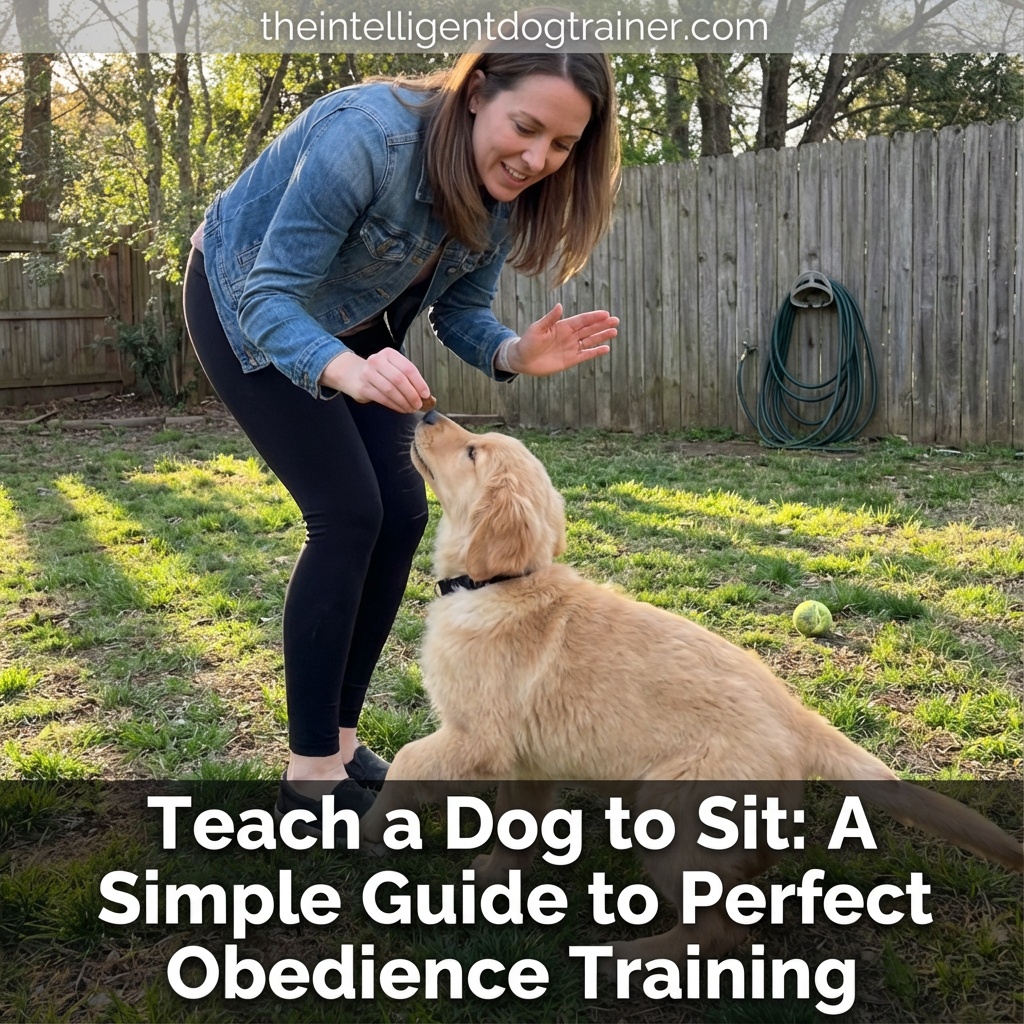
The lure training method for dogs is widely regarded as the fastest way to teach a dog to sit because it uses a natural physical motivator to guide the animal into position without any force.
This technique centers on holding a high-value treat directly in front of the dog’s nose. As you slowly move the treasure back toward the base of their tail, the dog’s head naturally tilts upward to follow the scent, which intuitively causes their hindquarters to lower to the ground.
It is a gentle, reward-based approach that removes the need to push on a dog’s hips—a move that often causes confusion or a defensive “brace” reflex in many pets.
Once you have mastered the mechanics of the lure, you provide your dog with a predictable framework of expectations.
If you are feeling inspired to expand your training toolkit, looking into various foundational dog training techniques can help you understand how these physical movements eventually transform into polished verbal responses.
This specific method thrives because it rewards the fluid motion of the body, fostering a positive mental connection with the task.
To get the quickest results, try practicing in a quiet environment where your dog can focus entirely on your hand and the delicious reward waiting for them.
A gentle approach to teaching a puppy to sit
When you are teaching a puppy to sit, your most valuable asset is undoubtedly patience.
Puppies are essentially fuzzy toddlers with incredibly short attention spans and a surplus of playfulness, so the secret to success involves keeping your sessions short, light, and full of encouragement.
You might find yourself wondering, how often should I practice the sit command with my puppy? Ideally, aim for several “micro-sessions” lasting about 2 to 5 minutes each throughout the day.
Consistency is much more important than duration at this stage; a quick practice before dinner or during a break in playtime keeps the lesson engaging without overwhelming the pup.
During these early weeks, it is often very productive to integrate sit training into other daily routines, such as house training.
If you are balancing several lessons at once, learning how to potty train a puppy alongside these basic commands helps establish a comforting sense of structure for your new arrival.
Should I use a clicker for teaching the sit command? Many trainers find the clicker to be an indispensable tool because it marks the exact moment the puppy’s bottom hits the floor, speeding up that vital “aha!” moment.
Always keep your tone warm and upbeat so your puppy learns to see these lessons as an enjoyable bonding experience.
Visual cues and hand signals for dog training sit
Dogs are incredibly observant creatures, often picking up on our body language long before they process our spoken words.
Incorporating hand signals for dog training sit helps bridge the communication gap, especially in environments that are noisy or full of distractions.
What is the correct hand signal for the sit command? A common professional signal involves starting with your palm facing upward at your side and then folding your arm at the elbow toward your shoulder in a smooth arc.
This upward motion naturally draws the dog’s focus and helps guide their body into a sitting posture.
Pairing these visual cues with an audible marker can significantly increase your training clarity.
Using a clicker to train a dog allows you to capture the precise movement you want, reinforcing the physical signal with a crisp, distinct sound.
With consistent repetition, your dog will begin to sit the moment your hand begins the gesture, often before you even say a word.
This skill is particularly useful if you need to direct your dog from a distance or in a busy park where your voice might be hard to hear.
As documented by Wikipedia, these signals are the essential building blocks for advanced obedience and competitive performance.
Effective tips for training dog to sit on command
Once your dog understands the physical flow of the motion, the next step is training dog to sit on command using only your voice.
The goal here is to gradually phase out the food lure until the dog responds immediately to the spoken word “sit.” To do this, say the command clearly once while giving your hand signal.
The moment they comply, give them the reward. A frequent question from pet owners is, how do I phase out treats when teaching my dog to sit?
When your dog is responding correctly about 90% of the time, start offering treats only occasionally, replacing them with enthusiastic praise or a brief moment of play with a favorite toy.
It helps to think of the sit command as a gateway to more sophisticated behaviors.
For example, a rock-solid sit is the necessary foundation for training a dog to stay, as it teaches the dog the value of remaining still and patient.
What if my dog is too distracted to sit during training? If your dog seems to be having a hard time, simplify things by moving back inside to a familiar room and using higher-value rewards, like small pieces of plain chicken.
You can slowly reintroduce distractions, like outdoor practice, once the behavior is firmly established in a quiet setting.
Expert advice on how to teach an older dog to sit
A very common concern for adopters is, can you teach an older dog to sit if they never learned? The answer is a resounding yes.
While the old saying might claim otherwise, mature dogs often have a level of focus and maturity that energetic puppies lack, making them surprisingly quick students.
When you are looking at how to teach an older dog to sit, it is important to be mindful of their physical comfort.
Senior dogs can sometimes deal with stiff joints or minor arthritis, which might make sitting on hard or slippery surfaces a bit uncomfortable for them.
Because adult dogs have their own histories and established personalities, your approach might need a bit more finesse.
Checking a more comprehensive guide on how to train a dog can provide the extra context needed to work through any old habits.
Try practicing on a soft rug or a grassy patch to ensure they have the grip and cushioning they need.
If your senior dog seems willing but a bit confused, simply go back to the lure training method for dogs to help them remember the physical mechanics.
Even in 2025, patience and positive reinforcement remain the gold standard for training, regardless of a dog’s age.
What to do when your dog refuses to sit
If you run into a situation where your dog refuses to sit, it is rarely motivated by spite; it is usually a sign of a simple misunderstanding or physical discomfort.
Why does my dog refuse to sit on hard surfaces? Some dogs have a genuine aversion to cold tile or slippery hardwood, which can feel uncomfortably unstable for them.
Another common hurdle is over-excitement. For instance, you might be asking how can I stop my dog from jumping when I ask for a sit?
In this case, try keeping your hand with the treat very low—closer to the ground—to keep their front paws down until their bottom settles into the desired position.
When a dog seems “stubborn,” they are often just feeling overwhelmed by too much sensory input.
Using the sit command as a practical tool to stop a dog from jumping is an excellent way to use basic obedience to resolve common behavior frustrations.
If the refusal to sit persists or seems to cause the dog pain, it is always a good idea to chat with a vet to rule out issues like hip dysplasia, as detailed by Wikipedia.
Approaching these small setbacks with empathy and steady consistency will help your dog gain the confidence they need to succeed.
Mastering the sit command is a foundational victory that enhances almost every interaction you have with your dog.
By using the lure technique, clear hand signals, and adjusting your pace to fit the specific needs of a puppy or a senior, you build a connection that lasts.
Whether you are working with the frantic energy of a young pup or the calm presence of an older dog, the core values of positive reinforcement will always point you toward success.
Training is a lifelong journey, and every successful sit is a step toward a much more harmonious life with your loyal companion.