
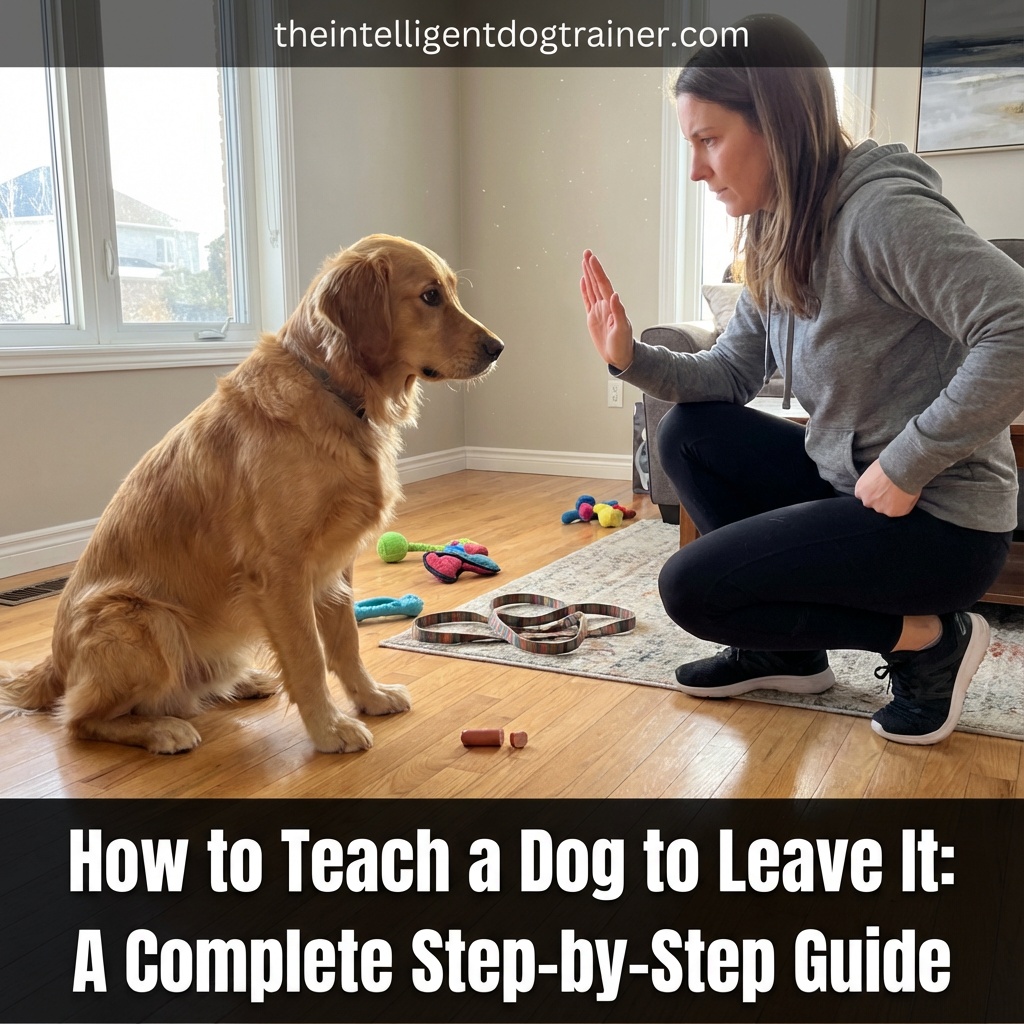
Have you ever experienced that heart-stopping moment where you’re lunging to stop your dog from swallowing a mysterious piece of chocolate on the sidewalk or desperately holding them back from chasing a squirrel?
Mastering how to teach a dog to leave it is arguably the most vital skill in any pet owner’s toolkit. Beyond just another obedience trick, this command serves as a critical safety net, effectively preventing your companion from ingesting toxins or darting into dangerous situations.
This guide breaks down the learning process into manageable, logical phases, focusing on clear communication and a bond built on trust rather than correction.
The Importance of Teaching the Leave It Command Step by Step
Helping a dog master a new behavior requires a structured approach so they can grasp the logic behind the request. When you begin teaching leave it command step by step, you are essentially helping your dog build a foundation of impulse control.
Why is the leave it command essential for dog safety? Its value is immense because it empowers you to stop your dog from interacting with hazardous items—like onions or dropped medication—before they ever make physical contact.
You can start simply by hiding a treat in a closed fist; very quickly, your dog learns that ignoring the forbidden item results in an even better reward from your other hand.
As you progress through these stages, your dog starts to view Leave It not as a frustrating restriction, but as a proactive choice that consistently leads to a win. This methodical approach reduces stress for everyone involved (including the person holding the leash).
If you are interested in more ways to refine your pet’s overall education, you can dive deeper into how to train a dog to become a truly well-adjusted companion.
How do I teach my dog to leave it using positive reinforcement? Success lies in the timing; reward the exact millisecond they advert their gaze from the lure, which reinforces their conscious decision to check back in with you.
Understanding the Difference: Leave It vs Drop It Dog Training
A common point of confusion for many owners is the distinction between leave it vs drop it dog training. While they might seem similar in purpose, they serve two distinct needs in the real world.
Leave It is a proactive cue; it tells the dog not to touch or engage with something in the first place. On the other hand, Drop It is a reactive command used for an object that is already inside the dog’s mouth.
What is the difference between the leave it and drop it commands? To put it simply: Leave It prevents the object from ever being picked up, while Drop It ensures it is surrendered immediately.
Recognizing this nuance is incredibly helpful if you have a dog that likes to collect random household objects. For example, if your pup has a habit of grabbing your sneakers, you might need specific strategies to stop a dog from chewing while simultaneously using Leave It to intercept the thought before the shoes are touched.
Consistent use of these specific terms prevents cue blurring, where a dog becomes unsure of what action you’re actually asking for. By keeping your definitions clear, you ensure your dog can respond with lightning speed when the stakes are high.
Early Learning Tips: How to Teach a Puppy to Leave It Safely
Starting this process during puppyhood offers a massive advantage (and saves you from many headaches during the rowdy teenage months). Since puppies explore the world primarily with their mouths, they are prone to tasting everything from rough gravel to toxic garden plants, making it vital to know how to teach a puppy to leave it.
Can I teach the leave it command to an older dog? Absolutely! Dogs are lifelong learners, though puppies generally benefit from shorter, high-energy sessions that cater to their brief attention spans.
Use high-value rewards—think tiny pieces of chicken or cheese—to compete with the many distractions of the great outdoors.
During these early stages, consider how this specific command fits into your puppy’s broader development. Often, setting clear boundaries is a core part of how you socialize a puppy to navigate the world with confidence and safety.
What should I do if my dog eats the bait during leave it training? There is no need to panic or scold; just reset the exercise. It usually just means the bait was a bit too tempting or your hand wasn’t quite fast enough to cover it.
Cover the lure again and wait for that moment of disinterest before rewarding them with a completely different, even better treat.
Fun and Engagement: Dog Training Games for Leave It Practice
Professional training doesn’t have to be a repetitive chore; in fact, incorporating dog training games for leave it practice can actually speed up the learning curve.
One popular game is The Zen Bowl, where you place a treat in a bowl and cover it with your hand if the dog tries to grab it, only uncovering it when they sit back and wait patiently.
Making the process a game creates high engagement and turns the dog into an active, thinking participant. Should I use a clicker for teaching leave it? It is highly recommended, as a clicker is a perfect tool for marking the exact second your dog chooses to look away from temptation.
When you lean into play, you tap into your dog’s natural desire to work for a win. Using a variety of dog training techniques ensures that Leave It feels like an entertaining puzzle rather than a boring drill.
What are the best treats for leave it training? Generally, it helps to use low-value items (like basic kibble) as the bait on the floor, while using high-value treats (such as freeze-dried liver) as the reward for success. This creates a very obvious and rewarding hierarchy of choice for the dog.
Real-World Success: Teach Your Dog to Ignore Food on the Ground
The true test of your progress happens when you move from the quiet living room to a busy sidewalk. To effectively teach dog to ignore food on ground, you have to prepare for the unpredictability of the outside world.
Start in a quiet driveway before graduating to a local park. How can I practice leave it during walks? You can try planting safe, non-toxic items along your walking route and guiding your dog past them on a leash.
When they notice the item but choose to look at you instead, give them a jackpot of several treats at once.
This skill is a pillar of both public etiquette and physical safety. It naturally complements other outdoor essentials, such as how to train a dog to walk on leash without them pulling you toward every piece of litter.
How long does it typically take a dog to master the leave it command? Every animal is an individual, but most dogs grasp the core concept within a few days of steady practice, though achieving 100% reliability in chaotic environments usually takes several weeks of consistent reinforcement.
Advanced Skills and Proofing the Leave It Command for Safety
The final stage of this journey involves proofing the leave it command. Proofing is essentially stress-testing the cue in harder scenarios—like when a tennis ball is rolling past or amidst loud noises.
To make sure your dog is truly dependable, you have to vary the distractions and the settings. How do I know when my dog has fully mastered the command? You have reached mastery when your dog instantly snaps their focus back to you the moment they hear the cue, even if the distraction is moving or smells particularly interesting.
At this advanced stage, Leave It becomes a reflex rather than a calculated decision. This level of focus is very similar to the discipline required to train a dog to stay even under heavy pressure.
In 2025, many trainers pair hand signals with verbal cues to ensure communication is clear even in noisy urban environments.
Always remember that the goal of proofing is to make the behavior bombproof, ensuring that if a dangerous situation pops up, your dog will choose to listen to you over the lure of the environment every single time.
In conclusion, teaching the Leave It command is a rewarding evolution that starts with simple hand exercises and grows into sophisticated safety training. By distinguishing it clearly from Drop It and sticking to positive reinforcement, you provide your dog with the skills they need to navigate life safely.
Constant practice, clear signals, and a few fun games will turn this essential command into a lifelong habit, giving you real peace of mind on every walk you take together.