
Finding your favorite sneakers mangled or noticing the corner of a leather sofa has become a makeshift chew toy is an incredibly frustrating moment for any pet owner. Yet, it is vital to recognize that gnawing is a deeply ingrained canine instinct, not an act of spite.
It serves several essential purposes, from helping a puppy explore their world to providing relief for sensitive, aching gums. If you want to successfully stop a dog from chewing your personal belongings, you have to look past the physical damage to find the underlying motivation, eventually offering better alternatives.
This guide dives into the psychological drivers behind this persistent habit, providing practical and modern strategies to protect your home while keeping your companion happy and occupied throughout 2025.
Understanding why your dog is chewing everything in your home
Before you can implement a fix, it helps to pause and consider a critical question: Why is my dog chewing everything with such newfound intensity? When dealing with puppies, the culprit is almost always teething—a developmental phase that typically peaks and then subsides by the six-month mark.
In adult dogs, however, the triggers are often more nuanced. They can range from simple boredom or hunger to more complex psychological issues like separation anxiety.
If you have ever caught yourself wondering, why does my dog chew on furniture when left alone? the answer frequently involves a need for self-soothing or a lack of physical and mental stimulation while you are away.
Identifying that specific “why” is the foundational step in modifying behavior. Without clear guidance, a dog cannot intuitively distinguish between a fuzzy plush toy and an expensive designer pillow.
Establishing these boundaries early is a game-changer, and mastering how to stop puppy biting and mouthing is really the perfect entry point for general mouth-discipline.
By focusing on the root cause rather than just the destruction itself, you develop a training strategy that respects your dog’s biological nature while keeping your living room intact.
Essential training techniques to manage destructive chewing in dogs
The secret to any lasting behavior change is unwavering consistency. When you are up against destructive chewing in dogs, your most powerful tool is positive reinforcement.
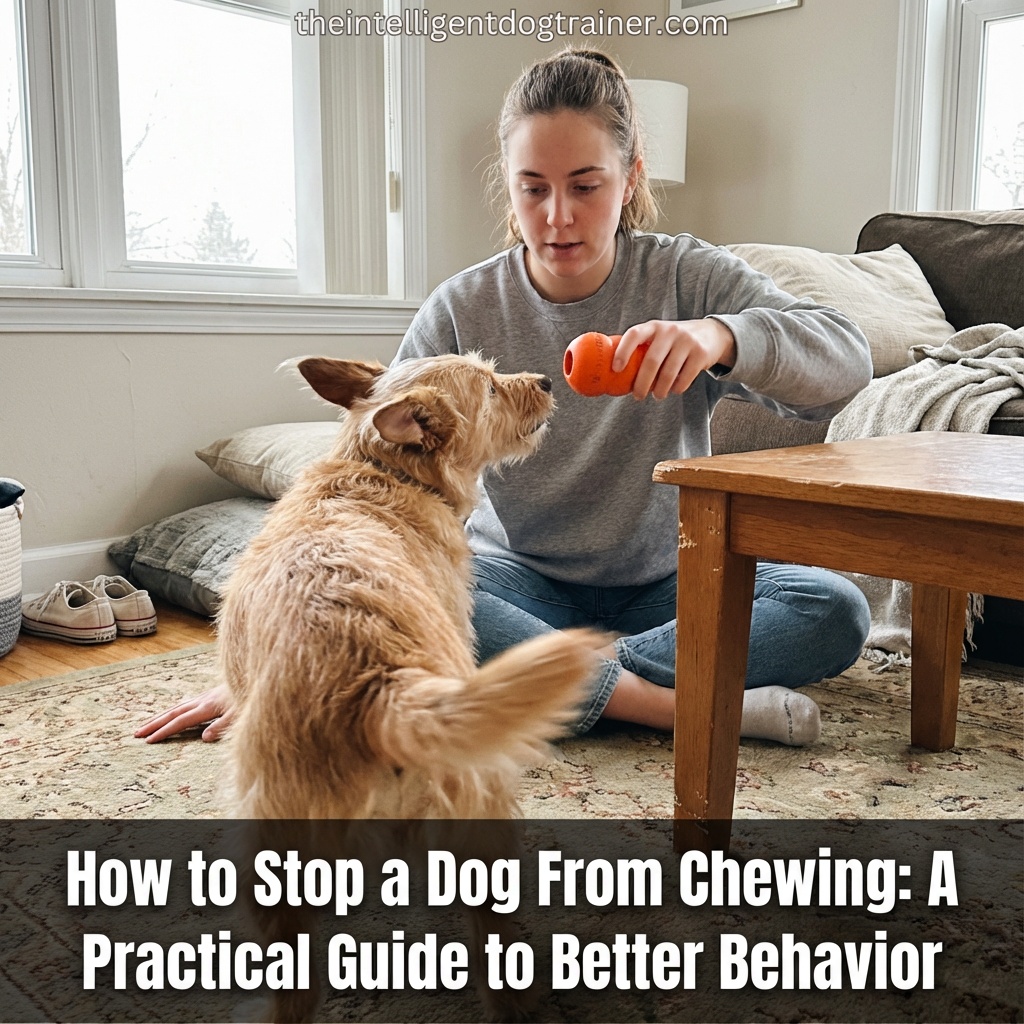
If you happen to catch your pet in the middle of gnawing on something forbidden, try to avoid an aggressive or loud reaction. Simply interrupt the behavior calmly and immediately swap the item for a high-value chew toy.
As soon as they engage with the correct object, offer plenty of praise. This immediate feedback loop makes it very clear which items belong to them and which are strictly off-limits.
A very common question among owners is: How do I teach my dog to only chew on their toys? This transformation relies on active supervision and a “trade-up” mindset.
It is important to remember never to scold a dog for damage you discover after the fact; they simply don’t have the cognitive bridge to connect a past mistake with current anger.
Instead, rely on effective dog training techniques that emphasize and reward the right choices. Over time, your dog will start choosing their own toys by default, simply because those are the items that consistently earn them positive attention and rewards.
How to protect your home and stop your dog chewing furniture
When your goal is to stop dog chewing furniture, prevention is just as vital as active training sessions. Until your dog has earned your complete trust, “dog-proofing” acts as your primary safety net.
This involves minor lifestyle shifts, such as keeping shoes behind closed doors and moving tempting objects out of reach. Many people naturally ask: Does crate training help prevent destructive chewing?
The answer is a resounding yes. A crate serves as a secure “den,” offering a safe space for your dog when you aren’t around to watch them, which effectively prevents them from damaging your home or, worse, swallowing something dangerous.
If you are new to using a crate, learning how to crate train a dog can be a total lifesaver for your carpets and wooden table legs.
You might also find yourself looking into what home remedies can stop a dog from chewing things, perhaps thinking about using diluted lemon juice or apple cider vinegar as a topical deterrent.
While these might provide a temporary fix by making a surface taste bad, they aren’t a permanent cure. Real success comes from a blend of managing the environment and making sure your dog has a dedicated, quiet place to relax.
Safety tips on how to stop a puppy from chewing wood and walls
Puppies are often drawn to the dense, resistive feel of wood, but this particular habit can lead to painful mouth splinters or even serious digestive blockages.
If you are currently trying to figure out how to stop puppy chewing wood, the best approach is heightened supervision during those high-energy “zoomie” hours.
New owners often wonder: At what age do puppies stop chewing on household items? While that intense urge usually fades once their adult teeth are fully set, it can linger as a permanent habit if it isn’t proactively redirected early on.
Sometimes, a puppy might target walls or baseboards simply out of curiosity or a lack of proper socialization and exposure to new environments.
It is vital to socialize a puppy so they feel confident and relaxed in their home rather than seeking out destructive ways to vent frustration.
Swapping out a piece of furniture for a rubberized toy or even a frozen washcloth can provide that soothing relief they need without sacrificing your home’s woodwork.
The role of deterrent sprays and proper toys in chew prevention
It is very common for pet parents to test out a dog chewing deterrent spray, like bitter apple or cherry formulas, to protect specific “hot spots.”
But the question remains: will deterrent sprays really stop my dog from chewing? While they do make certain objects taste unpleasant, they should be viewed as a secondary tool rather than a primary fix.
You still need to provide a varied selection of “work-to-eat” puzzles and durable toys to satisfy that deep-seated biological drive to gnaw.
When you are shopping for toys, always prioritize non-toxic materials and choose sizes appropriate for your dog’s specific jaw strength.
To see actual, long-term improvement, you need to understand how to train a dog to actively prefer their possessions over yours.
Try a “push-pull” tactic: apply a bit of bitter spray to a chair leg while making a chew toy irresistible with a tiny smear of peanut butter. This makes the furniture unappealing and the toy the most rewarding thing in the room.
Using mental stimulation for bored dogs to reduce bad habits
Often, the most effective way to eliminate a bad habit is to provide consistent mental stimulation for bored dogs. This is a frequently overlooked component of behavior management.
You might ask: How much exercise does a dog need to stop boredom chewing? While a long walk is great for the body, mental fatigue is often even more effective at settling a destructive dog.
Activities such as scent games, food puzzles, and teaching new tricks burn through the cognitive energy that otherwise gets funneled into destroying a television remote.
Excess energy that doesn’t have a productive outlet will eventually leak out in other ways, like constant digging or barking.
Interestingly, learning how to stop a dog from barking often involves the same principles of engagement and redirection used to stop chewing.
By introducing interactive feeders and short, daily training blocks, you give your dog the mental challenge they naturally crave. When their mind is busy and satisfied, they are far less likely to view your furniture as a source of entertainment.
Managing your dog’s chewing habits requires a thoughtful blend of patience, environmental management, and consistent redirection. By identifying whether the behavior comes from teething, boredom, or stress, you can provide the right outlets.
Always keep in view that to a dog, chewing is a natural and functional behavior, not a personal attack. Through mental enrichment and the right rewards, you can protect your home while helping your dog become a more relaxed, well-adjusted member of the family.