
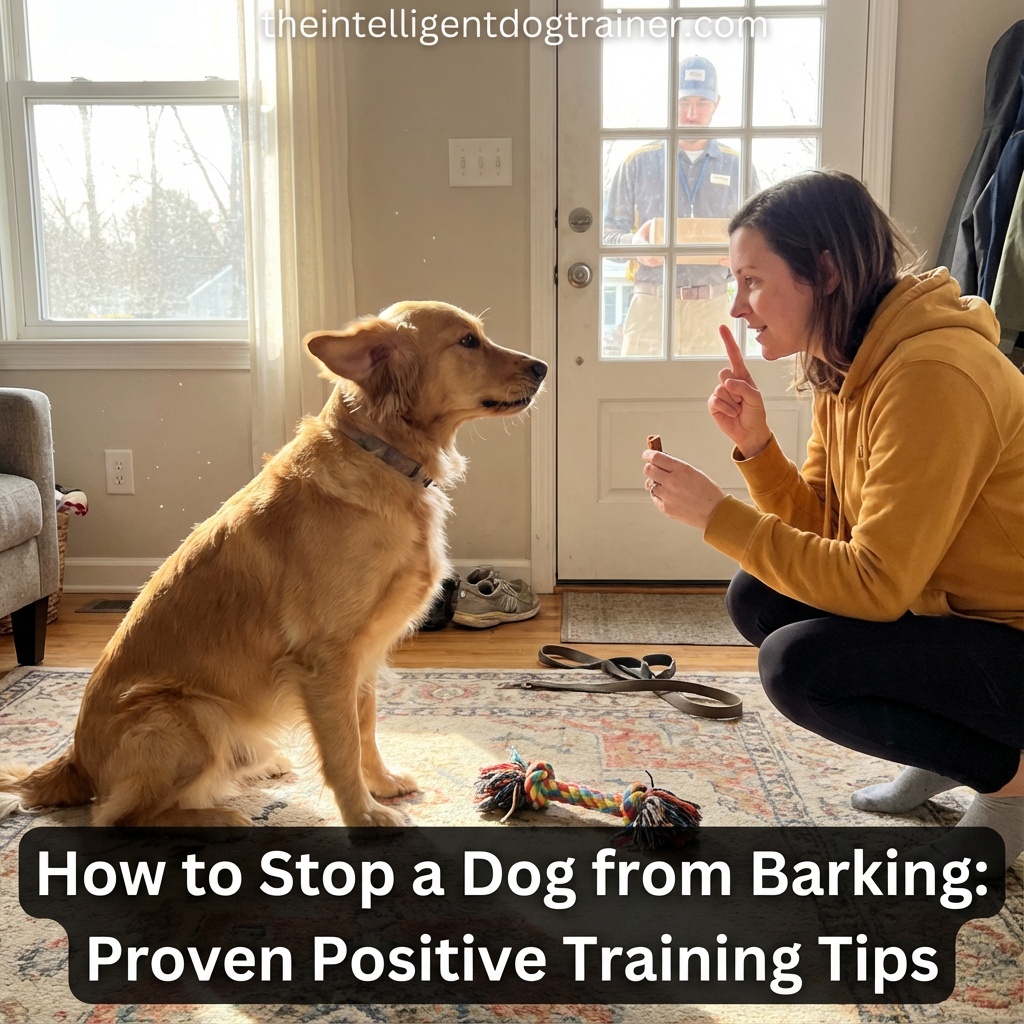
Does it ever feel like your living room has been transformed into a concert hall where the sole headliner is a shouting canine? It is a frustratingly common scenario, and you certainly aren’t the only one navigating this.
Figuring out how to stop a dog from barking remains one of the most frequent hurdles for pet parents in 2026. While vocalizing is a perfectly natural element of animal communication, it quickly becomes an issue when it turns into a relentless, non-stop soundtrack to your daily life.
Fortunately, by leaning on science-based positive reinforcement and digging into the specific “why” behind the racket, you can bring tranquility back to your household. This guide explores proven strategies to handle excessive noise while actually strengthening the bond you share with your dog.
Understanding Why Your Dog Barks Excessively
A successful fix requires you to first decode the message behind the noise. Many owners find themselves asking: Is my dog barking out of boredom or anxiety? Usually, the context provides the answer.
Barking born of boredom tends to be repetitive and monotonous—essentially a way to kill time—whereas anxiety-driven barking feels more high-pitched and is often paired with restless pacing. You might also find yourself wondering, why does my dog bark at everything that passes the window?
This is classic “territorial barking,” a defensive instinct where your dog feels compelled to protect their domain from perceived intruders. Another puzzle owners often face is: What is the difference between alert barking and demand barking?
Alert barking is a visceral reaction to an outside trigger, such as a neighbor’s car or a passing squirrel. On the flip side, demand barking is a learned strategy where the dog uses volume to secure a specific outcome, like a snack or an immediate walk.
Pinpointing these specific triggers allows you to implement dog training techniques that treat the underlying cause instead of merely masking the symptoms. Modern training in 2026 thrives on addressing a dog’s emotional state while maintaining clear, consistent boundaries.
Essential Steps to Teach Your Dog the Quiet Command
To effectively control excessive barking, you need to install a reliable “off switch.” A frequent question among owners is, how do I teach my dog the quiet command effectively?
Interestingly, the most fruitful approach is often to teach them how to bark on cue first. By pinning the behavior to a specific signal, you gain the leverage to dictate when it starts and, more importantly, when it stops.
Once your pet has mastered the “speak” cue, you can introduce the “quiet” command by capturing a brief window of silence and immediately offering a high-value reward. Naturally, you might wonder: how long does it take to train a dog to be quiet?
Success here is all about consistency. While most dogs will begin to understand the concept within two or three weeks of focused daily practice, high-energy breeds might require a bit more patience.
You are essentially rewiring a neural pathway to associate silence with positive outcomes. If you are still working on the fundamentals, it can be incredibly helpful to first teach a dog to speak so they can distinguish between making noise and staying still.
Keep in mind that yelling “quiet!” at a vocal dog often backfires; to them, it just sounds like you’re barking along, which reinforces the very behavior you’re trying to end.
Managing Reactions to Strangers and Visitors
When a dog barking at strangers occurs, it is usually fueled by a mix of fear or frantic over-excitement. This falls under the umbrella of reactivity, a physiological state where the dog enters a “fight or flight” mode.
To manage this effectively, you have to prioritize desensitization. A good starting point is rewarding your dog for staying calm when a stranger is still far enough away that it doesn’t trigger a reaction.
As your dog proves they can stay relaxed, you can slowly Close the gap. If your dog has a hard time with people on walks or visitors entering the house, a more structured plan is necessary.
Integrating leash reactivity training can give you the necessary tools to pivot your dog’s attention back to you when a “scary” person appears. The ultimate goal is to shift their emotional perspective of strangers from a “potential threat” to a “source of rewards.”
It is vital never to punish a dog for barking in these moments, as adding stress can deepen their fears and potentially escalate into serious aggression.
How to Stop a Dog from Barking at the Door
Few things are as disruptive as a dog that feels the need to stop a dog from barking at the door by losing their mind at every knock or chime. You may ask, how can I stop my dog from barking when the doorbell rings?
The secret lies in giving them a “job” that is physically incompatible with sprinting to the door and howling. Rather than letting them charge the foyer, you should look into how to teach a dog the place command so they learn to retreat to a designated mat or bed whenever they hear the alert.
By channeling that energy toward a specific “place,” you create a necessary physical and mental buffer between the dog and the excitement. A great way to practice this is by playing a recording of your doorbell at a low volume and rewarding your dog for staying on their bed.
Eventually, the chime becomes the signal to go lie down rather than a call to arms. This proactive strategy is far more effective than trying to regain control once your dog is already in a state of high arousal.
Effective Solutions for Persistent Demand Barking
Demand barking is arguably the most testing habit for any owner to endure. You might be asking yourself, does ignoring a dog work to stop demand barking?
The short answer is yes, but it requires nerves of steel. This behavior is a blatant bid for attention, and even “negative” attention—like a stern scolding—acts as a reward for a bored canine.
To create real solutions for demand barking, you must practice a total withdrawal of attention: no speaking, no touching, and absolutely no eye contact the second the noise begins.
Wait for a minimum of three seconds of total silence before you turn back to engage with them. This teaches the dog a simple lesson: “Noise makes my human vanish; silence brings them back.”
Of course, ensure you aren’t ignoring legitimate physical needs. If your goal is to stop a dog from begging or barking for their dinner, establishing a rigid schedule helps them understand exactly when resources are coming.
Over time, they will realize that being loud doesn’t pay dividends and will opt for calmer ways to ask for what they want.
Practical Strategies to Control Nuisance Barking
To find a permanent way to stop nuisance barking, you have to evaluate your dog’s overall lifestyle. A question that often comes up is: Can physical exercise help reduce excessive barking?
Without a doubt. A tired dog is generally a much quieter dog. However, creating mental fatigue is just as critical as the physical walk.
If you are struggling with how to stop a dog from barking at night, make sure they’ve had enough activity during the evening hours to dampen their urge to “patrol.” Natural light and movement help regulate the circadian rhythm, which leads to better sleep for everyone.
Many owners also ask, should I use a bark collar to stop the noise? Most experts in 2026 strongly discourage these devices, as they only suppress a symptom through discomfort without fixing the stress or boredom causing it.
Instead, focus on mental stimulation for dogs—think puzzle feeders, scent games, and short, varied training rounds. By enriching their environment, you remove the frustration that fuels most nuisance noise.
At the end of the day, patience and a steady routine remain the most effective tools in your arsenal. Dealing with a vocal dog requires a delicate balance of empathy, timing, and strategy.
Once you identify the specific triggers—be it the doorbell, a person on the sidewalk, or a plea for a treat—you can use targeted positive reinforcement to change the behavior. Remember that barking is essentially your dog’s language; the goal isn’t to silence them forever, but to help them communicate more peacefully.
With a solid “place” command, a reliable “quiet” cue, and a life full of enrichment, you can finally enjoy a harmonious and quiet home.