
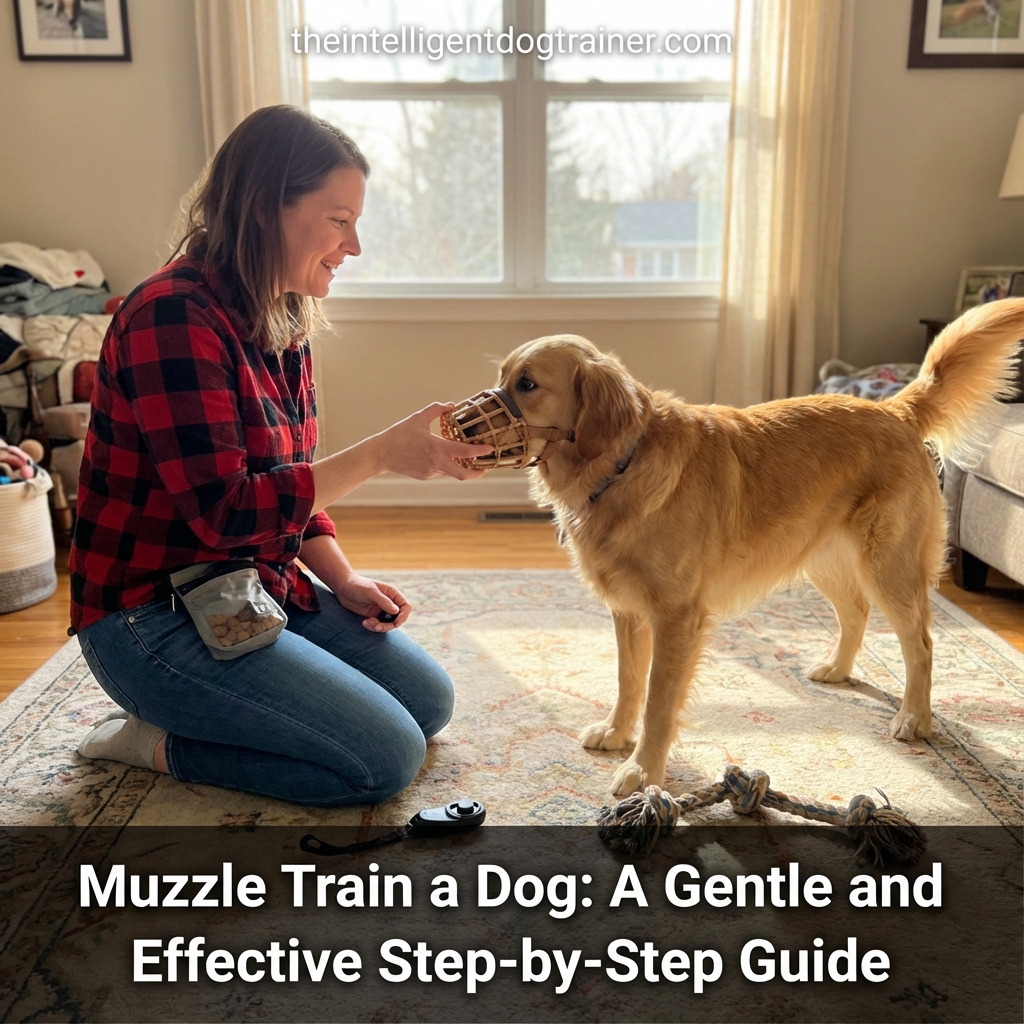
Muzzle training is frequently misunderstood as a scarlet letter for “bad dogs,” but in reality, it stands as a vital safety skill that every responsible owner should have in their toolkit.
Mastering how to muzzle train a dog through positive reinforcement ensures your companion stays composed during veterinary exams, emergencies, or unpredictable social encounters.
Instead of a restrictive device, you are essentially teaching your pet to view the muzzle as a “treat basket,” empowering them to navigate high-pressure moments with an impressive sense of calm.
Throughout this guide, we will delve into the subtle art of muzzle conditioning for dogs to ensure the journey remains rewarding and entirely stress-free for everyone involved.
Understanding the Importance of Muzzle Conditioning for Dogs
Successful muzzle conditioning for dogs centers on fostering a positive emotional response to a piece of gear that many pets naturally find intrusive at first.
A common concern among owners is, “Is muzzle training cruel to dogs?” The truth is quite the opposite, provided the process is anchored in patience and high-value rewards.
When you clicker train a dog to associate the sight of the muzzle with their favorite snacks, it becomes as unremarkable as putting on a collar or a harness.
This level of preparation is increasingly relevant in 2025, as many modern groomers and clinical staff advocate for pre-training to help keep canine cortisol levels stable during handled examinations.
Effective conditioning is essentially an insurance policy for “just in case” scenarios. You might find yourself wondering, “Should I use a muzzle for high-stress vet visits?”
Experts generally agree that the answer is yes. Even the gentlest dog can react instinctively if they are experiencing sharp pain or extreme fear.
As noted on Wikipedia, muzzles serve as standard safety equipment in professional animal settings.
By introducing the tool early, you ensure the physical restriction doesn’t add a secondary layer of panic when your dog is already feeling unwell or vulnerable.
Choosing the Best Muzzle for Training and Safety
Finding the best muzzle for training involves a careful balance between security and the biological needs of the dog.
One non-negotiable factor is “panting room”—the essential space a dog requires to open their mouth wide enough to regulate their internal temperature.
Owners often ask, “How do I know if the muzzle fits correctly?” A properly fitted device should never rub against the sensitive skin of the nose or eyes.
The straps need to be secure enough to prevent the dog from pawing it off, yet relaxed enough to slide two fingers underneath the material comfortably.
In your search for the right fit, you can apply modern dog training techniques to gauge how your dog reacts to different textures and weights.
Usually, the best muzzle for training is a model that allows you to easily slip high-value rewards—like peanut butter or squeeze cheese—through the openings.
It is also vital to confirm whether a dog can drink water while wearing a muzzle; most high-quality training versions are specifically designed to allow for lapping from a bowl.
While the muzzle is a powerful safety aid, it should always be used alongside active supervision and ongoing behavioral support.
Effective Techniques on How to Introduce a Muzzle to Your Pet
Mastering how to introduce a muzzle is perhaps the most delicate phase of the entire process.
It is a mistake to simply buckle a muzzle onto a dog’s face and expect them to adapt instantly.
Instead, start by leaving the muzzle on the floor and letting your dog investigate it at their own pace, offering rewards for any spark of curiosity.
You can draw on the same logic used to teach a dog to leave it by reinforcing focus and impulse control.
If your dog even glances at the muzzle, they get a treat; soon, the very sight of the gear will trigger a wagging tail.
A recurring hurdle for many is the question: “How do I prevent my dog from trying to paw off the muzzle?” The solution lies in building duration very slowly.
Begin by having your dog place their nose inside for just a fraction of a second to grab a treat, eventually working up to five, then ten seconds of contact.
Rushing this stage often leads to the dog feeling trapped, which triggers the urge to remove it.
If you are curious about “how long does it take to muzzle train a dog?”, keep in mind that every animal is different.
Some might be comfortable within a week, while others require a month of consistent, two-minute daily sessions to reach a state of total relaxation.
A Structured Approach to Basket Muzzle Training
When it comes to long-term comfort and reliable safety, basket muzzle training remains the gold standard for professionals.
These muzzles resemble a protective cage around the snout, offering superior ventilation and the best access for delivering treats.
A frequent question from dog owners is, “Is it safe for a dog to pant in a basket muzzle?” Not only is it safe, but it is the primary reason these are recommended over fabric sleeves that hold the jaw shut.
During this stage, it is quite useful to train a dog to stay in a stationary position while you practice clicking the fasteners, ensuring they don’t view the sound of the buckle as a cue to retreat.
A structured plan relies on “shaping” the desired behavior. By smearing a little wet food on the far end of the basket, you invite the dog to volunteer their snout for a reward.
It is crucial to avoid the temptation to push the muzzle toward them. Letting the dog “self-muzzle” builds a sense of confidence and agency.
This serves as a great foundation when people ask, “When is it appropriate to use a muzzle on a dog?”
Generally, they are ideal for situations where there is a known bite risk, during travel on public transit where required by law, or when a dog’s internal “threshold” for stress is likely to be pushed.
Specialized Muzzle Training for Reactive Dogs
For many families, muzzle training for reactive dogs is nothing short of a lifesaver.
It creates a safety net that allows owners to focus on behavior modification in public spaces without the paralyzing fear of a sudden snap.
If you are currently exploring how to train an aggressive dog, the muzzle functions as a “discretionary tool” that significantly lowers the handler’s anxiety.
People often ask, “Can a muzzle help with aggression training?” While the equipment doesn’t “cure” the underlying issue, it provides the essential safety required to conduct desensitization exercises effectively.
When dealing with reactivity, the muzzle train a dog protocol must be exceptionally thorough.
Because reactive dogs are often hyper-vigilant, the muzzle needs to feel like a completely natural part of their daily “outfit.”
It is important to remember, as highlighted on Wikipedia, that a muzzle should never serve as a punishment for growling or barking.
Instead, use it as a tool to navigate the world safely, rewarding your dog for observing triggers without reaching their breaking point. This approach builds a bridge between physical safety and meaningful social rehabilitation.
An Overview of the Different Types of Dog Muzzles
Before you lock in your training strategy, it is helpful to recognize the various types of dog muzzles currenty on the market.
Basket muzzles, typically constructed from plastic, wire, or Biothane, are the most versatile options for exercise and active training.
You may often see soft fabric or nylon muzzles at a vet’s office, but these are intended for very brief use because they prevent the dog from panting or drinking.
If your goal is to train a dog to walk on leash while muzzled, the basket style is the only safe choice to accommodate the physical effort involved.
There are also specialized designs for brachycephalic (short-nosed) breeds like English Bulldogs or Pugs, ensuring they can breathe properly while being restrained.
Regardless of the specific model you choose, the secret to success is always positive association.
By framing the muzzle as a “fun” accessory rather than a restrictive mask, you prioritize your dog’s psychological welfare.
Ultimately, a muzzle represents a tool of freedom, allowing dogs with complex needs to explore their environment with security.
Muzzle training is a deeply beneficial skill that focuses on safety while minimizing stress for both ends of the leash.
By picking the right gear, utilizing reward-based methods, and respecting your dog’s personal pace, you can transform a potentially intimidating experience into a routine part of their life.
Whether it is for a quick check-up at the clinic or managing outdoor reactivity, a muzzled dog who is comfortable is a dog with far more opportunities to enjoy the world.
Focus on that baseline of trust, and the muzzle will eventually be seen as just another piece of gear for your pet’s many adventures.