
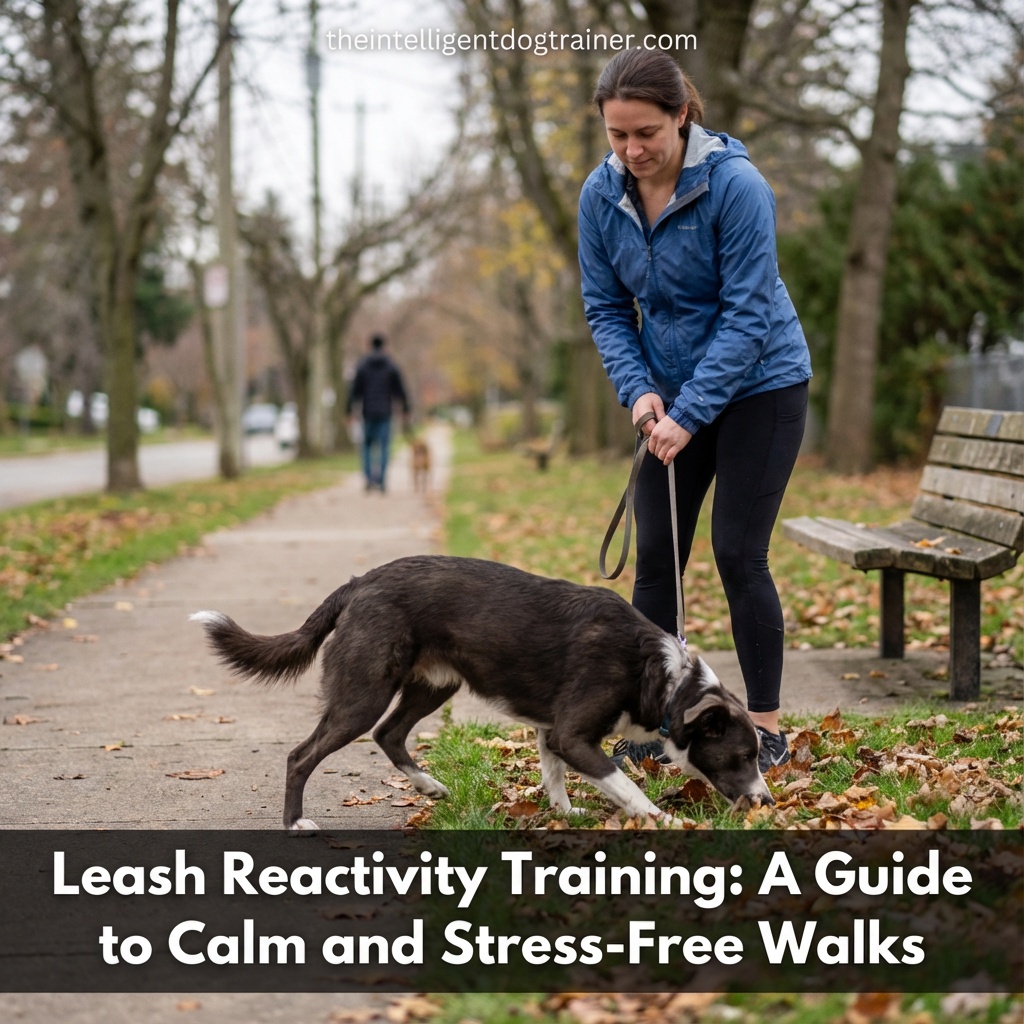
Does your heart sink the moment you spot another dog approaching during a quiet stroll? If so, you’re certainly not alone.
Navigating the world with a dog that barks, growls, or lunges can quickly turn what should be a relaxing hobby into a source of immense stress. However, effective leash reactivity training is about much more than just suppressing a “bad” habit; it is a journey into understanding your dog’s internal emotional landscape and equipping them with the confidence to feel secure.
By following the insights in this guide, you will discover how to transform those chaotic outings into peaceful walks using science-based methods that prioritize trust and focus.
Understanding the Basics of Walking a Reactive Dog
When we focus on the challenges of walking a reactive dog, we are frequently observing a “barrier frustration” or a deeply rooted fear response. This often prompts owners to ask: What is the difference between leash reactivity and aggression?
Essentially, reactivity is an exaggerated overreaction to external stimuli—usually driven by intense excitement or underlying anxiety—whereas aggression involves a calculated, deliberate intent to cause harm. Many owners are also puzzled by a specific contradiction: Why is my dog friendly off-leash but reactive on-leash?
This phenomenon occurs because the leash removes the “flight” option from the natural “fight or flight” instinct, leaving the dog feeling cornered and forced to act out to keep the perceived threat at a distance.
To foster real progress, you must first build a sturdy foundation of mutual trust and clear communication. Lasting success begins with a solid leash walking foundation that teaches your dog to look to you for direction instead of making impulsive, emotionally charged choices.
As noted by Wikipedia, the physical and psychological well-being of a dog is significantly influenced by the quality of their daily walks. If your canine companion is stuck in a state of high physiological arousal, they simply aren’t in a state to learn.
Your primary objective is to keep them beneath their stress limit so they can actually process and respond to your cues.
Identifying Safety Zones with Dog Threshold Training
Mastering the concept of “thresholds” is perhaps the most vital component of dog threshold training. Think of a threshold as an invisible boundary where your dog transitions from being a calm observer to being “over the top” and reactive.
Once you get too close to a trigger—be it another dog or a passing cyclist—the dog’s brain effectively enters a “shutdown” mode regarding learning. To remedy this, you need to pinpoint your dog’s “safety zone,” which is the specific distance where they can acknowledge the trigger while still remaining relaxed enough to take a treat or respond to their name.
Maintaining this distance is the key strategy to eventually stop a dog from barking at every person who passes by. A very common inquiry is: What are the most common triggers for leash reactivity?
While every dog has its own unique sensitivities, typical triggers often include other dogs, skateboards, noisy trucks, or even people wearing hats. Recognizing these patterns allows you to manage the environment with foresight.
In 2025, modern trainers emphasize biological fulfillment, which makes asking how does mental stimulation help a reactive dog stay calm? a crucial part of the puzzle. A dog that has engaged its brain through sniffing exercises or complex puzzles is often far less hyper-vigilant during threshold sessions.
How to Stop Dog Lunging on Leash Using Positive Reinforcement
If your goal is to stop dog lunging on leash, it is imperative to move away from traditional punishment-centric methods. Owners often wonder: Should I use a prong collar for a reactive dog?
Modern behavioral science suggests that aversive tools like prong or shock collars can actually heighten anxiety. They often cause the dog to associate the physical pain of a correction with the sight of the other dog, inadvertently worsening the reactivity.
Instead, we utilize positive reinforcement to celebrate the dog when they make a “good” choice, such as choosing to glance at us rather than fixating on a trigger.
As you work to reduce leash pulling and lunging, you are essentially building a brand-new mental association: “When I see a dog, I get a high-value reward from my human.”
This pivots the dog’s internal dialogue from “I have to scare that intruder away” to “Where’s my treat?” This fundamental shift is the very heart of leash reactivity training. Consistency is the secret ingredient; you must be proactive and reward the brief moment of calm just before an explosion has the chance to happen.
Essential Reactive Dog Training Exercises for Daily Success
Reliable daily progress is anchored in reactive dog training exercises practiced in low-distraction environments before you ever test them against real-world triggers. One of the most valuable behaviors to cultivate is the “Auto-Check-In,” where your dog chooses to look at you voluntarily.
It is also beneficial to practice the watch me command within the safety of your home to ensure your dog can maintain eye contact even when life gets a bit distracting.
A question that frequently arises is: How do I stop my dog from barking at other dogs on walks? The solution is often found in strategic redirection.
If you see a trigger looming, employ a “U-turn” or the “Find It” game (tossing treats on the grass) to keep your dog’s nose busy and their eyes off the prize. This is incredibly helpful when you find yourself in a tight hallway or on a narrow sidewalk.
Another common worry is: What should I do if another dog approaches us during training? In these moments, you must be your dog’s advocate. It is perfectly acceptable to tell other walkers, “My dog needs some space,” and calmly move in the opposite direction to protect your progress.
Mastering Desensitization and Counter Conditioning Techniques
The undisputed “gold standard” for sustainable behavioral change is the combination of desensitization and counter conditioning. Desensitization involves very controlled exposure to a trigger at a low intensity (usually from a distance), while counter conditioning focuses on shifting the dog’s emotional response to that trigger.
When you work with fearful or aggressive dogs, you are doing the deep work of rewiring the amygdala—the brain’s center for fear and survival.
This level of progress requires time and a good deal of patience. Clients frequently ask: How long does it take to fix leash reactivity? While there is no universal timeline, and results vary based on a dog’s history and the handler’s consistency, many owners notice a significant transformation within 3 to 6 months.
Additionally, many wonder: Can you ever fully cure a reactive dog? While some dogs eventually become entirely neutral, others may always require a level of careful management.
The ultimate goal is a dog that feels comfortable and remains under control. As Wikipedia notes, classical conditioning serves as the bedrock for these techniques, proving we can effectively alter reflexive responses through repetition.
Playing the Engage Disengage Game to Change Emotional Responses
To round out your toolkit, we use specific protocols like the engage disengage game to offer the dog a sense of “agency.” This game, which pairs excellently with clicker training techniques, rewards the dog first for “engaging” (looking at the trigger) and then for “disengaging” (turning back to you).
Students often ask: What is the engage-disengage game and how does it help? Its power lies in teaching the dog that spotting a trigger is actually a green light to check back in with their owner for a reward, rather than a signal to start barking.
Once you begin playing this game regularly, you’ll start to see your dog automatically whip their head toward you the moment they see a distraction. This is the “Eureka!” moment of leash reactivity training.
By using a clicker or a specific marker word, you provide the precise, split-second feedback your dog needs to understand exactly which behavior won the prize. Gradually, the sight of another dog transitions from being a “threat” to being a simple “information” cue, paving the way for the peaceful, stress-free walks you both deserve.
Ultimately, successfully managing a reactive dog is a blend of identifying thresholds, leaning into positive reinforcement, and staying dedicated to desensitization. By prioritizing your dog’s emotional health over mere physical compliance, you can forge a deeper bond and move through the world with newfound confidence.
Remember that patience and consistency are your most powerful allies on this journey toward harmony in 2025 and beyond.