
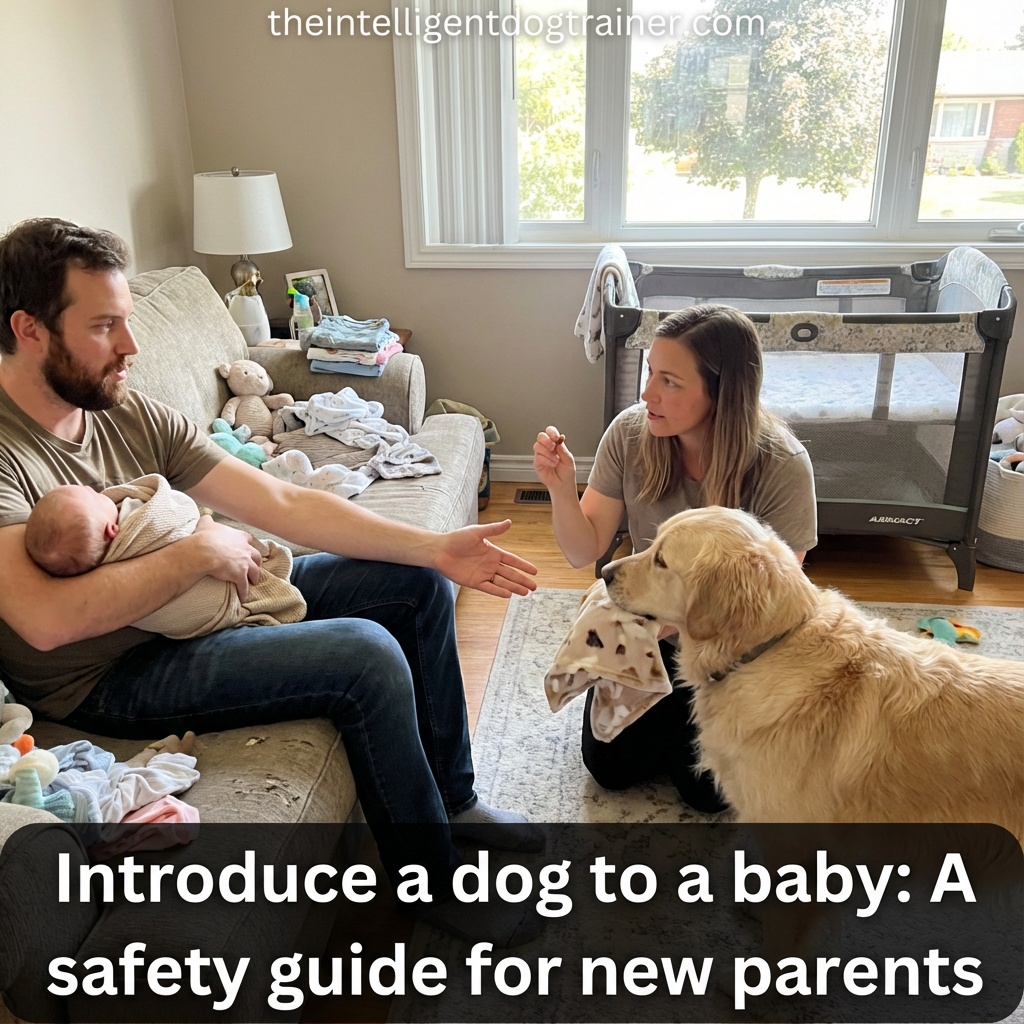
Bringing a newborn into your home is undoubtedly one of life’s most beautiful milestones, yet for the resident canine, it signifies a profound shift in the household hierarchy and atmosphere.
Successfully navigating how to introduce a dog to a baby requires more than just luck; it demands a proactive strategy centered on structure, safety, and genuine emotional support for your four-legged friend.
By initiating this transition months before your due date, you can proactively replace potential anxiety with a stable, harmonious bond. This guide outlines a science-based framework designed to help your expanding family flourish.
Preparing your dog for the new baby’s arrival
The most seamless transitions usually begin when owners start preparing dog for baby arrival at least four or five months before the big day.
Because dogs find comfort in predictability, any inevitable shifts in their walking routes, feeding windows, or sleeping quarters should be phased in gradually.
Many experts recommend assembling the nursery furniture early, allowing your dog to explore these new objects under your watchful eye.
If your dog is used to being the sole recipient of your attention, it is wise to slightly taper the intensity of your daily interactions now to prevent future resentment.
How do I prepare my dog for a new baby before the birth? Use this period to sharpen basic obedience and refine environmental boundaries.
It is an ideal time to reinforce house rules, such as staying out of the nursery or remaining settled while you occupy the rocking chair.
If you plan to use a “safe space,” you should learn how to crate train a dog effectively, ensuring the crate serves as a peaceful retreat.
Solidifying these habits in 2025 means that by the time you return from the hospital, your dog will already be fluent in the modified rhythm of the household.
Desensitizing your dog to new baby sounds and smells
Babies bring a sensory whirlwind into a quiet home, ranging from high-pitched wails to the unfamiliar fragrance of lotions and powders.
Desensitizing dog to baby sounds is a vital step in mitigating fear-motivated behaviors by playing audio recordings of infant cries at a low volume during mealtime.
This process of counter-conditioning helps your dog categorize these strange noises as irrelevant background noise.
As noted on Wikipedia, systematic desensitization is a standard behavioral pillar that uses controlled exposure to neutralize emotional overreactions.
Should I bring a baby blanket home for my dog to smell first? This is an excellent idea and a widely supported practice.
Having a partner bring a worn baby item home while the mother and child are still at the hospital gives the dog a chance to process new pheromones.
To keep your dog’s mind occupied, offering mental stimulation for dogs through interactive puzzles can significantly lower their cortisol levels.
Strategic tips for bringing the baby home to your dog
The day you are actually bringing baby home to dog should be a masterclass in calm precision.
Upon arrival, let someone else hold the infant while you greet your dog solo to burn off initial welcome home energy.
Once the dog is relaxed, move forward with a supervised introduction, keeping the dog on a loose leash for a quick sniff of the baby’s feet.
What is the best way to handle the first meeting between dog and baby? The key is to keep the interaction brief and overwhelmingly positive.
If you sense your dog is becoming too worked up, calmly ask for a sit or a lie-down to manage the physical space.
If you train a dog to stay with reliability, you can manage the environment without creating tension through a tight leash.
How do I manage my dog’s routine once the baby arrives? Consistency is your best friend; sticking to established schedules will help minimize a sense of displacement.
Essential safety tips for dogs and newborns
In the realm of dog and newborn safety tips, the golden rule is never-ending active supervision.
It is imperative that you never leave a dog and an infant alone together, not even for a fleeting moment.
Physical barriers like baby gates are excellent for creating dog-free zones, while learning canine body language acts as an early warning system.
Is it safe to leave my dog alone with my newborn? To be clear, it is never considered safe, regardless of a dog’s past behavior.
What should I do if my dog growls at the infant? Never scold the growl, as it is a dog’s way of communicating discomfort.
If you observe genuine reactivity or aggression, you must seek professional guidance on how to train an aggressive dog immediately.
Creating positive associations between your dog and baby
The ultimate aim of a successful introduction is to build positive associations dog and baby, ensuring the dog views the child as a lucky charm.
Whenever the baby is present, make it a habit to offer your dog high-value treats or verbal affection.
Can I use treats to help my dog like the new baby? You certainly can, provided you are rewarding a relaxed state of mind rather than frantic behavior.
Utilizing positive reinforcement dog training ensures that your pet develops a sincere pro-social attitude toward their new sibling.
Avoid using harsh corrections when the dog is near the infant, as this can inadvertently cause the dog to link the baby with negative feelings.
How long does it take for a dog to adjust to a new baby? Most dogs begin to settle into the new arrangement within two to four weeks.
Recognizing signs of stress or jealousy in your dog
Parents often mistakenly look for signs of dog jealousy with baby, but this is usually a form of resource guarding or stress from a broken routine.
Keep an eye out for subtle indicators of discomfort such as yawning when not tired, frequent lip-licking, or whale eye.
What are the warning signs my dog is stressed around the baby? A stiffened body, a frozen posture, or a tucked tail are clear signals that your dog needs a break.
How can I stop my dog from being jealous of the new baby? The solution is found in restoring their sense of security through structured interaction.
If your pet starts guarding items, it is necessary to stop resource guarding in dogs through careful desensitization.
The American Kennel Club points out that what we call jealousy is often just a plea for social stability.
Successfully introducing a dog to a baby is a gradual process that demands patience, foresight, and an unwavering commitment to safety.
By acclimating your pet to new sensory inputs and routine changes well in advance, you significantly lower the risk of stress-induced behavior.
Through consistent reinforcement and vigilant management, you can ensure your dog remains a happy, cherished part of the family as your child grows.