
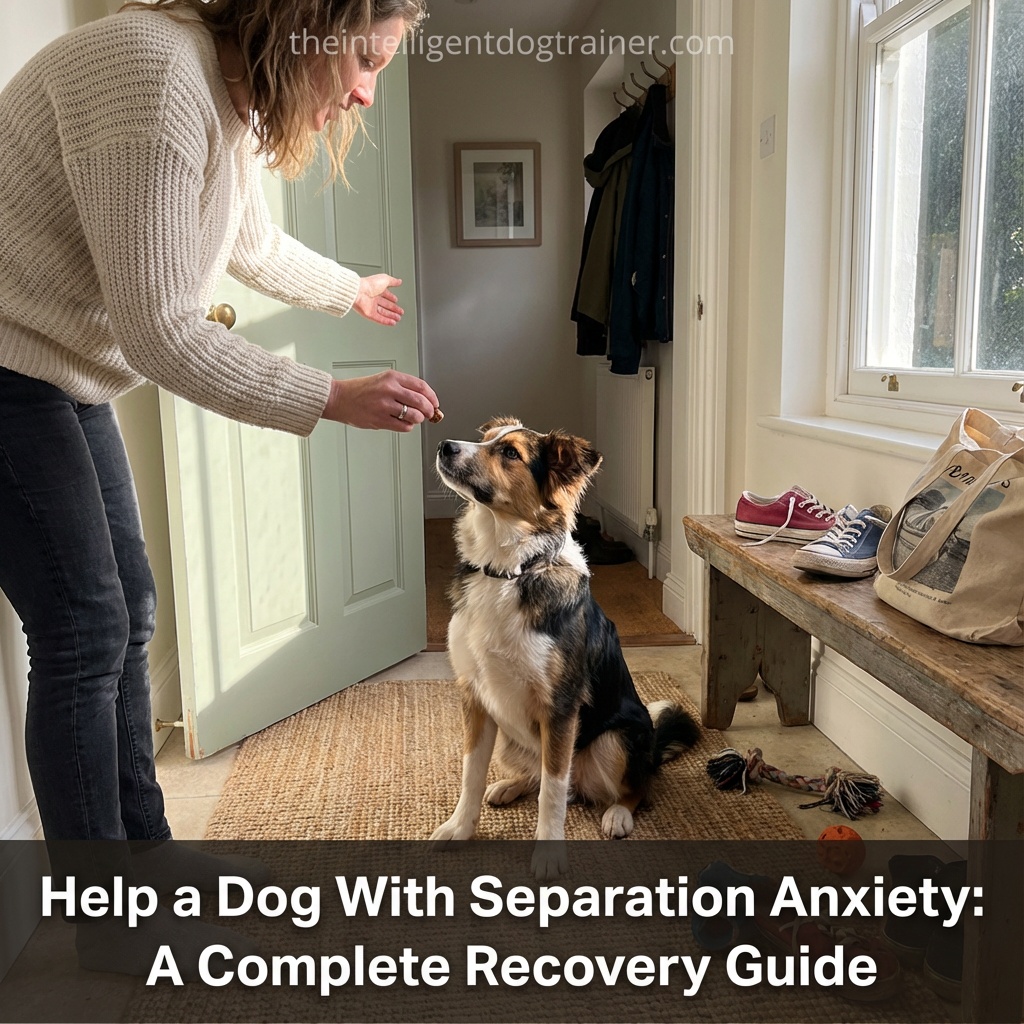
Watching a beloved pet descend into a state of panic the moment you reach for your car keys is a heavy burden for any owner to carry. Whether you are dealing with destructive chewing, restless pacing, or a chorus of persistent howling, understanding how to help a dog with separation anxiety is the vital bridge to a restoring a peaceful home environment.
Science and behavior studies in 2025 have clarified that this reaction isn’t about being spiteful or “getting back” at you; rather, it is a profound, physiological panic attack. By utilizing structured dog separation anxiety training tips and making thoughtful adjustments to your daily habits, you can encourage your dog to find their inner confidence.
This journey is essentially about teaching them that solitude isn’t a threat. This guide offers a compassionate, practical roadmap to help your canine companion feel secure, even when you aren’t by their side.
Recognizing the early signs of separation anxiety in dogs
The foundation of any successful recovery plan involves accurately identifying whether your pet is truly suffering from distress or is simply looking for a way to pass the time. What are the first signs of separation anxiety in dogs?
Keep a close watch for indicators such as excessive drooling, pacing tracks worn across the floor, or destruction specifically aimed at “escape” points like door frames and window sills. Owners frequently ask themselves, “How can I tell the difference between boredom and separation anxiety?“
A tell-tale sign is the timing of the behavior; anxiety-driven reactions usually erupt within the first 15 to 30 minutes of your departure and are almost always paired with physical symptoms like wide, dilated pupils or visible trembling. Boredom, conversely, tends to surface much later in the day and lacks that frantic, desperate energy.
It is also worth asking, are some breeds more prone to separation anxiety than others? While no dog is exempt regardless of their background, highly social or “velcro” breeds—think Vizslas or Border Collies—often require more mental engagement to feel emotionally stable.
If your dog’s fear manifests as destructive chewing, you might find yourself searching for ways to stop a dog from chewing your furniture, even as you work on the underlying emotional trigger. Don’t overlook physical health during your assessment, either.
Can underlying medical issues cause anxiety-like symptoms? Absolutely. Issues like urinary tract infections or age-related cognitive decline can mimic anxiety, making a veterinary consultation an essential first step in your journey.
Setting a foundation for treating puppy separation anxiety
In the world of canine behavior, prevention is far more straightforward than fixing a solidified phobia. This is why treating puppy separation anxiety should be a priority from day one.
Puppies are inherently social creatures according to Wikipedia, so a sudden transition to complete isolation can be quite jarring for them. The secret lies in cultivating “independent play” early.
Try giving your pup high-value toys in an area where they are physically separated from you but can still see you, slowly increasing that distance over time. This helps the puppy internalize the calming idea that your absence is always temporary and never dangerous.
Resilience is built through exposure to the world at large. When you socialize a puppy, you are doing much more than introducing them to other dogs; you are teaching them how to process new environments with composure.
This newfound confidence is a direct asset when they are left alone. To ease the transition as you leave, you might wonder, “Should I use treats to distract my dog before I leave the house?“
Long-lasting, high-value rewards, such as a frozen food toy, can help forge a positive link between your exit and a tasty reward, as long as the dog hasn’t already crossed the threshold into a full-blown panic where they refuse to eat.
Is separation anxiety crate training right for your pet?
There is significant debate in the training community regarding whether separation anxiety crate training is a help or a hindrance. So, does crate training help or hurt separation anxiety?
The reality is that it depends entirely on the individual dog’s personality. For many, a crate serves as a “den,” providing a much-needed sense of containment and safety.
However, for dogs suffering from intense isolation distress, being confined can trigger claustrophobia, leading to frantic escape attempts and potential self-injury. Closely watch your dog’s body language; if they are panting heavily or biting the crate bars, confinement is likely escalating their stress rather than soothing it.
If your dog does seem to enjoy having a dedicated “spot,” it is crucial to understand how to crate train a dog the right way, ensuring the space is always a sanctuary and never a place for “time-outs.”
You might also ask yourself, “Can leaving the radio or TV on help my dog feel less anxious?” For many pets, the sound of human voices or soft music can mask an unsettling silence and muffle outside noises that might trigger a reaction.
It is always a good idea to monitor your dog via a camera during these early stages to confirm the environment remains calming.
Effective desensitization exercises for dogs left home alone
The “secret sauce” of rehabilitation is found in desensitization exercises for dogs. These routines are designed to rewrite your dog’s emotional reaction to “departure cues”—those little things you do that signal you’re leaving, like grabbing your purse or putting on your boots.
If your dog starts to worry the moment you touch your keys, start doing those actions without actually going anywhere. Pick up your keys and then sit down to read. Put on your heavy coat and then head to the kitchen to make a sandwich.
This effectively breaks the mental link between the cue and the scary experience of being alone. Once the cues are “neutralized,” you can move on to actual departures, keeping them incredibly brief at first—perhaps only a few seconds.
This is where standard dog training techniques prove their worth, focusing on very gradual exposure and keeping the dog below their “threshold” of fear.
Regarding your own energy, is it better to ignore my dog when I come home or greet them? A calm, gentle greeting is perfectly fine, but keeping your departures and arrivals low-key helps your dog understand that these events aren’t a big deal.
What exercises can I do to desensitize my dog to my departure? Beyond neutralizing cues, practicing “stay” and “settle” exercises in different rooms can help strengthen their “independence muscle” over time.
Practical training tips to manage and reduce canine distress
Consistency serves as the backbone of this entire process. To effectively help a dog with separation anxiety, you need to provide a predictable world where the dog feels in control of their surroundings.
A solid exercise routine is part of this; a dog that has been physically and mentally challenged is much more likely to nap through your absence. Brain games, puzzles, and scent work can be just as exhausting as a three-mile walk.
It is also important to check your own stress levels, as dogs are masters at reading our nuanced emotions. If you are anxious about leaving them, they will inevitably mirror that tension.
Success depends on knowing how to train a dog using patience and positive reinforcement. Using punishment for anxiety-driven behavior will only backfire, adding more fear to an already stressed animal.
Many frustrated owners ask, “How long does it typically take to resolve separation anxiety in dogs?” There isn’t a universal timeline; for some, progress happens in weeks, while for others, it takes months of steady work.
Think of it as a marathon. Using specific signs of separation anxiety in dogs as your metric for progress will help you recognize the small wins during the long journey.
How to stop dog howling when alone using positive reinforcement
Vocalization is often the most stressful symptom for owners, especially those sharing walls with neighbors. To master how to stop dog howling when alone, you have to fix the underlying panic rather than just muffling the sound.
In the world of canine communication, a howl is essentially a “gathering call.” Your dog is literally calling out to bring their “pack” (you) back home.
Rewarding “quiet” behavior during your brief training sessions is essential. If you notice a moment of silence while you are standing on the other side of the door, return immediately and offer a reward.
The methods used to stop a dog from barking at the window can be successfully adapted for howling as well. By shifting their focus and rewarding the choice to remain calm, you help them develop the ability to self-regulate.
Keep in mind that scolding a dog for howling will only increase their distress, as they will then begin to fear your eventual return. If you focus on building that sense of safety and confidence, the vocalization will typically fade away as the panic subsides.
Helping a dog navigate separation anxiety requires a thoughtful mix of environment management, endless patience, and steady training. By identifying the early signals and separating them from simple boredom, you can create a custom plan that fits your dog’s unique personality.
Whether you are helping a tiny puppy or a senior rescue with a long history of fear, the objective remains the same: showing your pet that they are safe even when you are out of view. Through desensitization and positive reinforcement, you can ease your dog’s burden and finally enjoy a more relaxed life together.