
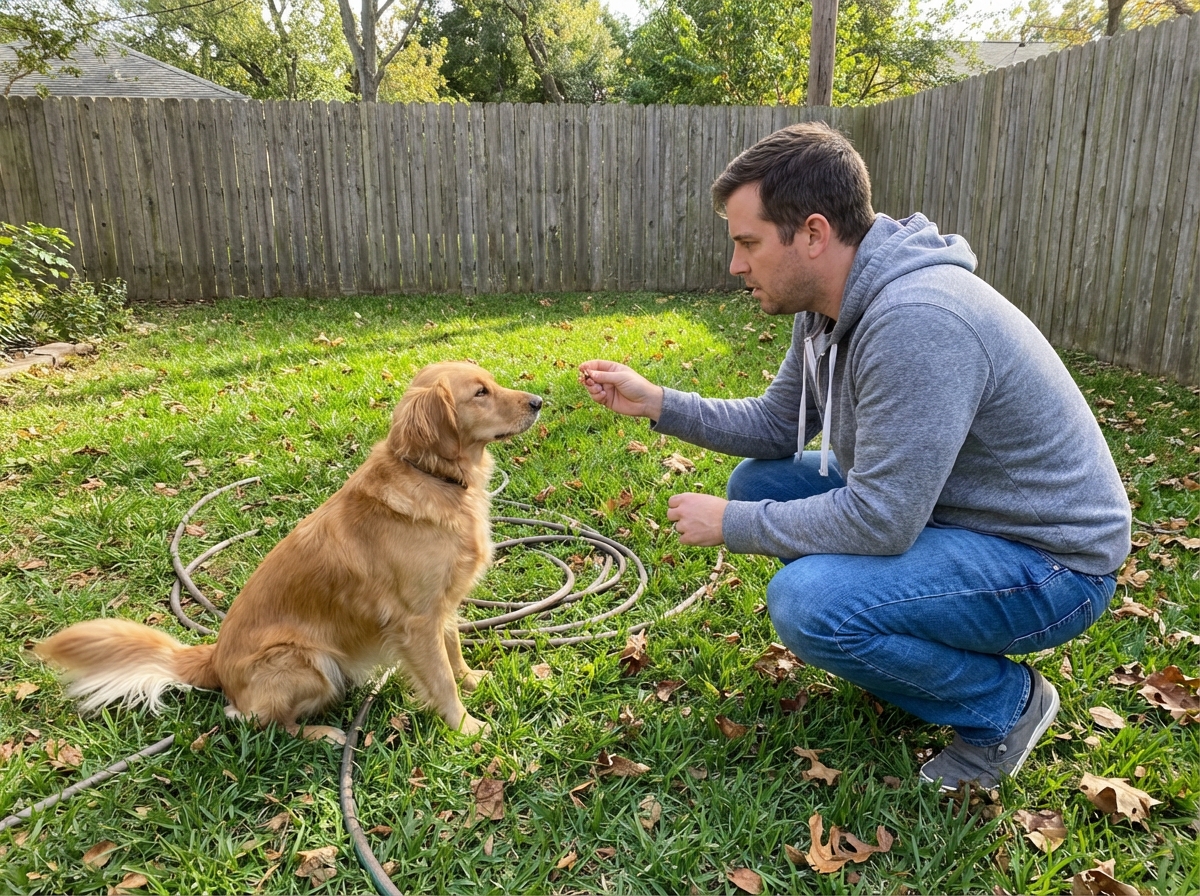
Understanding the “why” driving your dog’s actions is frequently just as significant as mastering the “how.” The foundation of contemporary dog training techniques relies heavily on positive reinforcement, a philosophy that effectively means compensating the behaviors you wish to see repeated while functionally overlooking or redirecting the ones you do not.
When the question arises, is positive reinforcement better than punishment? The response is an absolute affirmative. While punitive measures tend to generate fear and can fracture your bond, positive reinforcement cultivates confidence and a sincere enthusiasm for learning.
For novices just beginning, the best dog training techniques for beginners typically revolve around “luring” and “capturing.” Luring involves guiding your pup into a specific posture (like a sit) using a treat, whereas capturing implies rewarding a spontaneous behavior the exact second it occurs.
It is vital to comprehend the mechanics of operant conditioning to utilize these strategies effectively. This scientific perspective guarantees that your communication remains crystal clear.
If you wish to delve further into these core concepts, a comprehensive dog training guide can supply the structural scaffolding you need to commence your journey. Keep in mind that consistency is paramount; sending mixed signals will merely baffle your pet and stall your advancement.
Tackling Housebreaking with Patience
Potty training often stands as the initial significant obstacle for new guardians, demanding considerable reserves of patience and observation. A common query is, How do I stop my puppy from having accidents inside? The answer resides in adhering to a rigorous schedule and constant oversight.
Young dogs operate with tiny bladders and minimal restraint, meaning they require frequent trips outdoors—typically every hour, plus immediately following meals, naps, or play sessions. Utilizing a crate whenever you cannot directly watch your pup remains one of the most reliable dog training techniques to avert mishaps, simply because canines instinctively avoid fouling their sleeping quarters.
Should an accident occur, punishment is futile unless you catch them mid-act, and even in that instant, a mild interruption works far better than harsh scolding. Rather, concentrate your efforts on celebrating successful elimination outside.
Lavish them with enthusiastic praise and present a treat the moment they finish to build a positive association with doing their business outdoors. If you find yourself battling constant cleanups, consulting specifically tailored puppy potty training methods can assist in fine-tuning your timetable and recognizing the nuanced signals that your dog needs relief. Steady repetition turns this chaotic phase into a dependable habit.
Building Trust with the Recall Command
Of all the safety-focused dog training techniques, instructing your companion to return when summoned—the recall—is arguably the most vital. A dependable recall can quite literally save your dog’s life should they slip their collar or dart toward traffic.
What is the most effective way to teach a dog to come? The trick is to ensure that returning to you feels like the most wonderful event in the world. Never summon your dog to penalize them or perform something unpleasant (like a bath), as this will poison the command.
Instead, utilize high-value snacks, toys, and immense praise every single time they check in with you. Begin in a setting with minimal distractions, such as your living room, before graduating to the backyard and eventually the park.
If your dog tunes you out, do not chant the command repeatedly; this merely teaches them that the word is optional. Instead, go collect them or make yourself intriguing by running away to trigger their chase instinct.
Mastering teaching reliable recall commands requires time, yet it grants your dog a degree of liberty they would not otherwise enjoy. Constructing this trust guarantees that even when squirrels or other dogs appear, your voice remains the most compelling sound in their universe.
Ensuring Comfortable and Controlled Walks
Walks ought to be a soothing bonding experience rather than a contest of strength. Nevertheless, countless owners find themselves being dragged down the pavement. Why is my dog pulling on the leash during walks?
Simply put, they pull because it functions—it gets them to their destination faster. Canines naturally walk at a brisker pace than humans, and they are thrilled to investigate their surroundings.
Efficient dog training techniques for leash manners involve teaching the dog that a taut leash signifies the walk halts, whereas a slack leash means the journey continues. To remedy this, freeze the moment you sense tension on the line.
Wait for your dog to glance back or step toward you to generate slack, then offer praise and proceed. You might also change directions frequently to keep your dog’s attention locked on you rather than the scenery.
It is often beneficial to employ equipment like a front-clip harness to decrease their physical leverage while you shape the behavior. If you feel worn out by the tug-of-war, adopting strategies to stop leash pulling behavior can convert your daily outings from a chore into a delight.
Managing Aggression with Safety in Mind
Realizing that your companion harbors behavioral challenges can be frightening. What if my dog shows signs of aggression? The primary step involves identifying the trigger—whether it stems from fear, resource guarding, or territorial instincts.
Aggression frequently acts as a symptom of deep-seated anxiety. Do I need a professional for basic dog training techniques? While numerous tricks can be mastered at home, aggression is the exception where expert guidance is strongly recommended; safety must always take precedence.
Never punish a growl; a growl serves as a warning. If you suppress the warning, a dog might skip directly to biting next time. Instead, concentrate on desensitization and counter-conditioning—exposing the dog to their stressor at a distance where they remain reactive-free, and rewarding them for composure.
This shifts their emotional reaction over time. For granular insights on navigating reactivity, reading about managing aggressive dog behavior is a responsible starting point.
Furthermore, comprehending canine aggression from an ethological angle can help you recognize this is not “malice,” but a behavioral response demanding modification.
Creating a Sustainable Training Routine
Training is not a singular event but rather a lifelong lifestyle. A frequent question is, how long does it take to train a dog using these techniques? The timeline fluctuates depending on the individual dog and the specific behavior, yet sustainable dog training techniques prioritize progress over perfection.
Owners also inquire, can I use these dog training techniques on an older dog? Without a doubt. The adage that “you can’t teach an old dog new tricks” is a myth; senior dogs may simply require a bit more time to overwrite established habits.
To sustain success, how often should we practice obedience training? Brief, frequent intervals work best—aim for 5 to 10 minutes, two or three times daily. Integrate training into everyday life: request a “sit” before dinner or a “wait” before opening the door.
This keeps the rules distinct and the bond robust without becoming a load to bear. For those aiming to keep their pet sharp through the years, establishing a training schedule ensures that your dog stays mentally stimulated and polite throughout their entire lifespan.
Ultimately, effective training revolves around consistency, patience, and transparent communication. By prioritizing positive reinforcement and making an effort to view the world from your dog’s perspective, you cultivate a harmonious household where both you and your pet can flourish.
Whether you are addressing basic commands or navigating complex behavioral adjustments, the energy you invest today establishes the foundation for a lifetime of companionship.