
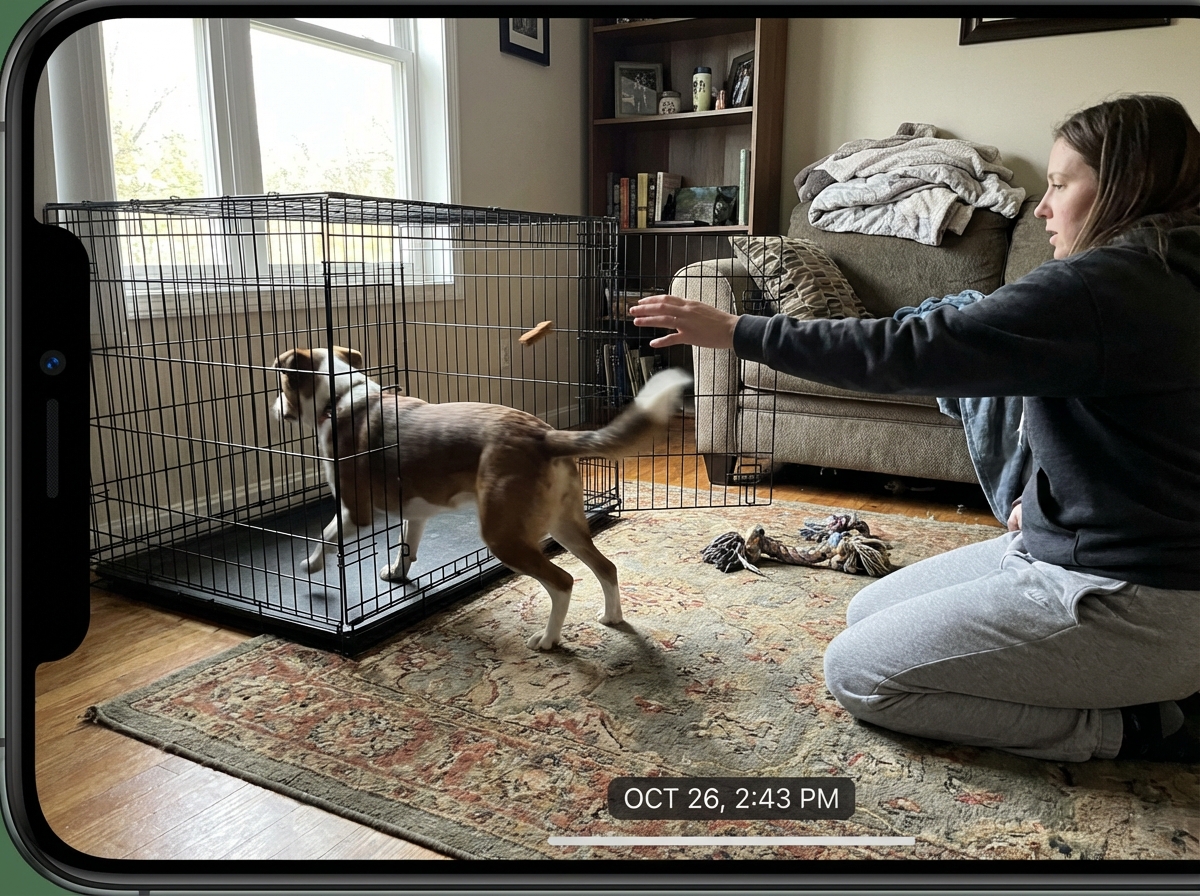
It is common for new owners to feel a pang of guilt when considering crate training, often worrying that confining their furry companion seems harsh or unnatural. However, when approached with the right mindset, a crate transforms into a sanctuary—a secure, private den where your dog can decompress and retreat from the hustle of the household.
Learning how to crate train a dog is genuinely one of the most generous gifts you can offer your pet, ensuring their safety during travel, accelerating the housebreaking process, and curbing destructive instincts when you cannot be there to supervise. Far from being a cage, a properly introduced crate taps directly into a dog’s instinctual desire to seek out small, protected shelters.
Whether you are bringing home a bouncy eight-week-old puppy or a rescue dog with a complicated history, the pillars of success remain the same: positive association, rock-solid consistency, and an abundance of patience. This guide is designed to walk you through the journey, ensuring the crate becomes your dog’s favorite retreat rather than a punitive space.
By sticking to these steps, you will establish a routine that benefits the entire household in 2025 and beyond.
Selecting the Best Dog Crate for Effective Training
Success starts with the right equipment, meaning you must carefully consider materials and dimensions to find the best dog crate for training. Wire crates are a frequent favorite because they offer superior ventilation and visibility, often featuring dividers that allow the space to expand as your puppy grows.
In contrast, plastic crates provide a more enclosed, den-like atmosphere that can soothe anxious dogs, while soft-sided crates are fantastic for travel but generally ill-advised for determined chewers or the early phases of training.
You might be asking yourself, What size crate do I need for crate training my dog? Sizing is a critical factor. The space should be just large enough for your dog to stand without crouching, turn around comfortably, and lie down fully extended.
If the crate is too cavernous, a puppy might soil one corner while sleeping in the other, which completely undermines your housebreaking efforts. For those still feeling apprehensive, asking Is it cruel to crate train a dog? is natural, but the answer is a resounding no.
Dogs are den animals by nature, and a correctly sized crate simply mimics that natural security. Location is equally important when introducing the crate. Position it in a high-traffic area like the living room so the dog does not feel banished or isolated.
The goal is to weave the crate into daily life, establishing it as a zone of reward. To help you grasp the broader picture of canine psychology and how tools like crates fit into a wider discipline strategy, it is helpful to review comprehensive dog training foundations before you begin.
Setting Up a Crate Training Schedule for Puppies
If puppies crave one thing above all else, it is a predictable routine. A solid crate training schedule for puppies relies on the biological reality that they should never be confined longer than they can physically hold their bladder.
A reliable rule of thumb for awake time is one hour out followed by two hours in for naps, though you will need to adjust this as they age. You may ask, Is crate training helpful for potty training a new puppy?
Yes, it is arguably the most effective tool at your disposal because dogs have an innate aversion to soiling their sleeping quarters. Your daily flow should alternate between ample playtime, potty breaks, meals, and crate rest.
Regarding provisions, owners often ask: Should I put food and water in my dog’s crate during training? Feeding meals inside the crate fosters a powerful positive association.
However, exercise caution with water bowls; while a specialized crate bottle is acceptable, an open bowl often leads to spills and a wet, miserable bed. Consistency allows the puppy to anticipate what happens next, which significantly lowers anxiety.
Every single time you release the puppy from the crate, take them immediately outside to their designated spot. This establishes a clear mental bridge between leaving the “den” and doing their business.
For a deeper understanding of bathroom logistics, you should familiarize yourself with the techniques for establishing clean housebreaking habits to ensure you aren’t making common rookie mistakes.
Understanding the Timeline: How Long to Crate Train a Dog
One of the most frequent questions from eager new owners is: How long does it take to crate train a dog? The timeline depends entirely on the dog’s unique temperament and history.
A confident puppy might accept the crate in a single weekend, whereas an older dog with negative associations could require weeks of slow desensitization. Ultimately, How long to crate train a dog isn’t about hitting a fixed deadline, but rather progressing at a pace the dog can handle.
Regarding duration, you also need to know how long can I safely leave my dog in a crate during the day? A standard guideline for puppies is their age in months plus one, calculated in hours.
For instance, a 3-month-old puppy can generally hold it for roughly 4 hours maximum. Adult dogs can usually manage a standard workday of 8 hours, provided they receive rigorous exercise before and after.
However, leaving a dog crated for more than 10 hours regularly is detrimental to their physical and mental well-being. Patience is truly your best ally here. Trying to rush the process often leads to regression.
Just as you wouldn’t expect a dog to master advanced obedience overnight, crate training is a skill that strengthens over time. It is similar to the patience required when teaching reliable recall commands, where rushing often leads to failure.
Make sure to celebrate small victories, like seeing your dog enter the crate voluntarily for a nap.
Tips for Successfully Crate Training Puppies at Night
Nighttime often proves to be the most challenging hurdle, but mastering crate training puppies at night ensures everyone eventually gets better sleep. To minimize distress, keep the crate in your bedroom for the first few weeks or months.
Hearing the rhythm of your breathing and smelling your scent reassures the puppy that they haven’t been abandoned in the dark. Many owners wonder, Should I cover the crate with a blanket at night?
Yes, for many dogs, this is a game-changer. Covering a wire crate—while ensuring proper airflow—blocks visual stimuli and creates a darker, cozier environment that signals “sleep time” to the canine circadian rhythm.
When considering comfort and asking what type of bedding is best for a puppy in a crate?, it is wise to avoid expensive beds initially if your puppy is a chewer. Use Vetbed or old towels that are easily washable and pose less danger if ingested.
The secret to a quiet night is invariably a tired dog. Mental and physical stimulation before bed is non-negotiable. A long walk is ideal, but if your walks are stressful because your dog is unruly, they won’t burn off enough energy.
Mastering skills like stopping leash pulling behavior will make these pre-bedtime walks more effective, ensuring your puppy is physically ready to settle down for the night.
Special Considerations for Crate Training an Older Dog
It is natural to ask: Can you crate train an adult dog that has never been crated before? Absolutely. Crate training an older dog just requires a slightly adjusted approach.
Unlike a blank-slate puppy, an adult dog might view confinement with suspicion or fear, especially if they are a rescue with a history of being trapped. You must proceed much slower, perhaps starting by just feeding them near the open crate door for several days before they ever step foot inside.
Never, under any circumstances, use the crate as punishment or a “sin bin.” This is crucial for adult dogs who need to view the crate as their ultimate safe zone.
Leave the door open during the day and hide high-value treats inside for them to discover on their own. The goal is to fundamentally shift their emotional response from suspicion to anticipation.
If your older dog displays intense panic, barrier frustration, or aggression when confined, standard crate training might not be immediately possible. These reactions can sometimes be linked to broader behavioral issues.
In cases where confinement triggers a fight-or-flight response, looking into methods for managing reactive behavioral issues can provide context on how to lower their arousal levels before attempting to close the crate door.
Troubleshooting: What to Do About a Dog Crying in the Crate at Night
Hearing a dog crying in crate at night is both heartbreaking and frustrating. How do I stop my puppy from whining in the crate? First, you must identify the cause.
Is it a genuine potty need, or is it a demand for attention? If they have been asleep for a few hours and wake up whining, they likely need to eliminate.
Take them out calmly, on a leash, with zero play or talking, and then put them straight back in. If the whining starts immediately upon entry, it is likely a protest meaning “I want to be on the bed!”
In this scenario, you must be made of stone. Acknowledging the whining—even to say “shush”—rewards the behavior with attention.
You can also use a “heartbeat toy” or leave a radio on low volume to soothe separation anxiety. Sometimes, the crying stems from confusion about having to “hold it.”
If you are unsure if the whining is physical urgency or behavioral, reviewing the basics of a puppy toilet training routine can help you distinguish between a genuine bathroom emergency and a test of your willpower.
Conclusion
Learning how to crate train a dog is a journey that pays dividends for the lifetime of your pet. It provides them with a psychological sense of security and gives you peace of mind knowing your home and your dog are safe when you cannot be there.
Whether you are dealing with a dog crying in crate at night or simply trying to figure out the right schedule, remember that consistency is your greatest tool.
By making the crate a place of high value—filled with treats, meals, and comfort—you transform a metal box into a beloved bedroom. Keep your training sessions short, positive, and devoid of frustration.
With time, you will likely find your dog voluntarily curling up in their crate for a nap, proving that they see it not as a cage, but as their own personal castle.