
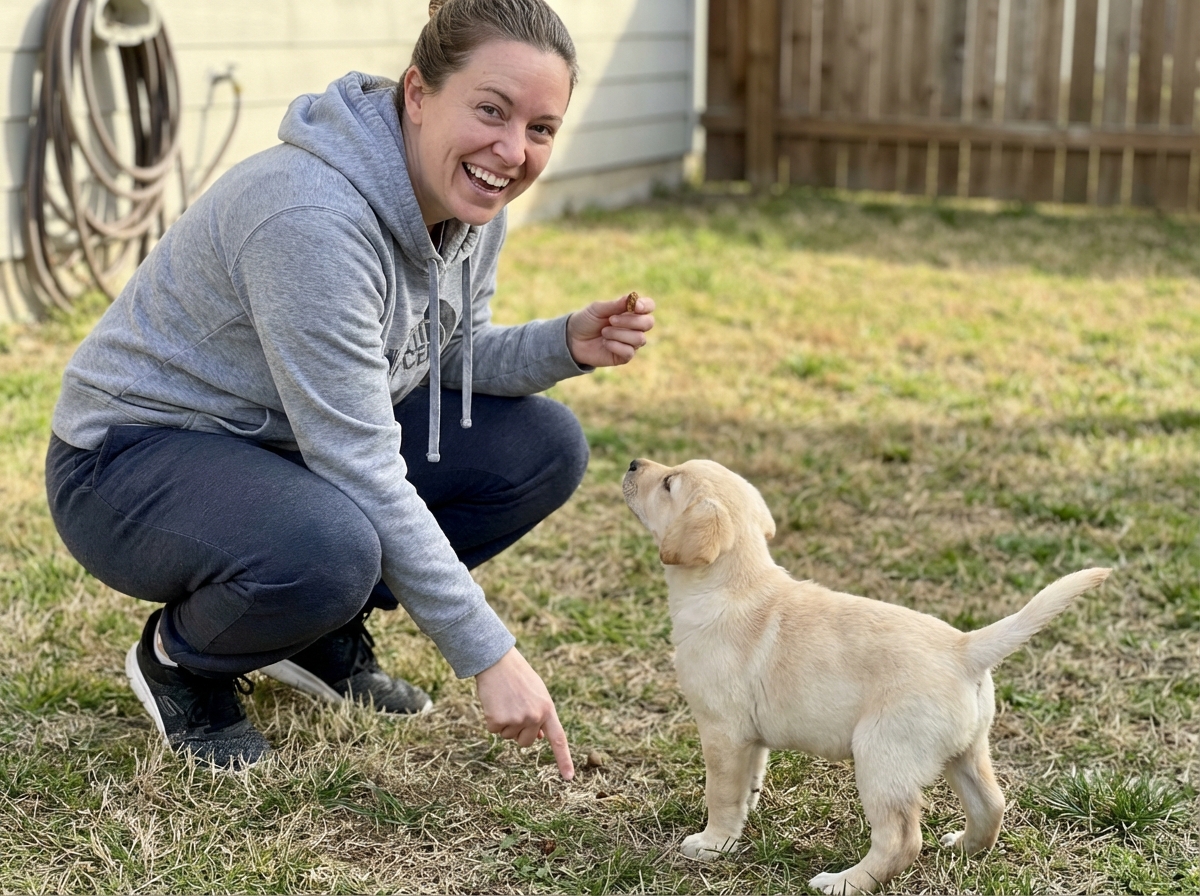
We are all familiar with those alluring, clickbait headlines promising immediate miracles, but we have to ask ourselves: is housebreaking a puppy in 7 days actually a realistic goal? The honest answer hinges entirely on how you choose to define “housebroken.”
Within the span of a single week, you can absolutely cement a solid routine and significantly slash the accident rate by teaching your new companion the fundamental concept of where the bathroom is located. However, biological maturity plays the lead role in this drama, and nature cannot be rushed.
At what age should you start potty training a puppy? Ideally, you should begin the education process the moment they cross your threshold, which typically happens around 8 weeks old. Yet, we must remember that full bladder control is a developmental milestone that takes time to achieve, much like learning to walk.
While you can instill the habit in a week, expecting a young dog to be perfectly reliable without your constant supervision is setting yourself up for frustration. At what age are most puppies fully potty trained?
Most dogs achieve true physiological reliability between 4 to 6 months of age, though it is worth noting that some stubborn breeds may take up to a year to fully master the skill.
It is crucial to approach this process with an understanding of the biological limitations of your little companion. A widely accepted guideline suggests that a resting puppy can hold their bladder for one hour for every month of their age, plus one.
Consequently, a two-month-old puppy provides a safety window of roughly three hours, but this applies strictly when they are resting. During moments of active play or excitement, that window shrinks dramatically.
By understanding the principles of successful housebreaking methods, you can align your expectations with your dog’s physical capabilities, thereby reducing the stress levels for both parties involved.
The Fastest Way to House Train a Puppy Starts With Routine
If you are looking to discover the fastest way to house train a puppy, the secret ingredient is establishing a strict, unwavering schedule. Dogs are naturally creatures of habit who find comfort and security in predictability.
Your puppy needs to understand that there are specific, non-negotiable times for eating, playing, sleeping, and eliminating. Without a schedule to guide them, you are essentially asking your dog to guess your intentions, a strategy that inevitably leads to confusion and messes on the floor.
How often should I take my puppy out to potty? As a baseline strategy, take them out first thing in the morning when the sun comes up, last thing at night before bed, and immediately after every meal, nap, or vigorous play session.
For very young puppies, this might translate to a trip outside every 30 to 60 minutes. You must also become an expert observer of your dog’s body language.
How do I know when my puppy needs to go outside? Watch closely for the tell-tale signs: abrupt sniffing of the floor, frantic circling in one specific spot, or simply wandering away from the center of family activity.
When learning how to potty train a puppy, supervision remains your most valuable tool. If you cannot supervise your puppy 100% of the time, they should remain in a safe, confined area to prevent mistakes.
This approach is often called the “umbilical cord” method—essentially keeping the puppy on a leash attached to you or your furniture so they cannot wander off to soil a distant corner. This level of close supervision facilitates positive reinforcement which is a cornerstone of current dog training methodologies.
By catching them in the act of proper elimination, you can reward them immediately, reinforcing exactly the behavior you want to see repeated.
Establishing a Crate Training Schedule for Potty Training Success
Using a crate is arguably the most effective instrument in your training arsenal. A properly executed crate training for potty training schedule leverages a dog’s natural instinct as a den animal; they instinctively desire to keep their sleeping area clean and free of waste.
Can I use a crate to speed up potty training? Absolutely. The crate prevents the puppy from wandering off to soil the house when you aren’t looking and encourages them to hold their bladder until you release them to the appropriate spot.
The daily schedule should feel rhythmic and circular: Crate (nap) -> Immediately Outside (potty) -> Free Time (supervised play) -> Back in Crate.
If you take the puppy out and they do not relieve themselves, they should go back into the crate for 10-15 minutes before you attempt the process again. This strategy effectively prevents the classic, frustrating scenario where they come inside and immediately relieve themselves on the living room rug.
It is vital to prioritize how to potty train a puppy using the crate as a safe haven, rather than a punishment cell. The crate should be just large enough for the dog to stand, turn around, and lie down comfortably.
If it is too cavernous, they might decide to use one corner as a bathroom and the other as a bedroom, defeating the purpose. Understanding the nuances of crate training mechanics ensures you are using this tool to build confidence and security rather than anxiety.
Choosing the Best Method: Puppy Pads vs Outside Potty Training
Owners often debate the merits of puppy pads vs outside potty training. Should I use puppy pads or go straight to outside? The answer depends largely on your specific living situation and the vaccination status of your dog.
Ideally, training your puppy to go outside from day one is the gold standard approach. It teaches the dog unequivocally that the concept of “indoors” is for living, while “outdoors” is the designated space for elimination.
The issue is that puppy pads can sometimes muddy the waters for dogs. Essentially, you are teaching them that it is acceptable to pee on a soft, rectangular surface inside the house.
Later, this lesson can unfortunately translate to them peeing on bath mats or area rugs because the texture feels confusingly similar under their paws. However, pads are sometimes necessary for unvaccinated puppies in high-risk parvo areas or for owners dealing with limited mobility.
If you find you must use pads, try to place them near the door to eventually transition the habit outdoors. If you can go straight to outdoor training, stick with it, as it clarifies the rules significantly.
When they go outside, praise them lavishly with treats and affection. This utilizes the psychological principle of positive reinforcement, making it more likely the behavior will be repeated. The goal is to make the act of eliminating outside the most rewarding part of their whole day.
Tips for Potty Training a Puppy in an Apartment With No Yard
Learning how to potty train a puppy presents unique challenges for city dwellers living in high-rises. Potty training puppy apartment no yard scenarios require tight logistics and impeccable timing.
By the time you get your shoes on, call the elevator, and descend to the ground floor, it might essentially be too late. In these cases, you might need to carry your puppy from your door all the way to the designated relief spot to prevent accidents in the hallway.
Many apartment dwellers find success using a fresh grass patch on a balcony. This solution bridges the gap between pads and the outdoors, as the dog learns to associate the scent and texture of real grass with potty time.
Routine becomes even more critical in these environments. You cannot just open a back door casually; you have to plan your trips purposefully.
How long does it realistically take to potty train? In an apartment setting, the process might take slightly longer simply due to the logistical delay involved in getting outside.
Be patient with yourself and your dog. Consistency remains key. If you are struggling with the concept of indoor vs. outdoor zones in a small space, reviewing resources on general animal housebreaking habits can offer additional strategies for spatial management in confined environments.
Essential Nighttime Potty Training Puppy Tips and Accident Prevention
Sleep deprivation is a real struggle for new owners, but implementing specific nighttime potty training puppy tips can help everyone get more rest. To prevent accidents at night, pick up the water bowl about two hours before bedtime.
This simple step ensures the puppy goes to sleep with an empty bladder. What is the fastest and most effective potty training method? At night, it acts as a “strictly business” approach.
When the puppy cries to go out, keep the lights low, do not speak, carry them out, let them go, and put them immediately back to bed without any playtime.
Despite your best efforts, messes happen. What should I do when my puppy has an accident inside? Never scold a puppy for an accident you didn’t see happen; they won’t typically connect the punishment to the action.
Just clean it up calmly. Use an enzymatic cleaner to break down the proteins effectively; otherwise, the dog will smell the microscopic residue and likely mark the spot again.
If you find yourself asking, “Why does my potty trained puppy still have accidents?“, consider a few potential factors. It could be a urinary tract infection (UTI), anxiety, or a simple disruption in their routine.
Regression is also normal in adolescence (around 6-10 months). Keep in mind that consistent changes in canine behavior patterns often signal a medical or environmental issue rather than stubbornness, so consult a vet if regression persists.
Ultimately, mastering how to potty train a puppy is not about flawless execution from day one, but about building a language of communication between you and your pet. It is a temporary phase that sets the foundation for a lifetime of clean floors and mutual trust.
Stick to the routine, celebrate the small successes, and remember that every accident is just a lesson in timing for next time.