
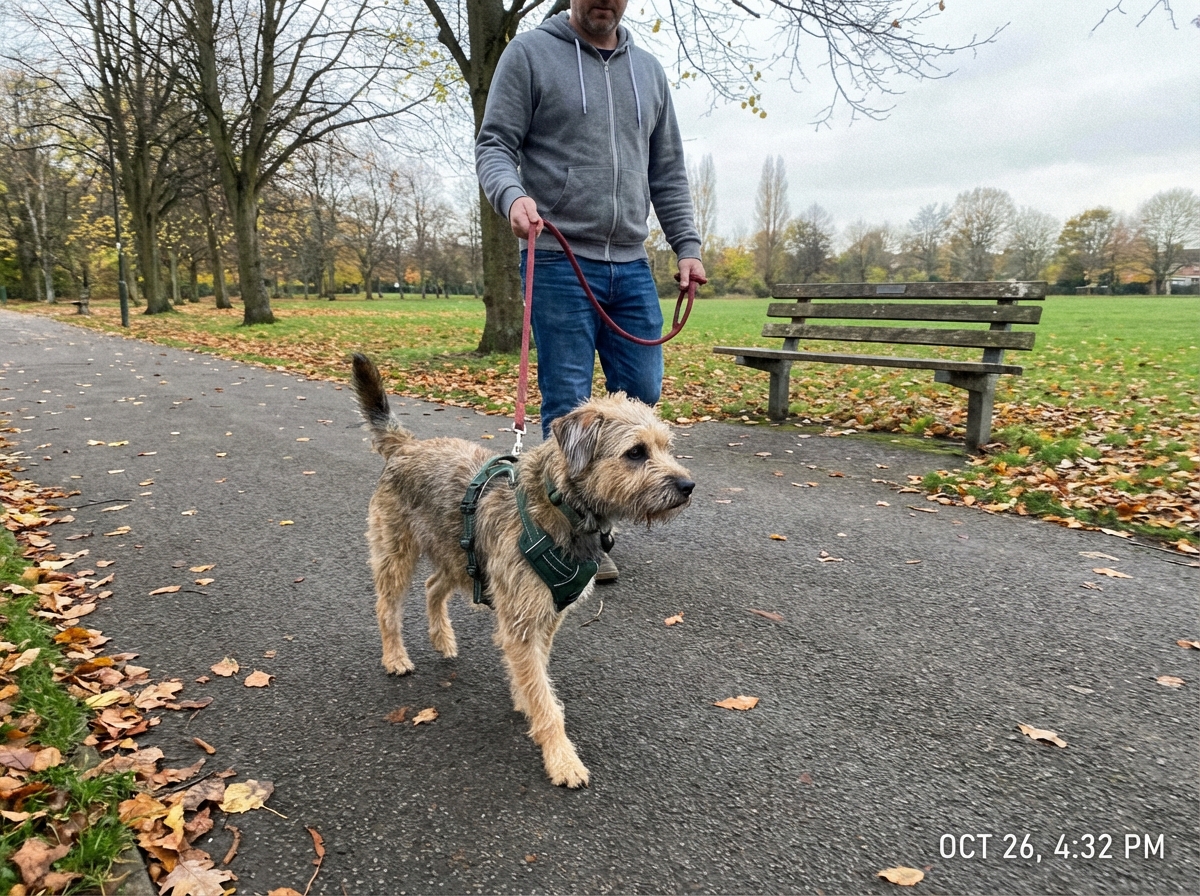
We all cherish the mental image of the perfect daily walk: a relaxing bonding moment where you and your four-legged companion stride through fresh air in perfect sync. The reality, however, often feels less like a partnership and more like a chaotic game of tug-of-war, resulting in sore shoulders and mounting frustration for many pet parents.
If you spend your mornings acting as a counterweight while being dragged down the sidewalk, take comfort in knowing you aren’t alone. In fact, finding effective, humane strategies for how to stop dog pulling on leash remains one of the most widespread behavioral hurdles owners face in 2025.
It is crucial to remember that walking politely on a tether is a learned skill rather than an innate personality trait. Whether you are handling an exuberant puppy or managing a determined senior dog, change is absolutely possible.
In this guide, we will explore practical techniques, the necessary gear, and the psychology behind why our canine companions rush ahead, helping you transform those chaotic outings into the peaceful strolls you deserve.
Understanding Why Your Dog Pulls So Hard on Walks
To effectively address the behavior, we first need to grasp the motivation driving it. Many owners find themselves asking, “Why does my dog pull on the leash so much?”, often worrying that it stems from dominance or a desire to be the “alpha.”
The answer, however, is rarely about status; it is primarily about a simple discrepancy in pace. Humans naturally walk at roughly 3 miles per hour, whereas the comfortable trotting pace of most dogs is significantly faster. They aren’t trying to annoy you; they are physically wired to move quicker than we do.
Moreover, our dogs are profoundly driven by their noses, viewing the environment as a buffet of exciting smells, squirrels, and potential friends. When a dog pulls and you continue to walk forward, you are inadvertently rewarding the behavior.
Essentially, you have taught them that tension on the leash is the mechanism that propels them toward the desires of their heart. This helps explain why does my dog pull so hard on walks—quite simply, it works for them. By dragging you, they get to investigate that tree or greet that stranger faster.
There is also a physiological reaction known as the “opposition reflex,” a concept frequently discussed in animal behavior. When a dog feels pressure against their chest or neck, their instinct isn’t to yield to it, but to push against it to maintain their biological balance.
This explains why pulling back on the leash often causes your dog to pull harder in the opposite direction. Understanding that this is a natural physiological response, rather than willful disobedience, is the first step toward better walks.
Choosing the Best No-Pull Harness and Essential Gear
Having the right tools in your arsenal can make the training process significantly easier and safer. While training is 90% technique, the remaining 10% relies on equipment that facilitates better communication.
A common question arises: “Is a no-pull harness better than a collar for pulling?” In almost every instance, the answer is yes. Walking a heavy puller on a flat collar can place dangerous amounts of pressure on the trachea and neck, potentially causing long-term physical injury.
To effectively manage a strong dog, you need to search for the best no-pull harness that actually works for your specific pet. It is advisable to avoid back-clip harnesses for training purposes, as these often trigger that opposition reflex mentioned earlier, essentially turning your dog into a sled dog.
Instead, opt for a front-clip harness. The mechanics here are crucial: when the dog pulls, the front attachment redirects their momentum back toward you, making it physically difficult for them to continue dragging you forward.
Naturally, conscientious owners often worry and ask, “Do no-pull harnesses actually work or are they harmful?” Front-clip harnesses are generally safe and highly effective when fitted correctly. They do not cause pain; they simply alter the mechanics of the walk.
However, you should avoid harnesses that restrict shoulder movement, often called “norwegian” style harnesses, which sit across the shoulder blades. For extreme pullers, a head halter can be a valid option, though it requires a dedicated acclimatization period to be accepted by the dog.
How to Teach Loose Leash Walking Effectively
Mastering how to teach loose leash walking requires a commitment to consistency and clear criteria. The goal here isn’t a rigid military-style march, but simply walking with a “J” shape in the leash—meaning there is visible slack.
A popular and effective technique is the “Stop and Be a Tree” method. The moment you feel tension on the leash, you must stop immediately. Do not yank the dog back; just stand completely still.
Wait for the dog to look back at you or take a step toward you to release the tension. Once the leash is loose, praise them and continue walking.
You might wonder “What is the fastest way to stop leash pulling?” Truthfully, there is no magic button, but providing high-frequency rewards speeds up the process immensely. You simply need to become more interesting than the environment.
Use the “mark and reward” system: as you walk, if the leash is loose, say “Yes!” (or click) and deliver a treat right at the seam of your pant leg. This teaches the dog that proximity to you is profitable.
Regarding rewards, people often ask, “What treats should I use for leash training?” It is time to ditch the dry kibble. You are competing with squirrels and other dogs, so you need high-value currency to hold their attention.
Small pieces of boiled chicken, cheese, or hot dogs generally work best. The environment is highly distracting, so the payout for paying attention to you needs to be substantial. If your dog isn’t accepting treats, the environment might be too overwhelming, and you may need to practice in a quieter location first.
Mastering the Heel Command Step by Step
It is important to distinguish between casual walking and a legitimate “heel.” Owners frequently ask, “What is the difference between heel and loose leash walking?” Loose leash walking allows the dog to sniff and explore as long as they don’t create tension.
“Heel,” however, is a focused command where the dog must walk consistently by your side, usually the left, ignoring distractions with their shoulder aligned with your leg. This is particularly useful for passing other dogs or navigating crowded streets.
When approaching heel command training step by step, start indoors to minimize distractions. Begin by luring your dog; hold a high-value treat in your hand at your dog’s nose level on the side you want them to walk.
Take a few steps while luring them, and if they follow smoothly, mark “Yes” and give the treat. Once they are reliably following your hand, you can add the cue by saying “Heel” just before you start moving.
Finally, fade the lure by gradually stopping the habit of holding the treat in your hand; keep it in your pocket instead, only rewarding after a few successful steps.
This type of structured training relies heavily on operant conditioning, where the dog learns that maintaining a specific position results in a positive outcome.
Leash Training Strategies for Puppies and Adult Dogs
The approach to training varies slightly depending on your dog’s life stage. Leash training a puppy that pulls is often about shaping a new behavior on a blank slate.
Puppies have inherently short attention spans, so keep sessions brief—just 5 to 10 minutes—and fun. If you have a puppy, starting early is the best way to prevent the habit from forming in the first place.
Conversely, leash manners training for adult dogs involves breaking an ingrained habit. People often doubt the process, asking, “Can you teach an older dog to stop pulling on leash?”
Absolutely. Old dogs can learn new tricks, but it requires more patience because you are overwriting years of muscle memory. With adult dogs, you may need to use higher value rewards and be stricter with your criteria, never letting pulling succeed in getting them where they want to go.
A common challenge is managing the environment. “How do I practice leash training in busy areas?” The secret is gradual progression. Start in your living room, move to your backyard, and then try a quiet street.
Only move to busy areas when your dog has mastered the skill in quiet ones. If you go straight to a festival or a crowded park, your dog will be over threshold and unable to learn. This gradual increase in difficulty avoids setting your dog up for failure.
Consistency and Patience: The Key to Leash Manners
If you are wondering “How long does it realistically take to leash train a dog?”, the answer depends on the dog’s history and your personal consistency. It can take anywhere from a few weeks to several months.
The most common reason for failure is inconsistency. If you let your dog pull on Tuesday because you are in a rush, but correct them on Wednesday, the dog will be confused and will continue to test the boundaries.
You might find yourself asking, “Why does my dog still pull even after weeks of training?” This is often due to an “extinction burst.” When a behavior that used to work—like pulling—stops working, the dog might try it harder and more frantically before giving up.
It’s their way of asking, “Hey, this usually works, is the button broken?” If you give in during this burst, you unwittingly train them to pull harder.
Stay the course. Learning how to stop dog pulling on leash is a marathon, not a sprint. Celebrate small victories, like a loose leash walk to the mailbox, and remember that every calm step is an investment in a lifetime of enjoyable walks together. With clear communication and patience, you will eventually have a dog that walks happily by your side.