
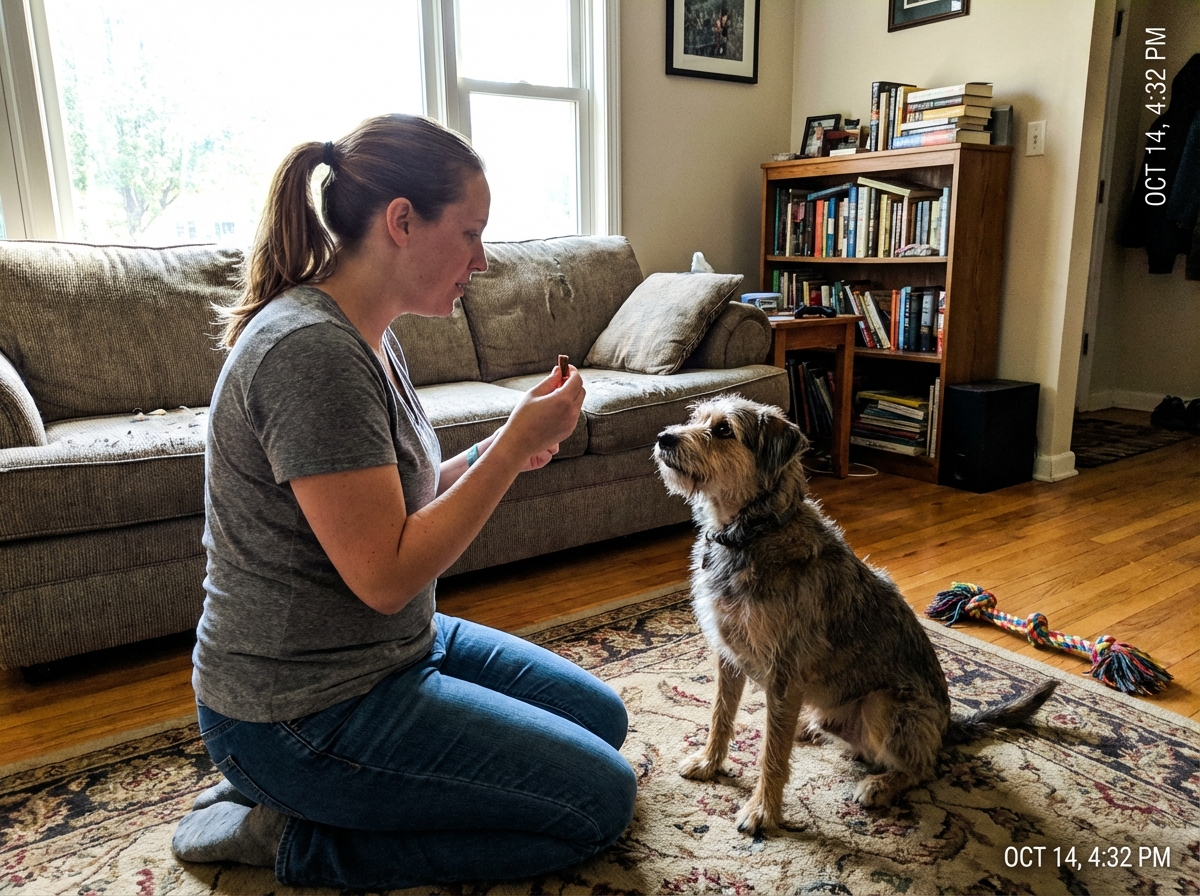
Bringing a new four-legged partner into your life creates moments of pure joy, even if it inevitably introduces a unique set of challenges to your daily routine. Truly understanding how to train a dog extends far beyond the novelty of teaching them to shake hands; it is essentially about establishing a shared language that ensures safety, builds deep trust, and fosters a serene household.
Whether you are channeling the chaotic energy of a spirited puppy or helping an older rescue navigate a new world, the recipe for success relies on the same ingredients: patience, absolute consistency, and clear direction. By learning to interpret the world from your dog’s perspective, you can convert potential localized chaos into a genuine partnership where your dog looks to you for guidance rather than reacting impulsively to every stimulus.
Understanding the Power of Positive Reinforcement
When experts discuss modern behavioral protocols, we are almost exclusively referring to methods that encourage the dog to be an active, willing participant in their own education. A question frequently posed by new guardians is: Is positive reinforcement better than dominance training? The answer is a definitive yes.
Outdated dominance theories have been largely dismantled by behavioral science; instead of wasting energy on a confrontational struggle for “alpha” status, you are far better off rewarding the specific behaviors you want to see repeated. This philosophy, which anchors any reputable positive reinforcement dog training guide, operates on the simple premise that actions followed by a pleasant outcome will naturally happen more often.
To make this mechanism work, you need motivation, which brings us to the “salary” you pay your dog: treats. You might find yourself asking, What are the best high-value treats for dog training? while dry kibble works for easy tasks in a boring living room, high-stakes learning demands a higher payout.
think along the lines of soft, smelly options like freeze-dried liver, tiny cubes of cheese, or plain boiled chicken. By utilizing these premium rewards, you effectively use operant conditioning to build a powerful neurological bridge between a specific action and a delightful consequence, making the learning curve steeper and the entire process far more enjoyable for your dog.
Essential Puppy Training Tips for First-Time Owners
Navigating those first few months with a young dog can feel like managing a small whirlwind, but establishing a routine early is the secret to lifelong harmony. What is the best age to start training a puppy? Ideally, the process begins the moment they trot through your front door, generally around 8 weeks of age.
At this stage, puppies are essentially little sponges for information. While they may not have the discipline for long, formal classes, they are actively decoding how their world works every waking second. applying smart puppy training tips for first time owners right away helps prevent frustrating habits from taking root before they ever really begin.
That said, enthusiasm needs to be tempered to avoid burnout for both parties. How many minutes a day should I train my dog? It is far more effective to keep sessions short and sweet—aim for 5 to 10 minutes, perhaps two or three times a day.
Young dogs have notoriously short attention spans, and pushing past their limit only leads to mutual frustration. Owners also often wonder, “How many weeks does it take to fully train a dog?” The honest truth is that training is a lifelong journey, not a final destination. While the basics might click in a few weeks, generalizing those behaviors so they work in different environments requires months of steady reinforcement.
An Introduction to Clicker Training for Beginners
One of the most precise tools in a handler’s kit is the clicker. While Clicker training for beginners can feel a bit like a coordination test at first, it offers incredible clarity in communication. The clicker is simply a small mechanical box that makes a distinct sound, acting as an “event marker.”
It tells the dog that the exact thing they were doing the split-second they heard the sound is what earned them the reward. Without this marker, your dog might be left guessing why the treat appeared. Did they get it because they sat, or because they sniffed the ground a second later?
The clicker bridges that gap between the action and the food, creating instant understanding. When learning how to train a dog with this method, you first “load” the clicker by clicking and treating repeatedly, so the dog learns that the sound equals food. Once that association is locked in, you can capture complex behaviors with split-second timing, speeding up the process significantly. For deeper context on this approach, you can explore the history of clicker training.
Mastering Basic Obedience Training at Home
You certainly don’t need a fancy academy to see real progress; basic obedience training at home is often the superior starting place simply because it offers a quiet, controlled environment. A common worry is, “Can I train my dog at home without a trainer?” Absolutely.
in fact, working with your dog personally does wonders for strengthening the bond between you. The strategy is to control the environment to guarantee success before you gradually introduce the chaos of parks or sidewalks. People naturally look for efficiency, asking, “What is the easiest and fastest way to train a dog?”
The only real shortcut is ironclad consistency. If “down” means “lie on your belly” today, it cannot mean “get off the sofa” tomorrow. How do I know if my dog training is working? You will know it is effective when your dog responds to cues the first time you ask, even when there are mild distractions present. If you find yourself chanting a command three times, the dog isn’t fully trained yet; they are simply gambling on whether you are actually serious this time.
Teaching Essential Dog Commands Every Dog Should Know
While teaching tricks like “shake” or “roll over” is fun, there are essential dog commands every dog should know purely for safety reasons. These critical cues include Sit, Stay, Come (Recall), Down, and Leave It. A rock-solid recall can quite literally save your dog’s life if they bolt toward a busy street, just as “Leave It” prevents them from swallowing dangerous items on a walk.
When teaching these, you might hit a wall and wonder, “Why does my dog ignore me during training sessions?” Usually, if a dog tunes you out, the environment is too exciting, or the “paycheck” (the treat) isn’t high enough for the work you are asking them to do.
If you are in a bustling park and your dog ignores a “Sit” cue, you are competing against squirrels, other dogs, and a thousand interesting smells. To win their focus, you must either increase the value of the reward or move further away from the distraction. Mastering how to train a dog involves constantly managing these variables to set your dog up for a win.
How to Fix Bad Dog Behavior Effectively
Even with the best start, behavioral hiccups can pop up. Understanding how to fix bad dog behavior like jumping on guests, nuisance barking, or chewing furniture requires a shift in mindset. Instead of just shouting “No,” you must tell the dog what they should do instead.
If your dog jumps on visitors, teach them that sitting is the only way to unlock attention. This is called “incompatible behavior”—physically, they cannot be jumping up if their rear end is firmly on the floor. Sometimes, however, the issues run deeper than simple manners.
When should I hire a professional dog trainer? You should seek expert guidance if your dog shows signs of aggression, such as growling or snapping at people or animals, or demonstrates severe distress like separation anxiety. These are complex emotional states, not just training gaps. While you can handle behavior modification for minor annoyances at home, dangerous behaviors require a professional eye to keep everyone safe.
Conclusion
Learning how to train a dog is a journey that asks for empathy, consistency, and a healthy sense of humor. Whether you are polishing up basic obedience training at home or trying to correct a pestering habit, remember that your dog generally wants to please you—they just need to understand exactly what it is you want.
By using positive reinforcement and keeping your communication clear, you build a relationship grounded in trust rather than fear. Take it one day at a time, celebrate the small victories, and genuinely enjoy the process of helping your dog become the best companion they can be.