
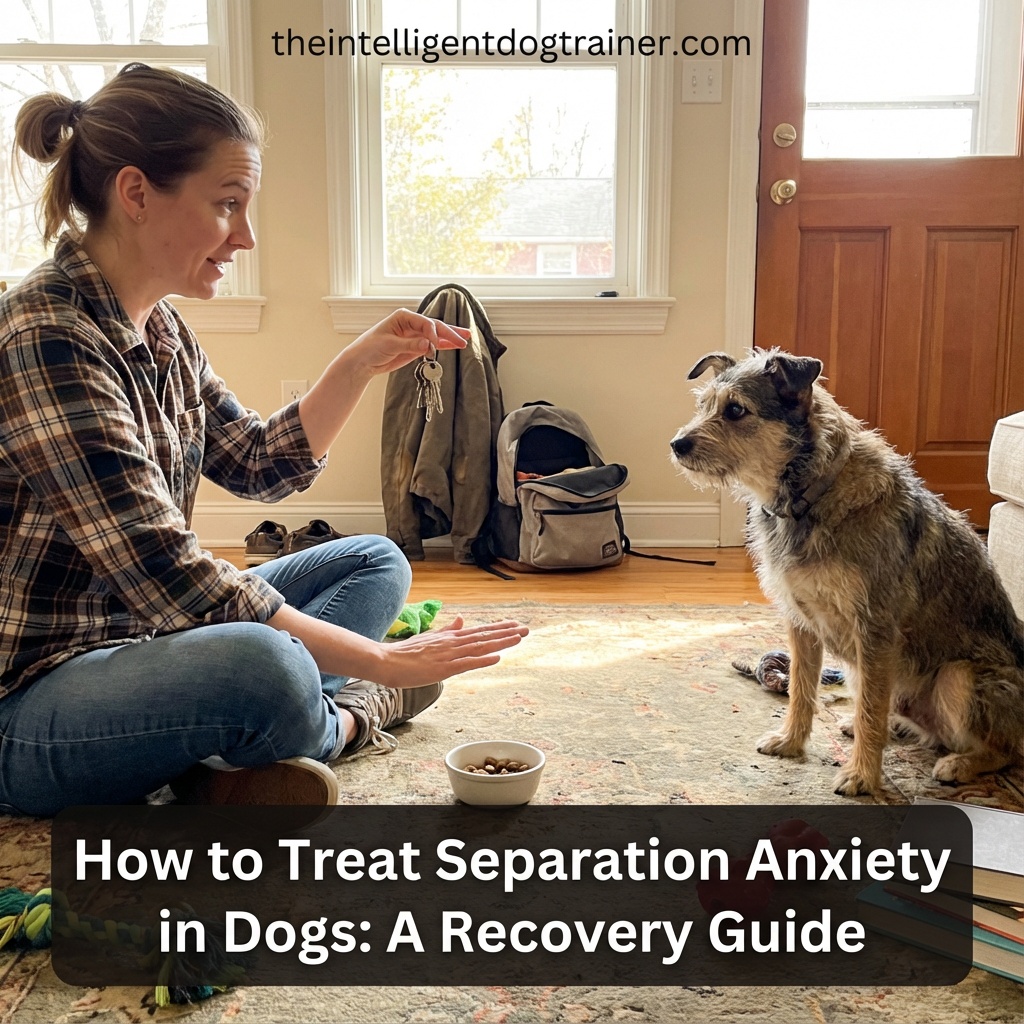
Watching your dog dissolve into a state of blind panic the moment you reach for your car keys is a truly draining experience, leaving most pet owners feeling both helpless and emotionally exhausted.
It is crucial to recognize that separation anxiety isn’t just a “bad habit” or a sign of poor discipline—it is a legitimate clinical panic disorder. In these moments, a dog isn’t being difficult; they are experiencing genuine terror at the prospect of being left behind.
As we move through 2026, our collective understanding of canine psychology has moved away from outdated dominance theories toward more empathetic, science-based protocols.
This guide provides a comprehensive roadmap to help you treat separation anxiety in dogs by focusing on independence through patience and clinically grounded techniques.
Identifying dog separation anxiety symptoms and triggers
The first step toward a calmer household is learning to accurately read the specific dog separation anxiety symptoms your pet displays.
You might notice destructive behavior aimed specifically at doors or windows, excessive drooling, or vocalizations that start the second the deadbolt clicks. What are the common signs of separation anxiety in dogs?
While frantic howling is the most obvious signal, keep an eye out for more subtle cues like incessant pacing, heavy panting, or “accidents” from an otherwise perfectly house-trained pet.
Experts often distinguish between true separation anxiety, which involves a hyper-attachment to one specific person, and isolation distress, a broader fear of being alone regardless of who is in the room. What is the difference between isolation distress and separation anxiety?
Simply put, isolation distress is often easier to manage because the dog remains relaxed as long as any human presence provides a sense of security.
Triggers are the small, everyday signals that tip your dog off to your departure—think of the sound of your keys or the sight of you pulling on a coat.
If your dog begins to shake or follows you like a shadow as you prepare for work, they are likely experiencing “pre-departure anxiety.”
To make real progress, you must learn how to help a dog with separation anxiety by identifying these environmental cues and systematically uncoupling them from the act of leaving.
As highlighted by Wikipedia, these behaviors are involuntary physiological responses, not calculated acts of spite or revenge.
Distinguishing separation anxiety vs boredom in dogs
It is vital to figure out if you are dealing with separation anxiety vs boredom in dogs, as the solution for one rarely works for the other.
A bored dog might chew a remote because it’s a fun way to burn off energy, whereas an anxious dog might literally shred a doorframe in a frantic attempt to find you.
Timing is a great diagnostic tool: if the damage happens three hours after you leave, it’s likely boredom. If the chaos erupts within the first fifteen minutes, anxiety is almost certainly the cause.
Can exercise help reduce anxiety during departures? While mental and physical activity are essential for any healthy dog, exercise isn’t a “cure” for a panic disorder, though it does provide a necessary foundation for a more relaxed baseline.
If the issue is boredom, your focus should be on enriching their environment. Providing mental stimulation for dogs—such as scent work or brain-teasing puzzles—can tire them out and encourage rest.
For under-stimulated dogs, you’ll usually see a quick improvement once their cognitive needs are met.
However, if they remain distressed despite a two-hour hike and a fresh puzzle toy, you are likely dealing with a deep-seated emotional struggle that requires a more targeted behavioral strategy.
Using desensitization training for dogs to build confidence
The gold standard for treating fear-based issues remains a structured program of desensitization training for dogs.
This process involves exposing your dog to a “micro-dose” of their fear—like just standing near the exit for a few seconds—and slowly increasing the duration, but only as long as the dog stays relaxed.
The secret is keeping them “under threshold,” which is the state just before panic takes over. How long does it take to resolve separation anxiety in dogs?
There isn’t a one-size-fits-all timeline; every dog progresses at their own speed, and trying to rush the process can lead to frustrating setbacks.
Building lasting confidence is about celebrating tiny, incremental breakthroughs. You can effectively train a fearful dog by rewarding calm, settled behavior in all areas of life, not just when you’re heading for the door.
Is separation anxiety common in senior dogs or puppies? Absolutely; puppies may lack the life experience to feel safe alone, while seniors might experience increased anxiety due to cognitive decline or the loss of their primary senses.
Consistency is the engine of success here, ensuring your dog never feels overwhelmed by a task that is too difficult.
Effective counter conditioning dog training techniques
While desensitization lowers the intensity of a reaction, counter conditioning dog training aims to flip the dog’s emotional script entirely.
The goal is to take a scary event (your departure) and pair it with something wonderful (like a high-value treat). Can I use food puzzles to help with separation anxiety?
For dogs with mild stress, a specialized food toy can help create a positive association with you leaving.
However, in severe cases, many dogs are too stressed to even look at food—a clear sign that the anxiety level must be lowered through desensitization before food rewards can do their job.
The ultimate objective is a dog that sees your departure cues as a signal that something good is coming.
By using positive reinforcement dog training, you teach them that being alone leads to a favorable result.
Over time, that inner feeling shifts from panic to calm indifference or even anticipation.
This method works best with “special-tier” rewards that are only available when you are gone, making your absence feel more like a special treat than a loss.
How to simulate departures for dog training success
To effectively treat separation anxiety in dogs, you have to break the habitual cycle of fear.
A great way to do this is to simulate departures for dog training without actually going anywhere. This “cue-busting” involves things like picking up your keys and then sitting down to read, or putting on your boots to make breakfast.
After enough repetitions, these sounds lose their power to predict a departure. What should I do if my dog barks constantly when I leave?
Frequent, ultra-short simulations help desensitize the dog to the “trigger,” showing them that these cues don’t always end in hours of isolation.
The next step is often called “door-dashing” in reverse: stepping outside for just a second and returning before your dog has a chance to worry.
You want to teach a dog to wait at the door while you keep your energy neutral and “boring.”
Eventually, you can grow these absences from seconds to minutes, and then to much longer periods. Will getting a second dog cure my dog’s separation anxiety?
Generally, no. If the anxiety is specifically tied to their connection with you, a second dog typically offers little comfort and can even become stressed by the first dog’s panic.
Selecting appropriate calming aids for anxious dogs
Sometimes, training alone can’t quite break through a full-blown panic attack, and calming aids for anxious dogs can provide necessary physiological relief.
These range from pheromone diffusers and weighted vests—utilizing the principles of deep pressure—to prescription options discussed with a vet.
Should I crate my dog if they have separation anxiety? This is a personal call; some dogs feel trapped and may hurt themselves trying to escape, while others find peace in a “den” environment.
It’s usually best to crate train a dog with great patience to see if it helps them feel secure or increases their stress.
Never hesitate to ask for help from a veterinarian or a certified trainer. When should I consult a professional for dog separation anxiety?
If your dog is injuring themselves, causing major damage, or if you aren’t seeing progress after several weeks of work, it’s time for an expert opinion.
They can help decide if medication is needed to “lower the ceiling” of your dog’s panic, creating the mental space for real learning to happen. Combined with smart training, these tools can help a terrified dog grow into a confident, independent companion.
In summary, managing separation anxiety requires a multi-layered approach that targets specific triggers, distinguishes panic from boredom, and leans on desensitization.
By simulating departures and using the right calming supports, you create a safe world where your dog learns that being solo isn’t a threat.
Ultimately, your patience and consistency are the keys to replacing your dog’s distress with a sense of peaceful independence.