
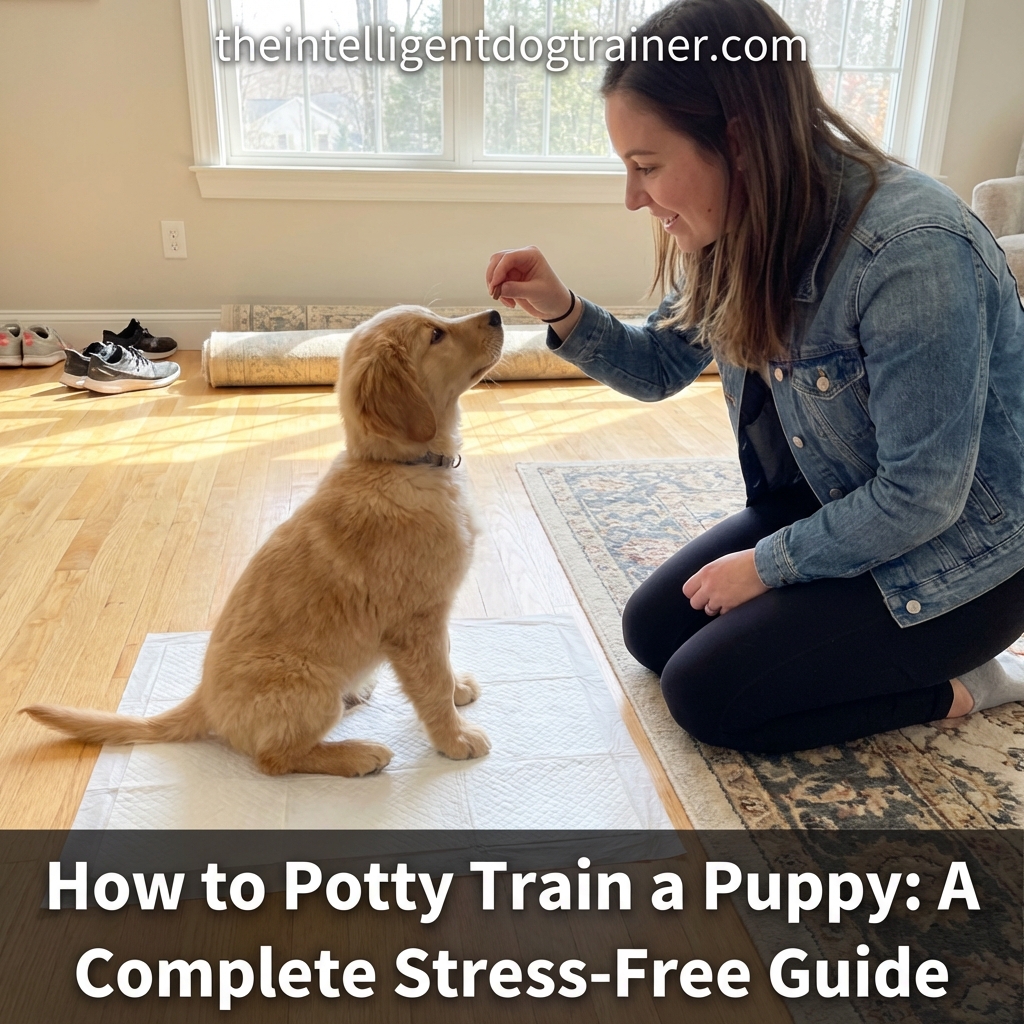
Bringing a new puppy into your life is easily one of the most joyful experiences you can have, though it does come with a significant, immediate challenge: explaining the difference between the living room rug and the backyard.
Successfully learning how to potty train a puppy requires a sensitive blend of endless patience, sharp observation, and a basic understanding of how a young dog’s body works.
As we look ahead to 2026, the aim is to raise a dog that is a model of household etiquette, a process that relies on a well-structured approach. This guide offers a professional yet warm roadmap to help you maneuver through those inevitable “accident phases” with grace, keeping your home clean while ensuring your pup feels secure and confident.
Establishing a Consistent Puppy Potty Training Schedule
The true secret to success when you potty train a puppy lies in the power of a predictable routine.
Dogs are absolute creatures of habit, and puppies especially thrive on a steady rhythm because their digestive systems tend to work with almost mechanical regularity.
Experts in the field usually recommend a puppy potty training schedule that lines up with their physical growth; a solid rule of thumb is that a puppy can usually hold their bladder for about one hour for every month they’ve been alive.
To get ahead of any potential messes, make it a habit to take your puppy outside as soon as they wake up, after every single meal, following their naps, and right before the household settles in for the night.
How often do I need to take my puppy outside? During those first few weeks, aim for an outdoor trip every 30 to 60 minutes whenever your pup is awake and moving around.
Consistency is about more than just the time on the clock; it means using the same door to exit, visiting the same patch of grass, and offering the same enthusiastic praise.
By sticking to a daily puppy training schedule, you are essentially helping your dog’s internal biological clock sync up with the rules of your house.
What age should I start potty training my new puppy? Ideally, the training starts the very moment they step through your front door, which is typically around the 8-week mark for most families.
It’s also helpful to use a specific “potty cue” like “hurry up” or “go now” so they begin to link those words with the physical act itself.
As noted on Wikipedia, using positive reinforcement—which means providing immediate treats and warm verbal praise the second they finish—is the most effective way to build these vital lifelong habits.
Recognizing the Physical Signs a Puppy Needs to Pee
Long before an actual accident happens, your puppy will almost always show a few subtle “tells” or shifts in their behavior.
Learning how to spot these signs a puppy needs to pee is your most effective tool for preventing indoor stains.
Keep an eye out for sudden circling, intense sniffing of the floor, unexpected whining, or a deliberate wander toward the door or a quiet hallway.
If you see your pup suddenly drop a toy or walk away from their food bowl to find a corner, they are likely searching for a spot to relieve themselves.
Why does my puppy pee inside right after coming from outside? This is a frequent point of frustration for owners, but it usually just means the puppy was too distracted by a passing bird or a new noise to actually finish the job while they were outdoors.
Refining your observation skills helps you step in before the squat even begins.
Many owners find it helpful to teach a dog the watch me command to better manage their focus when transitioning between different rooms.
If you find yourself wondering, what should I do if I catch my puppy peeing inside?—the most important rule is to stay calm and avoid scolding.
Frightening the dog only teaches them to hide their business from you in the future.
Instead, use a gentle interrupter, such as a soft clap, to pause them and immediately lead them to their correct outdoor spot. If they finish there, celebrate with plenty of affection.
Punishment often backfires, causing dogs to associate the act of peeing—rather than the location—with fear.
Choosing Your Method: Puppy Pads vs Outside Training
New owners often spend time weighing the benefits of puppy pads vs outside training.
Pads certainly offer a level of convenience, particularly for people living in high-rise apartments or those with mobility issues who can’t get to a yard in a matter of seconds.
However, the downside is that pads can sometimes blur the line between “inside” and “outside,” which might make the learning process a bit longer for some dogs.
How do I transition my puppy from indoor pads to the yard? A smart strategy involves slowly “migrating” the pad toward the door over a period of days until it eventually sits outside on the grass.
You can make this communication even clearer if you bell train a dog, providing them with a literal way to “ring for service” when they need to go.
Choosing outdoor training from day one taps into a dog’s natural instinct to keep their “den” area clean.
Is it harder to potty train certain dog breeds? While some toy breeds have smaller bladders and might need more frequent trips, the foundational principles of the routine stay the same regardless of the breed.
Can cold weather affect a puppy’s potty training progress? It certainly can; many puppies find a heavy rainstorm or a pile of snow quite intimidating and might hesitate to step out.
During these seasons, setting up a small sheltered area or using a “potty porch” can help keep your progress on track through the winter. No matter which path you take, the goal remains the same: reliable, long-term habits.
Effective Overnight Potty Training for Better Sleep
Managing overnight potty training is perhaps the biggest test of a new owner’s endurance.
Because young puppies have such limited physical capacity, most won’t be able to make it through the entire night without a break until they are roughly 12 to 16 weeks old.
To help everyone catch a few more winks, try cutting back on their water about two hours before the final bedtime.
Should I wake my puppy up at night to go potty? Generally, yes; setting an alarm for a proactive midnight trip is much more effective than waiting for the puppy to start crying.
This prevents the puppy from learning that barking is a great way to get your attention.
Keep these late-night bathroom breaks “strictly business”—avoid any play, keep the lights low, and speak only in very quiet tones.
A crate is perhaps the most useful tool you have for managing these overnight hours.
Does crate training help with the housebreaking process? It is incredibly helpful because dogs instinctively avoid soiling the area where they sleep and rest.
When you crate train a dog with a gentle touch, the crate becomes a safe “bedroom” that naturally encourages bladder control.
The secret is making sure the crate is the right size—it should be just large enough for them to stand up, turn around, and lie down comfortably.
If it’s too big, they might use one end as a bathroom and sleep in the other. As Wikipedia notes, crates are vital for both safety and setting behavioral boundaries.
Eliminating Odors and Cleaning Dog Urine Smells Properly
Small accidents are just a natural part of the learning process, but how you handle them often determines how quickly your puppy moves past this stage.
Cleaning dog urine smells takes a bit more effort than a quick spray with a standard household cleaner.
A dog’s sense of smell is remarkably sharp; if they can pick up even a tiny trace of ammonia from a previous slip-up, they will instinctively view that spot as an acceptable bathroom.
It is essential to use an enzymatic cleaner specifically made to break down the proteins and salts found in urine.
These biological cleaners ensure the scent is actually neutralized at a molecular level rather than just being masked by a floral scent.
Managing the environment is just as important as the cleanup. If your pup seems to have found a “secret spot” behind the armchair, it’s a good idea to temporarily block access to that area.
For those who have adopted an older pet, you may need to house train an adult dog using these same biological principles.
Proper cleaning breaks the cycle that often pulls puppies back to the same spot on the carpet.
How long does it generally take to potty train a puppy? While many dogs are fully reliable by 6 months, don’t be discouraged by occasional lapses that can happen up until their first birthday.
Addressing Sudden Potty Training Regression in Growing Pups
It’s completely normal to feel a little frustrated when you run into potty training regression.
You might have a puppy who was doing perfectly for weeks and then, out of nowhere, starts having indoor accidents again.
This often happens around the 6-to-10-month mark, coinciding with puppy adolescence.
Frequently, a change in the daily routine, a health issue like a UTI, or even a new source of stress in the house can lead to a setback.
If this occurs, the most effective move is to “reset” and go back to the basics.
Treat your teenage dog as if they were 8 weeks old again: increase your supervision and tighten up the outdoor schedule for a few days.
The “teenage” months bring about significant neurological changes and a natural desire to test established boundaries.
Developing a deeper understanding of adolescent dog training can provide the perspective you need to see regression as a temporary bump.
You can also check Wikipedia for more insight into these specific developmental phases.
By staying the course with patience and a steady hand, you reinforce the strong foundation you built in the early weeks.
Remember, the consistency you show now is what ensures a lifetime of clean floors and a happy relationship with your best friend.
Potty training is a fundamental part of the bond you build with your dog, based on clear and mutual communication.
By following a steady schedule, getting to know your puppy’s unique habits, and using the right tools, you create an environment where succeeding is the natural outcome.
Shorter nights and occasional regressions can be tiring, but staying focused on positive reinforcement ensures your puppy grows up understanding that their world is a structured, rewarding place.
Stick with the process, keep your cool, and you’ll have a fully house-trained companion by your side before you know it.