
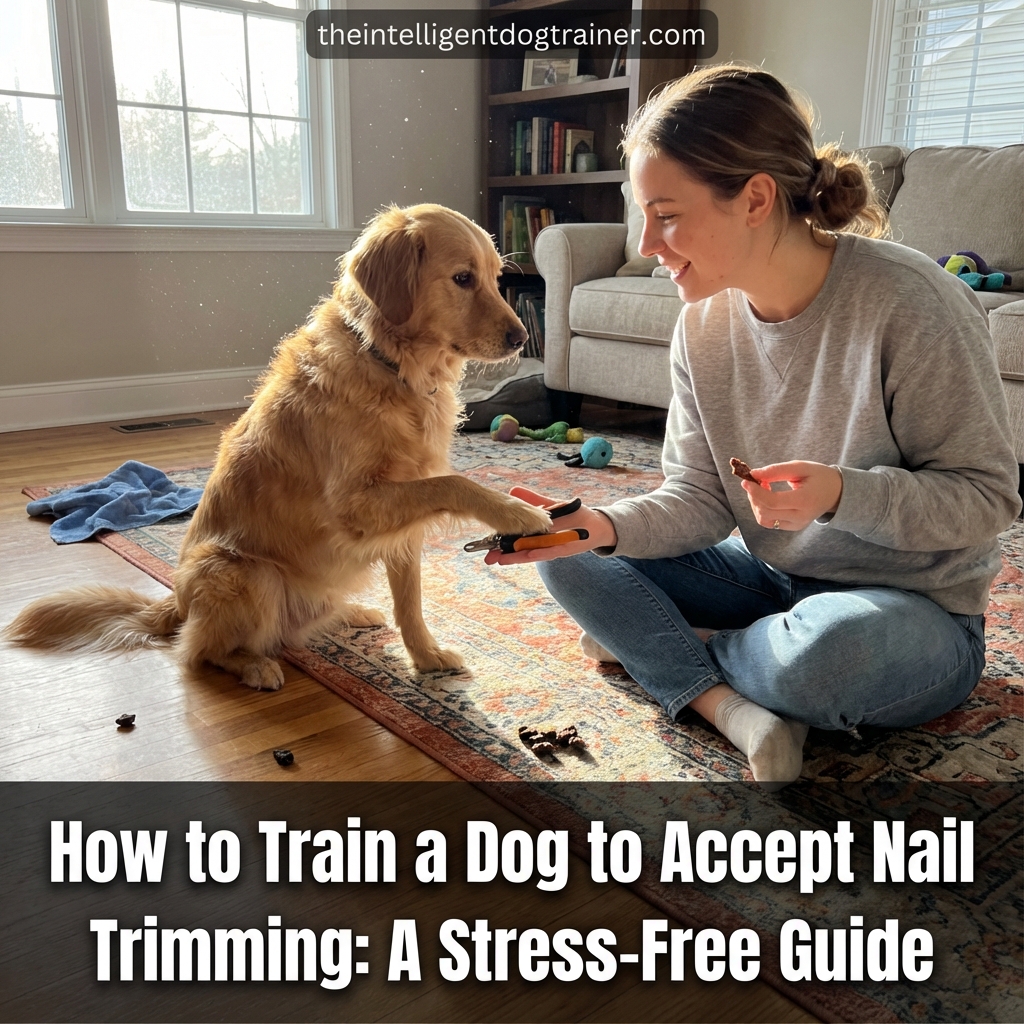
Maintaining your dog’s paws is a fundamental aspect of canine health, yet many owners find themselves in a wrestling match every time the grooming kit comes out. Learning how to train a dog to accept nail trimming is not just about aesthetics; it is about preventing painful postural issues and joint strain caused by overgrown claws.
By shifting from a “control” mindset to a collaborative one, you can transform this chore into a bonding activity. This guide explores evidence-based methods to reduce anxiety, build trust, and ensure your dog feels safe throughout the process.
Understanding the Basics of Cooperative Care Training Exercises
The foundation of a stress-free grooming session lies in the concept of agency. What is cooperative care in dog training? It is a modern approach where the animal is an active participant, often using “start” and “stop” signals to communicate their comfort level.
This methodology moves away from forceful restraint, which often exacerbates fear. Instead, you focus on rewarding the dog for voluntarily offering their paw or remaining still while being handled.
Many owners ask, why is my dog so afraid of having his feet touched? This sensitivity, often called “paw shyness,” is a natural survival instinct; dogs’ paws are highly sensitive and vital for flight or fight.
To build confidence, you must first teach a dog to touch your hand or objects on command, which creates a positive association with physical contact. Start by rewarding very brief touches to the leg or foot.
Only once your dog is comfortable with basic handling should you progress to more specific cooperative care training exercises, such as having them rest their chin on a towel to signal they are ready for you to proceed. If they lift their head, you stop immediately.
This control reduces the dog’s “predator-prey” reflex, making the entire experience predictable and significantly less frightening for them.
The Power of a Positive Reinforcement Nail Trim
When you prioritize a positive reinforcement nail trim, you are essentially using “paychecks” to change your dog’s emotional response. High-value rewards—think boiled chicken, freeze-dried liver, or peanut butter—are essential here.
A common question among pet parents is, how do I get my dog to sit still for nail trimming? The secret isn’t better restraint; it’s better timing. You want to reward the dog while the clipper is near the nail, not just after.
This helps the dog realize that the presence of the tool predicts something wonderful. Understanding positive reinforcement dog training principles is vital for long-term success.
What treats work best for positive reinforcement during grooming? Use something creamy or soft that the dog can lick steadily, as the act of licking is naturally calming for canines.
Even for those with older pets, can senior dogs learn to accept nail trims? Absolutely. While they may have more established fears or arthritic discomfort, the same principles of reward-based training apply.
However, you must be more mindful of their physical comfort and joint flexibility during the session.
How to Desensitize Your Dog to Nail Clippers Organically
To successfully desensitize dog to nail clippers, you must work at a pace where the dog remains below their “threshold” of fear. This means your dog should never be trembling or trying to bolt.
How long does it take to desensitize a dog to clippers? Depending on previous trauma, it can take anywhere from two weeks to several months of daily, two-minute sessions.
Start by simply leaving the clippers on the floor near their food bowl. Progress to holding the clippers while petting them, then touching the clippers to a toe without actually cutting.
If you are trying to train a fearful dog, you might explore the Pavlovian response: the sight of the clipper equals a treat, 100% of the time.
Eventually, you can simulate the “click” sound by trimming a dry piece of spaghetti near the dog’s ear while offering a reward. This breaks the sensory experience into manageable pieces—the sight, the touch, and the sound.
The goal is to reach a point where the dog sees the grooming kit and walks over in anticipation of the rewards, rather than hiding under the sofa.
Safe Strategies to Trim Aggressive Dog Nails
Dealing with a dog that snaps or growls requires a high level of caution and environmental management. If you need to trim aggressive dog nails, safety must be your first priority to prevent injury to both parties.
Should I use a muzzle during nail trimming? If there is any risk of a bite, a properly fitted basket muzzle (which allows the dog to pant and take treats) is a responsible tool.
However, the muzzle should be introduced separately as a positive item, not just brought out for “scary” events.
When you how to train an aggressive dog, you understand that aggression is almost always rooted in fear.
How can I trim my dog’s nails without being bitten? One effective strategy is the “bucket game,” where the dog focuses on a bucket of treats while you handle their feet. If they look away from the treats, you stop.
This gives them a non-aggressive way to say “no.” Never punish a growl; it is your dog’s way of communicating that they are uncomfortable. If you punish the warning, they may go straight to a bite next time.
A Smooth Approach to Dog Nail Grinder Training
For many dogs, the vibrating sensation of a rotary tool is less invasive than the “crushing” feel of traditional clippers. Dog nail grinder training requires its own specific set of steps.
How do I introduce a nail grinder to a fearful dog? Start with the tool turned off, rewarding the dog for sniffing it. Then, turn it on in another room so they hear the hum from a distance while eating.
Gradually bring the noise closer until you can touch the vibrating handle (not the spinning tip) to their shoulder or leg.
Using a clicker train a dog method can be incredibly website precise here. You can click and reward the exact moment the dog allows the pulse of the grinder to touch a nail for one second.
This precision helps the dog understand exactly what behavior is being rewarded. Grinders are excellent for smoothing out jagged edges and avoiding the quick, the sensitive blood vessel inside the nail.
Because grinders generate heat, you must use “pulse” touches—one or two seconds at a time—to keep the dog comfortable and prevent thermal pain.
Implementing Dog Scratch Board Training as an Alternative
If manual trimming remains too stressful, dog scratch board training is a highly effective “DIY” alternative. A scratch board is essentially a piece of wood covered in high-grit sandpaper.
By teaching your dog to “dig” at the board, they naturally file down their own nails through friction. This is often the best solution for dogs that simply cannot tolerate their feet being held.
It provides excellent mental stimulation for dogs because it turns grooming into a puzzle-solving game.
Is a scratching board a good alternative to nail clippers? For the front nails, it is often superior because the dog controls the pressure and duration. Teaching the behavior usually involves putting a treat behind the board.
Over time, the dog learns that the specific motion of scratching the sandpaper results in a reward. While it is more difficult to use for back nails, a scratch board can reduce the frequency of stressful clipper sessions by 80%.
Successfully training a dog to accept nail trimming is a journey of patience, consistency, and empathy. By utilizing cooperative care exercises and positive reinforcement, you move away from conflict and toward a partnership.
Whether you choose traditional clippers, a modern nail grinder, or a scratch board, the key is to move at your dog’s pace. Consistent, short sessions are far more effective than long, stressful ones.
With time, the sight of the grooming kit will no longer cause your dog to retreat, but rather to engage confidently in their own self-care.