
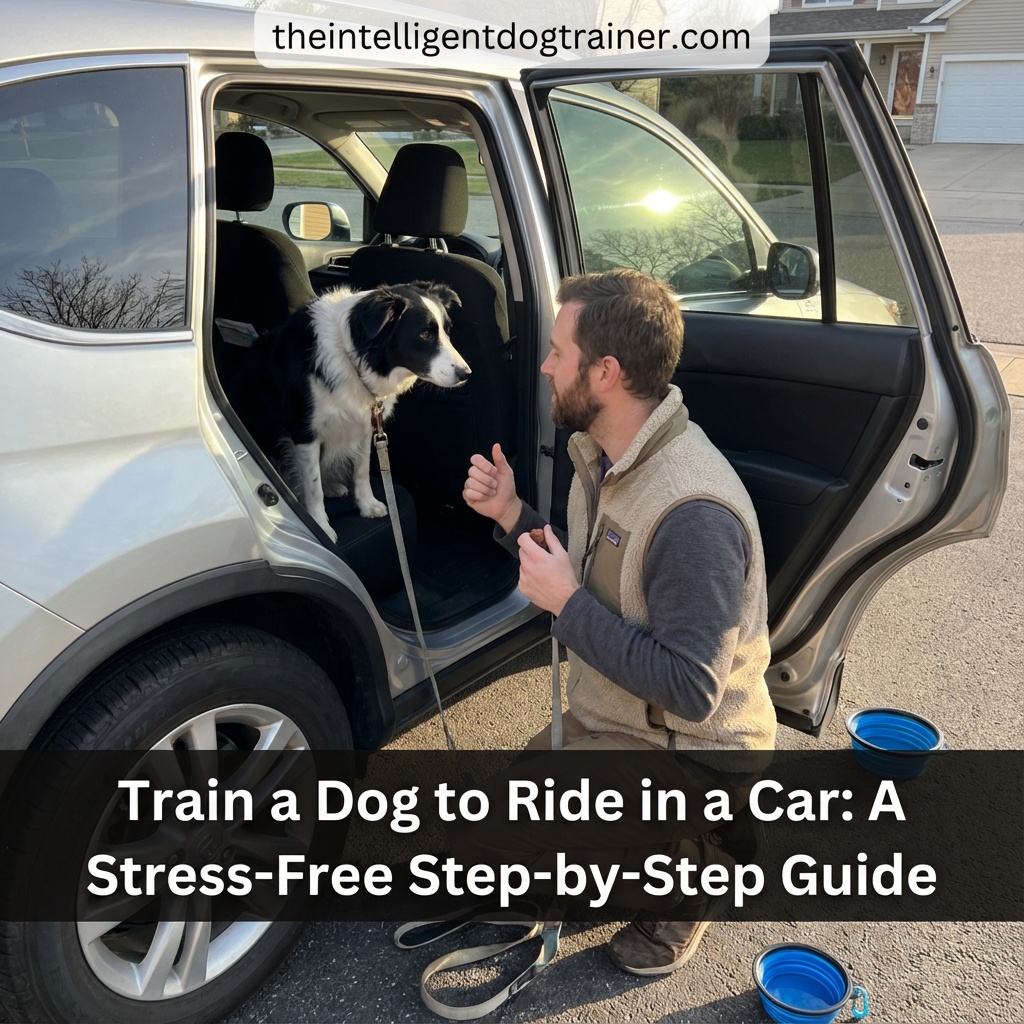
Preparing your furry companion for a road trip ought to be an exhilarating adventure, yet for many owners, the reality involves a soundtrack of whining, pacing, or an outright refusal to even approach the vehicle.
Mastering how to train a dog to ride in a car is a fundamental skill that significantly enhances your pet’s quality of life while opening up a world of shared experiences.
Whether you are working with a rescue pup who has never seen a backseat or a seasoned pet that has developed a sudden, puzzling aversion, the secret lies in patience and a structured approach.
By focusing on gradual exposure and positive associations, you can transform the car from a source of dread into a comfortable “mobile den” where your dog feels both secure and relaxed.
Understanding and Managing Dog Car Anxiety Training
The primary phase of dog car anxiety training involves recognizing the subtle physical cues of distress. Why does my dog pant and shake when riding in the car?
These behaviors are classic indicators of a cortisol spike, frequently triggered by past negative associations or a simple fear of the unfamiliar.
Many dogs learn to associate the car exclusively with unpleasant destinations, such as the veterinarian’s office or a noisy grooming salon. To move past this, you must shift their emotional response.
Start by simply spending time with your dog in a stationary car without even turning the key. You might read a book or engage in a calm game while your dog relaxes nearby.
If your dog suffers from deep-seated fears, you may need to apply help a dog with separation anxiety principles to bolster their overall confidence and sense of independence.
Consistency is the vital ingredient; how long does it generally take to overcome car anxiety in dogs?
While every animal is unique, most show significant improvement within three to six weeks of daily, low-pressure sessions.
For particularly stressed dogs, a calming pheromone spray can sometimes offer a mild soothing effect, though it works most effectively when paired with active training rather than as a standalone solution.
How to Get a Scared Dog Into a Car With Confidence
If your pet treats the driveway like a “no-go zone,” you need to master how to get a scared dog into a car without resorting to force.
Pushing or lifting a struggling dog into a seat only serves to reinforce their terror. Instead, leverage high-value treats to create a “breadcrumb trail” leading directly into the vehicle.
How do I get my dog to jump into the car willingly? The answer is found in incremental rewards—offering praise for merely looking at the car, then for stepping toward it, and finally for placing a single paw inside.
When you train a fearful dog to approach new objects, you are building a foundation of trust that helps the car feel like a safe sanctuary.
Can desensitization help a dog that is terrified of the engine sound? Absolutely. Once they are at ease sitting inside, start the engine for just a few seconds while feeding them their favorite high-value meal, then turn it off immediately.
This helps the dog realize that the hum and vibration are not threats. For our older companions, consider utilizing a ramp or a lifting harness to help a senior dog feel more stable while the car is moving and when entering the vehicle, as joint pain often manifests as fear.
Effective Ways to Desensitize Your Dog to Car Rides
To successfully desensitize dog to car rides, you must deconstruct the journey into tiny, manageable milestones.
Once your dog is comfortable sitting in the running vehicle, transitions to very short trips—perhaps just to the end of the driveway and back.
The objective is to finish the session before the dog has a chance to feel overwhelmed. Utilizing positive reinforcement dog training ensures that your dog links the movement of the car with praise and tangible rewards.
Gradually extend the distance to a few blocks, and then eventually to a local park. According to research on canine behavior, dogs learn most effectively through repetition and clear, positive associations.
Always conclude the trip with an activity the dog loves, such as a short walk or a game of fetch. This establishes a “destination reward” system where the car becomes the gateway to fun.
If you notice any signs of regression, like sudden whimpering, simply go back a step in the process and spend more time on shorter distances until the dog settles back into a calm state.
The Safest Way to Transport Your Dog in a Vehicle
Safety and comfort are two sides of the same coin when you train a dog to ride in a car.
An unsecured dog is not only a potential distraction to the driver but is also at high risk during sudden stops or turns. Is it safer to crate my dog or use a seatbelt harness in the car?
While both options are far better than no restraint, a crash-tested crate is widely considered the safest way to transport dog in car because it provides a protective shell and prevents the dog from being thrown.
If you choose this path, you may find it helpful to learn how to crate train a dog in the house first so the crate is already perceived as a familiar sanctuary.
For larger breeds or vehicles with limited cargo space, a heavy-duty harness that integrates with the seatbelt system is a viable alternative.
Ensuring your dog is secure also helps them feel more physically stable as the car maneuvers, which is a major factor in reducing travel-related anxiety for many pets.
Proven Methods to Stop Dog Barking in the Car
Excessive vocalization is a common hurdle, and learning how to stop dog barking in car trips is essential for maintaining driver focus and safety.
What are the best methods to stop a dog from barking at passing cars? This behavior is often rooted in barrier frustration or instinctive territorial guarding.
To manage this effectively, you can use window shades or a light crate cover to block the dog’s line of sight, removing the visual triggers entirely.
Simultaneously, work on how to stop a dog from barking by rewarding “quiet” behavior the very moment it occurs.
If your dog barks out of pure excitement, keep the interior environment very calm with low-volume classical music or white noise.
Avoid the urge to yell at the dog to be quiet; they may interpret your shouting as “barking along” with them, which only serves to skyrocket their arousal level.
Instead, use a calm, firm command and immediately reward the silence that follows, helping the dog understand that a relaxed state is the fastest way to earn attention.
Essential Dog Travel Sickness Prevention Tips
The final piece of the puzzle is dog travel sickness prevention. Physical nausea can quickly unravel all of your behavioral training efforts.
Should I feed my dog before a car ride to prevent motion sickness? Generally, it is best to avoid a full meal at least two to three hours before travel.
An empty stomach reduces the likelihood of vomiting, though a tiny treat is usually fine as a reward for good behavior. What should I do if my dog vomits during every car trip?
If cleaning up messes is a regular struggle, consult your veterinarian, as they can prescribe anti-nausea medications that don’t cause excessive drowsiness.
Interestingly, teaching your dog the place command can also alleviate nausea; by remaining in a designated spot, the dog’s equilibrium stays more stable than if they are pacing.
According to Wikipedia’s entry on motion sickness, keeping the car cool and slightly cracking a window for fresh air can also help regulate the dog’s internal temperature and balance.
In conclusion, training your dog to be a calm passenger requires a holistic approach that addresses both their emotional state and their physical safety.
By understanding the roots of their anxiety, utilizing gradual desensitization, and ensuring they are securely fastened, you create an environment where travel is no longer a chore.
Remember that consistency is your most powerful tool, and with a bit of time, your dog will eventually be waiting by the car door with a wagging tail.