
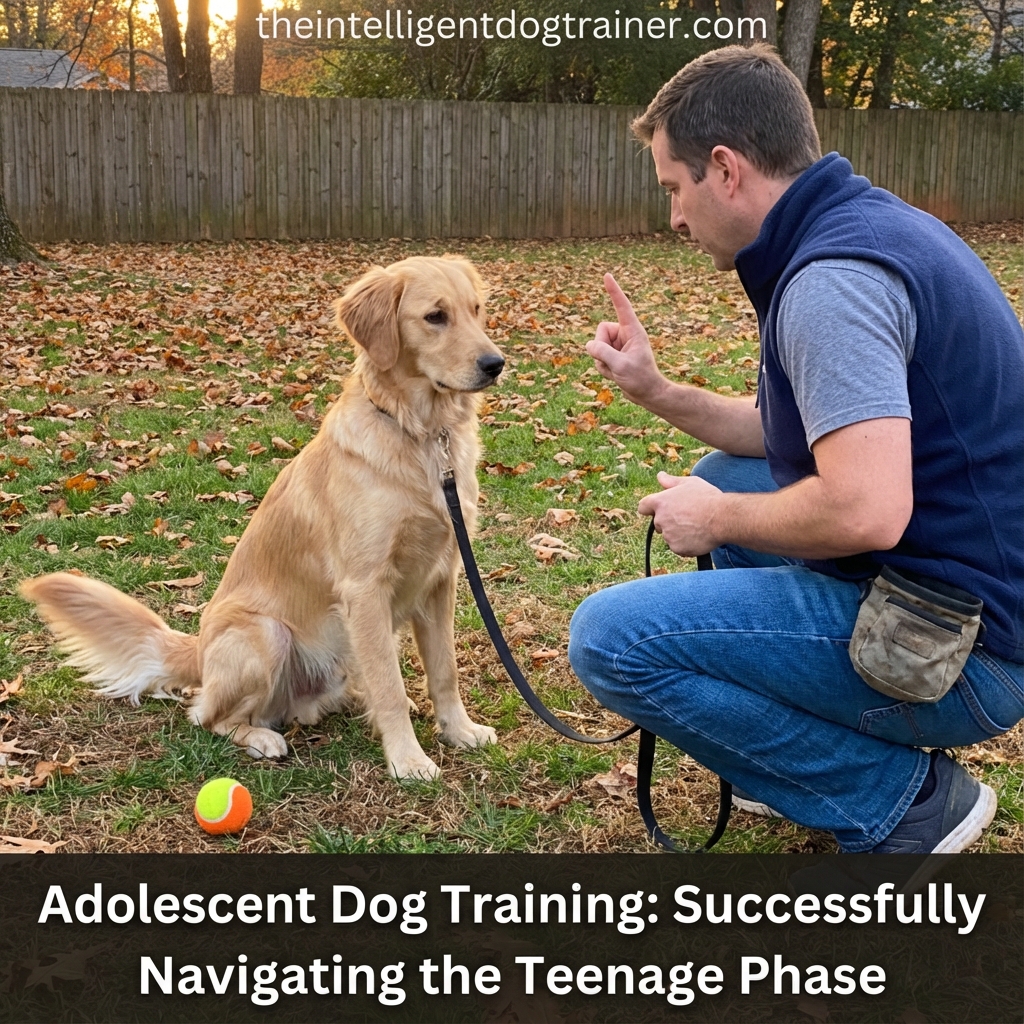
Observing your once-attentive puppy morph into a defiant “teenager” can feel like your internal navigation system has suddenly glitched. If you have noticed that your previously cooperative companion is now bypassing your commands or constantly pushing the envelope, you are likely in the thick of adolescent dog training.
This period represents a biological whirlwind where hormonal surges and significant brain remodeling can temporarily bypass months of hard-won progress. However, grasping the science behind this specific developmental milestone is the primary strategy for converting daily irritation into a more resilient, profound bond.
In the following guide, we will look at how to steer through this demanding phase using evidence-based methods to ensure your “teenage” companion matures into a dependable and well-adjusted adult.
Understanding the Dog Teenage Phase Behavior and Biological Changes
The shift into canine adolescence is a sophisticated biological journey that generally initiates between six and twelve months of age. During this particular window, the brain undergoes an intensive “synaptic pruning” phase, a process where the prefrontal cortex functions with temporary inefficiency, resulting in spiked impulsivity and a dip in emotional regulation.
When does the adolescent phase start in dogs? While this timing fluctuates based on breed size, smaller dogs occasionally start as early as six months, whereas giant breeds may not hit their full “teenage” stride until they reach their first birthday.
This physiological transition frequently manifests as a heightened sensitivity to their surroundings and a clear reduction in impulse control. Owners frequently find themselves wondering, how long does the teenage stage last in dogs?
Most experts agree that you can expect this behavior to persist until the dog achieves social maturity, typically occurring between 18 and 24 months. Throughout this developmental stretch, adhering to a structured puppy training schedule remains essential.
This provides the stability and predictability your dog craves while their brain is quite literally rewiring itself. It is a season marked by an emerging drive for autonomy and a noticeably diminished focus on their human handler.
Observations in mammalian biology confirm that these hormonal fluctuations are nature’s way of encouraging exploration, which neatly explains why a distant squirrel is suddenly more alluring than your most spirited “stay” command.
Identifying Common 6 Month Old Puppy Behavior Problems
As your pet enters adolescence, you may face specific 6 month old puppy behavior problems that seem to materialize from thin air. Selective hearing is almost certainly the most prevalent frustration; your dog might make direct eye contact and simply decide to disregard a familiar recall.
This isn’t a calculated act of spite, but rather a natural symptom of dog teenage phase behavior. You might also observe a resurgence in destructive chewing or redirected mouthing as they attempt to soothe jaw tension or expend restless energy.
If you are battling a sudden return to “mouthy” habits, refreshing your knowledge on how to stop puppy biting with an focus on adult-level intensity is a vital skill for this period.
Other typical hurdles include a return to leash pulling and heightened excitability when greeting people. How much exercise does a teenage dog need?
While their energy levels seem bottomless, their developing joints require careful protection. It is best to aim for a balanced diet of physical activity and structured engagement, though you should avoid repetitive, high-impact movements that might lead to long-term orthopedic issues.
Many owners also ask: Will neutering or spaying fix adolescent behavior issues? While hormones play a role in behavior, surgery is rarely a “magic fix” for fundamental training.
Most adolescent challenges are developmental and necessitate active instruction rather than a medical procedure. By tackling these issues early on, you prevent fleeting phases from hardening into permanent habits.
Managing Dog Training Regression with Patience and Consistency
One of the most taxing elements of this time is witnessing dog training regression. You might catch yourself asking, why has my dog suddenly forgotten all his training?
It helps to view this not as an actual loss of memory, but as a temporary realignment of their internal priorities and focus. What are the signs of regression in puppy training?
Generally, this looks like breaking a “wait” at the threshold, neglecting to sit when prompted, or a visible loss of focus in bustling public environments. To navigate this, you should lean heavily on positive reinforcement dog training.
This ensures that listening remains more rewarding than the various distractions competing for their attention. Steadfastness is perhaps your most effective tool for surviving puppy adolescence.
If your dog senses that established boundaries have become negotiable, they will instinctively continue to test them. Many owners seek advice on another point: should I change my training rewards during adolescence?
Often, the answer is a resounding yes. Because the world has become more stimulating, you may need to “increase the value” by using premium treats or high-interest toys to keep their focus in challenging settings.
It is wise to keep your training sessions brief, energetic, and successful to avoid overstimulating both yourself and your pet. Above all, the goal is to protect your relationship while the internal biological storm eventually subsides.
Proven Strategies for Surviving Puppy Adolescence Every Day
Successfully surviving puppy adolescence demands a strategy that is proactive rather than merely reactive. Instead of reacting to errors, arrange their environment to promote success from the start.
This could involve utilizing a long training line during outdoor walks if their recall has become shaky, or using baby gates to restrict access to areas where they might find items to chew. A vital element of maintaining a quiet home is ensuring adequate mental stimulation for dogs.
Activities like scent work or interactive puzzle toys can exhaust a teenage dog far more productively than a long, frantic run. Exercising patience is particularly crucial when navigating the “fear periods” that often surface during this development.
Why is my adolescent dog suddenly afraid of familiar objects? This is a routine developmental stage where the brain becomes more guarded and suspicious of its surroundings.
How do you handle fear periods in adolescent dogs? You should never force your dog to confront something that causes them distress; instead, employ gentle counter-conditioning techniques.
By associating the intimidating object with a high-value reward from a safe distance, you assist them in rebuilding their confidence at their own pace. Relying on ethology principles, we realize that forcing a dog through a fear response only heightens the risk of a lasting phobia.
Effective Techniques for Calming an Adolescent Dog Naturally
Helping an over-stimulated “teen” find their calm is often the most draining aspect of adolescent dog training. At this growth stage, dogs frequently find it difficult to “power down,” which leads to restless pacing, barking, or indoor hyperactivity.
Teaching a reliable “settle” on a specific mat is a cornerstone skill that offers significant benefits as they age. If your dog has started showing reactive behaviors toward other animals or cyclists, narrowing your focus to leash reactivity training can assist them in maintaining their cool in public.
Soothing a dog isn’t just about physical exhaustion; it is about instructing their nervous system on how to down-regulate following a period of excitement. You can also employ natural environmental signals to indicate that it’s time for rest and relaxation.
Elements like aromatherapy—specifically lavender—and calming music have demonstrated positive outcomes in clinical environments for lowering canine stress. Furthermore, it is essential to ensure they receive sufficient restorative sleep.
Adolescent dogs still require roughly 16–18 hours of rest daily, even if they behave as though they possess an infinite energy supply. Calming an adolescent dog is frequently a balancing act.
This ensures they have constructive outlets for their vitality so they are truly ready to decompress when at home.
Back to Basics: Re-training a Teenage Dog for Long-term Success
When regression feels overwhelming, the smartest move is re-training a teenage dog by simply simplifying everything and returning to the basics. If your dog ignores a “sit” command, treat the situation as if they were a puppy on their first day of school.
Use lures, premium rewards, and quiet, distraction-free spaces until the behavior becomes fluent once more. Revisiting the fundamental principles of how to train a dog ensures that no cracks have developed in their foundational learning during this turbulent phase.
This shouldn’t be seen as a retreat; it is a necessary reinforcement of the structure they need to feel safe. A common misconception is the worry: is it too late to correct bad behaviors in a teenage dog?
Not in the slightest. The brain of an adolescent dog is remarkably plastic, meaning it remains perfectly capable of learning, adapting, and refining habits. By consistently rewarding the actions you want to see and managing their environment to avoid the ones you don’t, you are molding a dependable and resilient adult.
Think of this “second puppyhood” as a bridge that must be crossed. If you stay the course with the same clarity and kindness you applied on day one, you will find that the unruly teenager eventually emerges as the focused, loyal companion you always intended to have.
The adolescent stretch is undoubtedly one of the most taxing chapters for any dog owner, yet it serves as a period of immense growth and hidden potential. By recognizing the biological changes at play within your dog’s brain and answering with intentional strategy rather than mere frustration, you can navigate these months with confidence.
By prioritizing mental engagement, steady boundaries, and a return to the basics when needed, you can successfully manage behavior hurdles and regression. Keep in mind that this phase is only temporary; the effort you invest now—through patience and positive reinforcement—will ultimately define the depth and quality of your bond for years to come.