
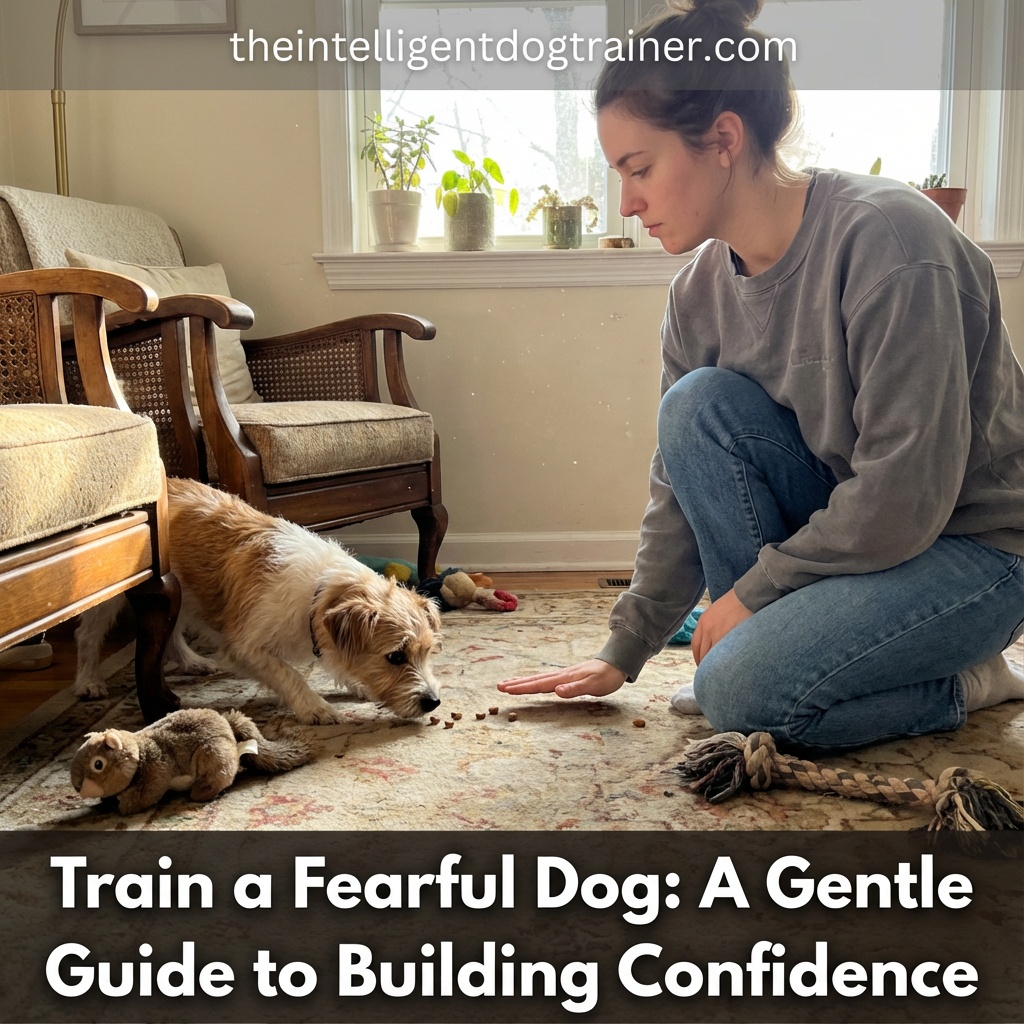
Supporting a dog that feels constantly vulnerable can be one of the most taxing yet deeply fulfilling experiences a person can go through. When you commit to train a fearful dog, the goal extends far beyond basic obedience; you are essentially reconstructing a broken sense of security.
In the canine world, fear often manifests through trembling, avoidance, or even defensive aggression, a realization that makes an empathetic, science-based approach vital for any real progress. By digging into the biological roots of fear and maintaining a steady routine of positive reinforcement, you can help a timid pup blossom into a more self-assured companion.
This guide offers a thoughtful roadmap to cultivating trust and building lasting confidence as we navigate 2025 together.
Learn How to Accurately Read Dog Body Language
To truly train a fearful dog, your first task is to become a fluent observer of their silent communication. Dogs speak through their posture, the set of their ears, and the tension in their eyes, often whispering their discomfort long before they reach a breaking point.
A common question among owners is, “How do I distinguish between fear and aggression in my dog?” In reality, the vast majority of aggressive displays are actually fueled by underlying fear.
Keep a close watch for displacement behaviors—actions like yawning, licking their lips, or sniffing the ground intensely when there is no obvious reason to do so. A dog in distress might tuck their tail, pin their ears tightly back, or exhibit whale eye, where the whites of their eyes become visible in a panicked stare.
Recognizing these subtle shifts allows you to step in before your dog crosses their threshold, the emotional point where they are too overwhelmed to process information. For instance, learning to redirect their focus back to you can stop them from spiraling when they see something frightening.
You can teach a dog the watch me command to provide a familiar anchor during moments of mild anxiety. By reading dog body language with precision, you demonstrate to your pet that you are a protective, reliable advocate who values their boundaries.
This creates the essential psychological safety net needed for future growth. As noted on Wikipedia, these visual signals serve as the primary mode of dialogue within the Canis lupus familiaris species.
Managing Natural Dog Fear Periods in Puppies
It is perfectly normal for a well-adjusted puppy to suddenly act terrified of a mundane object, like a flapping trash bag or a person wearing a hat. These stages are known as dog fear periods, typically surfacing once around the 8-10 week mark and again during the developmental shifts of adolescence (anywhere from 6-14 months).
If you find yourself asking, “What should I do during my puppy’s fear period?”, the best approach is to stay composed and never force an encounter. Pushing a puppy to confront what scares them can inadvertently create a lifelong phobia.
Instead, aim to keep these interactions as neutral or pleasant as possible. Since puppy development moves at such a lightning pace, utilizing a structured puppy training schedule can help you steer through these sensitive windows with much less friction.
During these phases, a puppy’s brain is naturally more attuned to potential threats, so gentle encouragement should always take precedence over correction. If your pup seems wary, don’t press the issue; simply add some distance between them and the source of their worry.
Don’t worry about rewarding the fear by offering comfort—you are supporting an emotional state, not reinforcing a bad habit. A calm voice and a safe place to retreat will do wonders for their recovery after a startling event.
Helping a Rescue Dog Deal with Past Trauma
When you are helping a rescue dog with trauma, it is crucial to remember that the clock is set by the dog, not our own expectations. You might wonder, “Can an older rescue dog overcome past trauma?” The answer is a resounding yes.
While their history might have left them with specific triggers, dogs possess an incredible capacity for resilience. The secret lies in creating a predictable, low-pressure environment where they never feel trapped or pressured to perform.
Many rescues arrive in a state of learned helplessness or temporary emotional shutdown, which calls for a very patient, hands-off approach initially. Understandably, many owners ask, “How long does it take to see progress with a fearful pet?”
While some dogs begin to blossom within a few weeks, others might require months just to feel safe enough to exhale. This journey often follows the Rule of Three: three days to settle the initial nerves, three weeks to understand a new routine, and three months to truly feel like part of the family.
When you train an older dog from a shelter environment, you are essentially overwriting old, negative memories with new experiences of safety. You can support this transition by keeping life predictable and respecting their safe zone—a specific bed or crate where they know they will be left entirely alone to rest.
Strategic Desensitization and Counter Conditioning
In the world of behavioral modification, the gold standard for easing anxiety is desensitization and counter conditioning. But how does desensitization work for fearful dogs?
Put simply, desensitization involves very gradual exposure to a scary thing at such a low level that the dog remains calm and doesn’t react. Counter conditioning then steps in to rewrite the dog’s emotional response by pairing that stimulus with something they absolutely love.
This effectively flips the script in the dog’s mind from That person is a threat to That person is a predictor of great snacks. This strategy is at its most potent when grounded in positive reinforcement dog training, as it focuses on rewarding a relaxed state of mind rather than punishing a fearful reaction.
If you are struggling with how to effectively train a dog that is scared of everything, start with the smallest possible challenge and build from there. For example, if the vacuum is the enemy, begin with it turned off and tucked away in another room.
Progress must happen in tiny increments. If your dog starts to bark or tries to hide, it’s a sign to slow down and increase the distance. This methodical approach is a cornerstone of behavioral biology used to turn down the volume on physiological stress responses.
Effective Confidence Building Exercises for Dogs
To help a timid dog navigate the world with more bravery, you can broaden their comfort zone through intentional confidence building exercises for dogs. These games are empowering because they give the dog a sense of control and agency over their surroundings.
Inquisitive owners often ask, “What are the best confidence-building games for shy dogs?” Activities like nose work or scent searches are incredible because they lean into a dog’s natural olfactory talents, which has a physiological effect of lowering their heart rate.
Even teaching simple, fun tricks can provide a significant ego boost for a shy pup. Incorporating mental stimulation for dogs through interactive puzzles helps shift them from a reactive brain state into a problem-solving one.
When a dog discovers that investigating a new object results in a win, that newfound courage begins to bleed into other areas of their life. Keep these sessions brief and lighthearted, maybe just five minutes at a time, to ensure they always finish with a sense of success.
Over time, these minor victories stack up, resulting in a more resilient dog that can face the unknown without immediate panic.
Socializing a Shy Dog Through Positive Experiences
Properly socializing a shy dog has nothing to do with overwhelming them at a busy dog park; in fact, that kind of forced immersion often does more harm than good. Real socialization is about controlled exposure—letting the dog observe the environment from a safe distance.
You may find yourself wondering, “Is professional help necessary for extreme anxiety cases?” If a dog’s fear makes them a danger to themselves or prevents them from functioning in daily life, reaching out to a certified behaviorist is a wise move.
A professional can also help you evaluate if there are specific tools that can help reduce my dog’s stress, such as calming pheromones or specialized pressure wraps. To get the best results, always prioritize quality over quantity.
Whether you socialize a puppy or an adult, one peaceful, distant observation of the world is worth significantly more than a dozen stressful, face-to-face encounters. Above all, be your dog’s advocate.
If a stranger wants to pet them but your dog is showing signs of worry, it is your responsibility to politely decline. Protecting their personal space is the most effective way to prove you are a guardian they can truly trust.
Training a dog with deep-seated fears requires a fundamental shift in perspective, moving from a desire for control to a focus on patience and partnership. By learning to read their body language and respecting the natural sensitivity of fear periods, you prevent the cycle of anxiety from worsening.
Through careful desensitization and confidence-boosting games, your dog can learn that the world is a place for curiosity, not just survival. While the path for a rescue or a timid puppy can be winding, the unique bond you forge along the way is incredibly rewarding.
With enough time, consistency, and a heart centered on empathy, even the most fearful dog can learn to embrace a life of security and joy.