
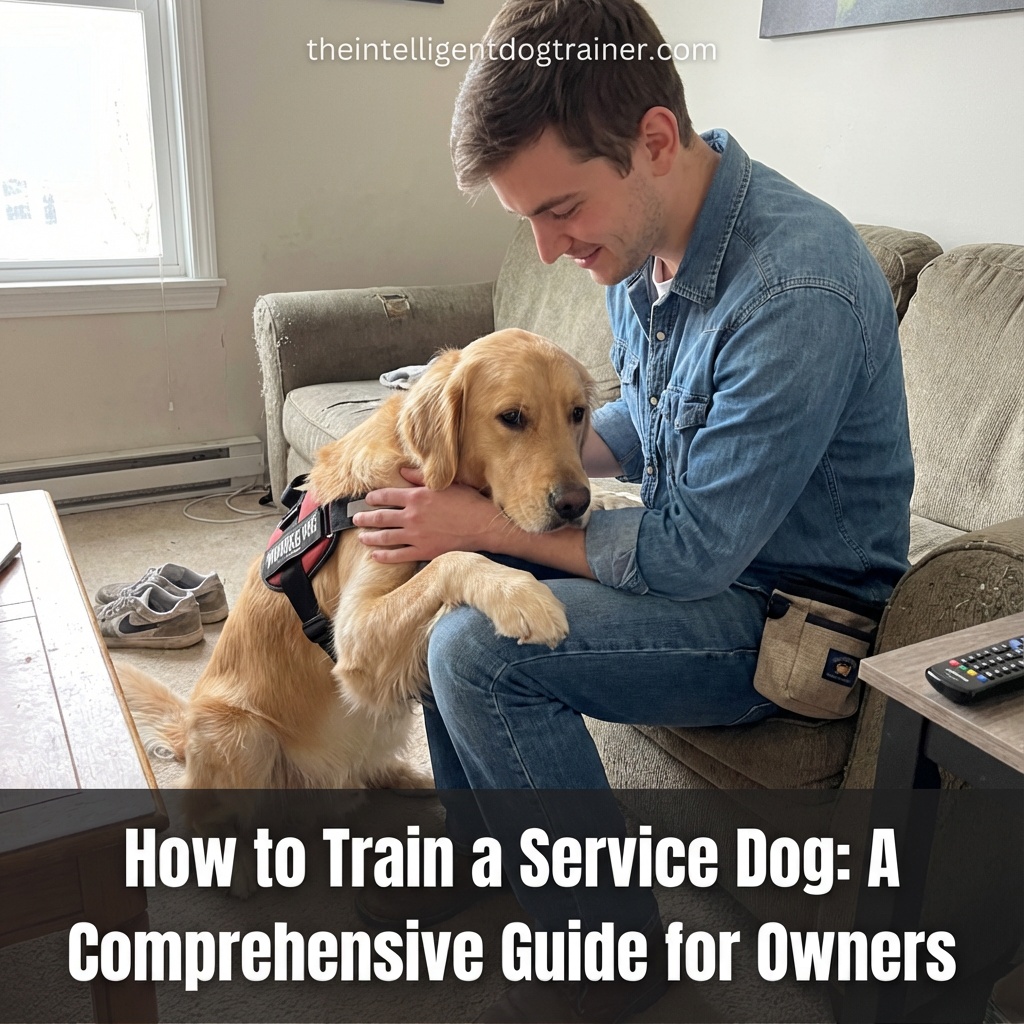
Deciding to train a service dog is a life-altering commitment that goes far beyond the typical experience of pet ownership or standard obedience coaching.
This journey is built upon a unique, profound partnership where the dog becomes much more than a companion—it becomes a vital tool for personal independence.
Preparing a service animal requires a meticulous approach, endless patience, and a dedicated focus on teaching specific tasks tailored to mitigate the effects of a disability.
Whether you are seeking physical assistance or emotional stability, this process is an empowering path toward a more accessible life.
In this 2025 guide, we will explore the essential protocols, legal frameworks, and specialized training techniques necessary to transition a loyal dog into a professional working partner.
Understanding the Difference Between Service Dogs and Emotional Support Animals
For many entering this world, the first challenge is untangling the often-confusing terminology surrounding assistance animals.
What is the difference between a service dog and an emotional support animal? The core distinction lies in their specific function and legal status.
A service dog undergoes intensive, specialized training to perform concrete actions that assist a person with a disability.
In contrast, an emotional support animal (ESA) provides therapeutic comfort through its mere presence and does not require any task-specific training to fulfill its purpose.
While the comfort provided by an ESA is significant, these animals do not possess the same public access rights as service dogs.
When you start to train a dog for service work, the objective moves from general companionship toward high-level, task-oriented behavior.
Under legal frameworks like the ADA in the United States, service dogs are viewed as working animals, not pets.
If you are curious about how these roles have changed over time, Wikipedia provides a comprehensive history of how these classifications evolved to aid individuals with various physical and mental health needs.
Essential Legal Requirements and Standards for Working Service Dogs
Before you begin the hands-on training, you must understand the service dog requirements that define a legitimate working team.
From a legal standpoint, a service dog must be housebroken and remain under the handler’s control at all times, regardless of the environment.
A frequent question that arises is: Does my service dog require official certification or paperwork?
In many regions, including the United States, there is actually no legal requirement for official registration, vests, or ID tags, though many handlers find these tools helpful for navigating public spaces more smoothly.
You must also consider the dog’s health and age before committing to this path.
For example, if you intend to train an older dog for service tasks, it is vital to ensure they have the physical stamina and temperament to handle a demanding work schedule.
Another common inquiry is: Is it possible to train any breed of dog for service work?
While any breed can technically serve, the specific individual must possess a rock-solid temperament and the focus needed for high-stress settings.
Ensuring your dog meets these foundational criteria is the first real step in your partnership.
A Step-by-Step Approach to Training Your Own Service Dog
Many prospective handlers ask, “Can I legally train my own service dog at home?” The answer is a definitive yes; owner-training is a widely recognized and often deeply fulfilling path.
This process is essentially a long-term marathon, typically requiring between 18 to 24 months of consistent effort.
The training usually flows from basic obedience to advanced socialization before finally tackling disability-specific tasks.
To make the learning process clearer and more efficient, many handlers clicker train a dog, using the tool to mark correct behaviors with absolute precision.
Success in this structured approach depends on building an unwavering foundation of focus.
How long does the service dog training process take? It is best to view this as a multi-hundred-hour investment in proofing behaviors across diverse environments.
The efficacy of training your own service dog rests on your ability to remain consistent and calm.
It is important to remember that if a dog shows persistent fear or reactivity, they may need to be washed—or moved to a standard pet role.
Specialized Psychiatric Tasks and Behavioral Support Commands
For those managing mental health conditions, psychiatric service dog tasks are the cornerstone of the animal’s work.
These dogs are conditioned to provide high-level interventions, such as disrupting harmful repetitive behaviors, grounding a handler during a flashback, or finding an exit during a panic attack.
The dog must become exceptionally attuned to the handler’s physiological changes.
What specific tasks can I teach a psychiatric service dog? Useful skills include room blocks to create personal space in crowds or checking rooms to help a handler manage hyper-vigilance.
Interestingly, focusing on these specialized skills can sometimes help a dog with separation anxiety by giving them a clear, grounding purpose.
Furthermore, can a psychiatric service dog help with panic attacks and PTSD? Absolutely.
By recognizing early signs like tremors or heavy breathing, the dog can intervene and de-escalate the situation.
Developing this kind of intuitive response requires a deep bond and thousands of successful practice rounds in increasingly complex settings.
How to Teach Your Dog Deep Pressure Therapy for Anxiety
One of the most effective ways a service dog can soothe a distressed nervous system is through teach dog deep pressure therapy (DPT).
This involves the dog using its body weight against the handler’s lap or chest to lower the heart rate and reduce cortisol.
To start, you must first teach a dog to lie down reliably, eventually transitioning that behavior to the handler’s lap.
For individuals with autism or sensory processing issues, DPT can be a functional lifesaver.
You can read more about how tactile stimulation affects the body on Wikipedia.
You can begin this training by encouraging your dog to place its paws on your lap while you sit, slowly moving toward having them settle their full weight across your legs.
Using a specific cue like Pressure or Lap helps the dog understand when to start the task, and rewarding them for staying calm and still is essential for success.
Preparing for Success: The Public Access Test Training Phase
The final hurdle in your journey is the public access test training phase.
This stage ensures your dog can maintain professional behavior in challenging spots like malls, restaurants, or buses.
What constitutes the Public Access Test for service dogs? This assessment confirms the dog can ignore food on the floor, wait quietly under a table, and stay focused despite loud noises.
A critical part of passing is the ability to teach a dog to heel so perfectly that the leash remains loose even in high-traffic areas.
How do I teach my dog to remain calm in busy public environments? The secret is slow, gradual exposure.
Start in quiet locations and slowly dial up the difficulty as your dog proves they can handle it.
The ultimate aim of public access test training is to show that the dog is a focused, unobtrusive professional.
By the time you complete this phase, your dog will be ready to stand by your side as a reliable partner in any situation.
To successfully train a service dog, you must navigate legal standards, master complex task training, and commit to the highest levels of public conduct.
By focusing on psychiatric tasks, perfecting deep pressure therapy, and embracing rigorous socialization, you can build a partnership that significantly improves your quality of life.
Even though the road is long and requires immense dedication, the resulting safety and independence provided by a skilled service dog are truly life-changing.