
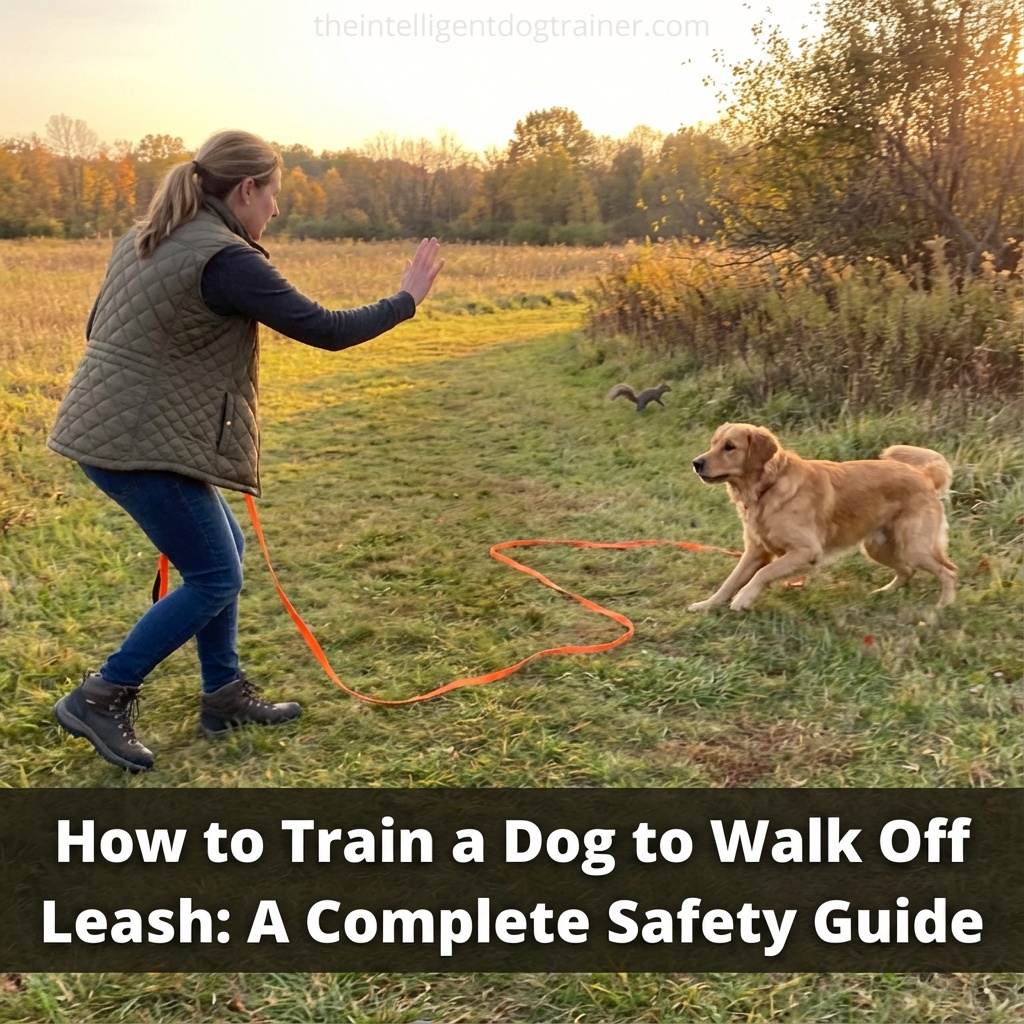
Imagine the sun warming your shoulders as you stroll through a vibrant meadow, your dog trotting contentedly by your side without a leash in sight. Reaching the point where you can train a dog to walk off leash is one of the most rewarding milestones any pet owner can experience.
However, it is a goal that requires a thoughtful strategy built on safety and unwavering consistency. This guide is designed to help you transform that vision of freedom into a reality, ensuring your companion stays responsive and focused even when the physical connection of the lead is removed.
By prioritizing genuine engagement and positive reinforcement, we will explore how to nurture the deep bond necessary for authentic off-leash success in 2025.
Establishing Foundations with an Off Leash Dog Training Guide
Every successful training journey begins with a clear understanding of what truly motivates your dog. Before you ever think about unclipping that lead, it is essential to pause and reflect: How do I know if my dog is ready to be off leash?
Generally, your dog is prepared when they respond reliably to basic cues in various environments and demonstrate a high level of focus on you, regardless of the distractions swirling around them. You can effectively learn how to train a dog by prioritizing engagement games that make you far more interesting than a scurrying squirrel.
A common question for many owners centers on timing: What is the best age to start off leash training? While you can begin laying the groundwork with a puppy as young as 8 to 12 weeks, it is truly never too late to start with an adult dog.
Having the right gear is just as vital to the process. What tools do I need to safely practice off leash training? At a minimum, you will need a sturdy harness, a long training lead, and high-value treats reserved exclusively for these sessions.
As noted on Wikipedia, positive reinforcement remains the most effective and humane path toward securing long-term behavioral reliability.
Building a Reliable Off Leash Recall for Total Control
A reliable off leash recall is arguably the most critical safety skill a dog can possess. It serves as your emergency brake, capable of pulling your dog back from a potentially dangerous situation in a heartbeat.
To master this, you need to build a bank account of massive rewards, ensuring that every time your dog returns to your side, they feel as though they’ve won the lottery. How do I keep my dog focused on me without a leash?
The secret lies in unpredictability; keep your rewards varied and your energy high so that returning to you is always the most exciting game they can play. If consistency feels like a challenge, you might consider how to train your dog to come when called using a specific verbal cue.
What should I do if my dog ignores my recall command? Resist the temptation to chase them, as this usually turns a serious moment into a game of tag. Instead, try moving in the opposite direction or dropping to the ground to spark their curiosity.
Progress is built on habit, so be sure to practice off leash skills daily in short, five-to-ten-minute bursts to keep their responsiveness sharp, even when their adrenaline is high.
Mastering Long Line Dog Training Exercises to Build Trust
Before you grant full liberty, long line dog training exercises act as an indispensable safety net. Utilizing a 15-to-30-foot lead provides your dog with the room to explore while you maintain physical control should a distraction prove too tempting.
This setup is perfect for practicing check-ins—those moments where your dog chooses to look back at you of their own volition. You can also use this time to effectively train a dog to stay from a distance, which builds the impulse control necessary for true reliability.
For those living with high-energy or hunting breeds, a familiar concern often arises: Can dogs with high prey drive be trained to walk off leash? It is certainly achievable, though it demands significantly more work on impulse control and a solid understanding of animal behavior.
Before you head into wide-open spaces, it is wise to test your dog’s reliability in a fenced area or a tennis court. This allows you to observe how they handle increased freedom in a secure environment and see if they still prioritize your instructions.
The Safe Transition from On Leash to Off Leash Freedom
The transition from on leash to off leash status should be a gradual shift rather than a sudden leap of faith.
A great intermediate step is allowing the long line to drag on the ground while you remain in a safe, enclosed area.
It is often incredibly helpful to first train a dog to walk on leash with impeccable loose lead manners. This teaches your dog that staying close to your side is the most rewarding place to be, regardless of whether they are physically tethered.
Before you fully commit to a leash-free lifestyle, take a moment to research your local regulations. Is it legal to walk my dog off leash in my area? Many towns enforce strict leash laws and may issue heavy fines, so it is best to stick to designated off-leash zones.
You should also consider the temperament of other dogs you might meet; are there specific breeds that should never go off leash? Sighthounds and certain scenthounds may find environmental distractions more overwhelming, requiring much more proofing.
How to Teach Your Dog to Heel Off Leash for Close Control
When you teach dog to heel off leash, you are essentially training them to stay magnetized to your side. This skill is particularly valuable when you need to pass other hikers or navigate narrow, crowded paths.
To get this right, you can teach a dog to heel using a lure and reward method, eventually phasing out the food rewards until the dog naturally mirrors your body movements.
This precision is a cornerstone of off leash hiking with dogs training, as it prevents your dog from bothering strangers or approaching other dogs. Since high-level heeling requires a great deal of mental energy, keep your practice sessions short and upbeat.
If your dog starts to wander, a quick touch command can be an excellent way to bring them back to your hand. Utilizing positive reinforcement ensures that your dog actively enjoys staying close to you as you navigate the world together.
Essential Preparing for Off Leash Hiking with Dogs
Venturing into the wilderness requires a unique skill set that goes beyond standard obedience. Off leash hiking with dogs involves navigating potential hazards like wildlife, standing water, or even toxic plants.
A non-negotiable prerequisite for trail safety is the ability to teach a dog to leave it on command. This single cue can stop your dog from investigating something dangerous or chasing after wildlife that could lead them far off the path.
Being prepared also means managing the physical logistics of your adventure. Always pack a collapsible bowl, plenty of extra water, and a basic first-aid kit. Remember that even the most disciplined dog can have an off day.
By combining a reliable off leash recall with a strong leave it command, you create a safety net that allows both you and your pet to explore with confidence. Training your dog for an off-leash life is a journey characterized by patience, mutual trust, and steady practice.
By building a strong foundation of engagement and utilizing tools like the long line, you construct a bridge toward safe, leash-free freedom. Keep in mind that recall and heeling are skills that can fade if not maintained; regular reinforcement is key.
With the right approach and a commitment to positive methods, you can look forward to a lifetime of adventures where your companion remains safe, happy, and responsive.