
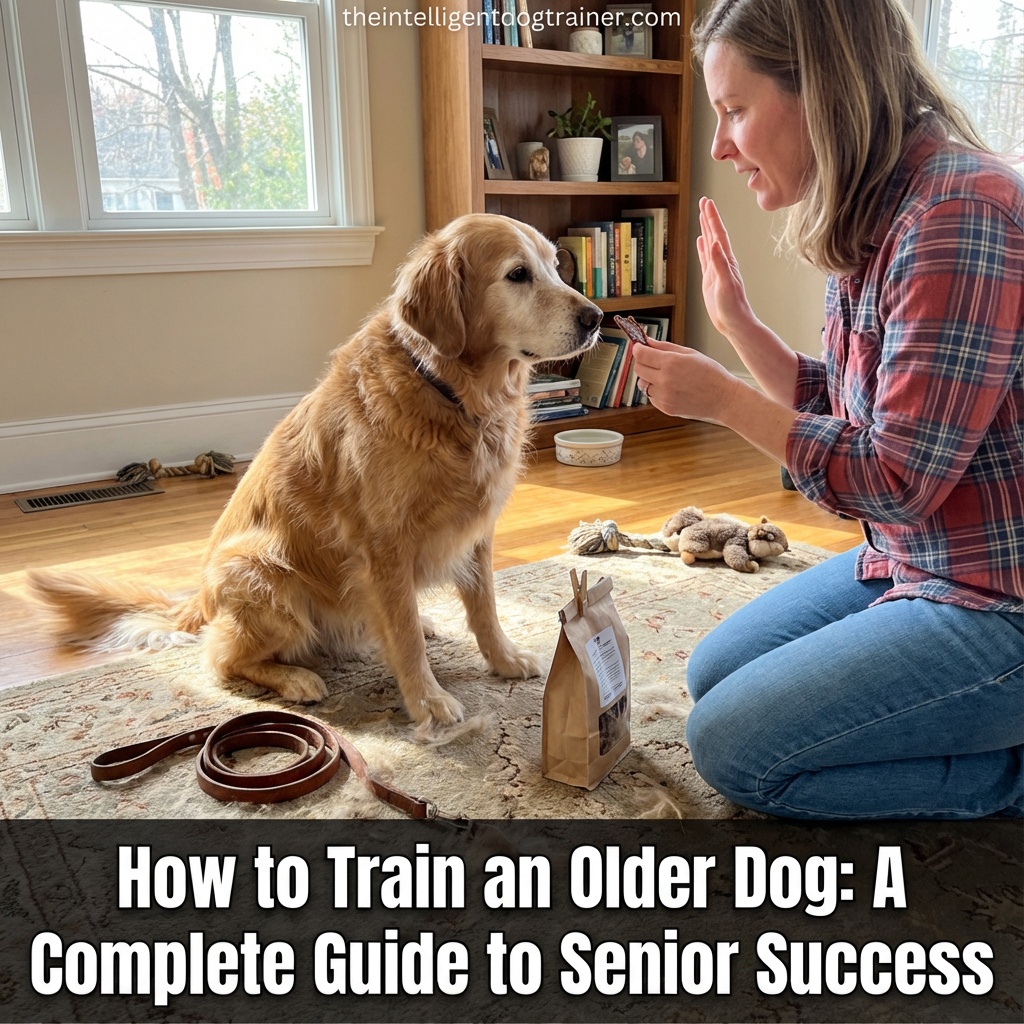
Welcoming a senior dog into your home or deciding to refine the skills of a longtime companion is one of the most fulfilling journeys you can undertake as a pet owner in 2025.
A persistent myth suggests that behavioral growth is a luxury reserved for puppies, but the reality is quite different: mature canines are remarkably adaptable.
They often demonstrate a level of focus that their younger, more erratic counterparts simply lack.
Whether you are helping a rescue settle in or supporting a lifelong friend who has picked up a few grumpy habits with age, success comes down to understanding their specific needs.
This guide explores the nuances of physical care and cognitive engagement to ensure your golden-ager stays mentally sharp, emotionally happy, and reliably well-behaved.
The Reality of Senior Learning: Can You Teach an Old Dog New Tricks?
While folk wisdom might suggest that age creates a ceiling for growth, canine cognitive science offers a much more optimistic perspective.
Can you teach an old dog new tricks? Without a doubt; in fact, making the effort to train an older dog is a vital strategy for fending off cognitive decline and keeping their spirits high.
Unlike the scatterbrained energy of a puppy, senior dogs tend to have longer attention spans and a deep-seated desire for connection, making them surprisingly capable students.
They might lack the raw physical stamina of a yearling, but their ability to synthesize and process information remains powerful.
It is quite common for owners to worry and ask, is it ever too late to start training an older dog? However, learning is best viewed as a lifelong journey rather than a temporary phase.
To smooth out the learning curve, many owners find that a dog clicker training method works wonders, as it provides an unmistakable and immediate signal of a job well done.
When you are working with an older pet, the secret is to keep interactions brief and rewarding.
How can I tell if my older dog is getting tired during a session? You should stay alert for signs like heavy panting, delayed responses, or a sudden interest in sniffing the ground—these are the subtle cues of mental or physical exhaustion.
By moving at their speed, you ensure that figuring out how to train an older dog becomes a way to bond rather than a source of stress.
As noted by Wikipedia, dogs possess the capacity to learn hundreds of signals and words throughout their existence, regardless of how many birthdays they have celebrated.
Building Foundations Through Obedience Training for Older Dogs
Creating a shared language is the foundation of a peaceful household.
Obience training for older dogs is often about dusting off basic cues—like sit, stay, or come—that may have faded from memory over the seasons.
These commands serve a purpose beyond simple manners; they are critical safety tools, particularly if your dog’s eyesight or hearing isn’t what it used to be.
As you refresh these basics, keep in mind that senior dogs can still learn complex commands, even if they need a little extra grace to move past decades of ingrained muscle memory.
A frequent concern among owners is: Do older dogs need more frequent rewards during training? Since you are often working to reshape years of established behavior, jackpot rewards—think tiny bits of roasted chicken or lean beef—are helpful to keep their motivation peaked.
Pairing verbal cues with clear hand signals is also a smart move, providing a reliable backup if their senses continue to dull.
Following the proper steps to train a dog ensures you don’t overlook those fundamental building blocks that keep a senior dog safe and confident in public.
Seniors often thrive on a learning by doing philosophy.
When you break down how to train an older dog into small, achievable victories, you significantly boost their self-esteem.
If your companion struggles with issues like arthritis, it’s only fair to adapt your physical expectations.
How do physical limitations affect senior dog training? It might mean rewarding a stay in a standing position rather than insisting on a painful sit.
Always prioritize comfort, perhaps by laying down an orthopedic mat before you begin your practice.
Patience and Routine: Potty Training an Older Dog Successfully
Housebreaking is a common hurdle for senior pets, especially those coming from a rescue background.
Potty training an older dog requires a delicate mix of structure and medical oversight.
Before assuming it’s a behavioral slip, it is essential to have a vet rule out underlying issues like kidney trouble or infections.
Once they get a clean bill of health, the process follows the puppy blueprint but demands even more rigid consistency.
If you’re wondering how do I potty train an older rescue dog?, the solution is a disciplined clock: outside immediately after meals, after naps, and plenty of just in case trips in between.
It’s natural to feel a bit of pressure and wonder, how long does it take to housebreak an adult dog? While many seniors pick up the routine in just a few days, others may need several weeks to untangle old habits.
Even if a dog has spent their whole life outdoors, you can teach a dog bathroom habits through heavy positive reinforcement for every successful outdoor encounter.
Punishment has no place here, as it only creates anxiety that can lead to further accidents.
Keeping your home environment pristine is also a major part of the strategy.
Using enzymatic cleaners is the only way to ensure odors are fully neutralized, which supports your efforts in potty training an older dog.
It’s also worth remembering that as dogs age, their bladder capacity naturally shifts, so success might simply require shorter gaps between walks.
By meeting their physical changes with empathy, you can keep your home clean while supporting your aging friend with dignity.
Creating a Safe Haven With Crate Training an Older Dog
It is a mistake to view a crate as a cage; when used correctly, it is a sanctuary.
Crate training an older dog offers them a peaceful hideaway from the noise of a busy home—a vital resource for seniors who might get overwhelmed or startled more easily than they used to.
The objective is to make the crate the most inviting spot in the house.
Placing a heated orthopedic bed inside or serving their favorite meals there can quickly reframe how they view the space.
Introduction should always be a slow, steady process.
If you consult a guide to crate usage, you will notice that the golden rule is never to use the crate as a place of exile or punishment.
For a senior, the crate is also a practical safety measure for those times you can’t be there to supervise, helping to prevent accidents or the anxious chewing that sometimes stems from cognitive changes.
Ultimately, crate training an older dog ensures they have a consistent safe zone regardless of life’s transitions.
Older dogs often prioritize rest above all else.
A crate gives them the chance to nap without being disturbed by children or other high-energy pets.
If they seem hesitant, try a low-pressure approach: leave the door wide open and randomly drop high-value treats inside throughout the day.
This gentle method is the real secret of how to train an older dog to embrace their new den.
In time, you’ll likely see your senior wandering in all on their own for a quiet afternoon snooze.
Socializing an Older Dog to Improve Confidence and Interaction
Socialization is a lifelong process, not something that expires after puppyhood.
Socializing an older dog is about maintaining their social vocabulary and preventing the kind of isolation that can lead to reactivity or low moods.
However, the tempo is different for a senior; they usually prefer a calm, parallel walk with a balanced friend over the chaotic energy of a dog park.
If you’ve adopted a dog with a mystery past, you might ask: How do I socialize an older dog with aggressive tendencies? In these cases, it is best to seek professional help and focus on very gradual, distance-based desensitization.
For most senior dogs, the goal isn’t to make them social butterflies, but to reach a state of calm neutrality.
You can effectively improve adult dog social skills by gently introducing them to new scents, sights, and people at a pace that keeps them feeling secure.
This level of mental processing can be just as tiring—and satisfying—as a physical workout.
Furthermore, socializing an older dog helps keep the brain active and can alleviate the anxiety that often follows the loss of hearing or sight.
As Wikipedia suggests, socialization is fundamentally about learning to navigate the world in a socially appropriate way.
For your senior, a successful day might just mean staying relaxed while a bike passes by.
By focusing on how to train an older dog to remain composed in various environments, you are significantly enhancing their quality of life.
Always be ready to reward that quiet confidence with a kind word or a treat, reinforcing the idea that the world remains a safe place.
Expert Advice on How to Train an Older Dog With Positive Methods
The most reliable way to see progress in a senior is through the lens of positive reinforcement.
What are the best training methods for senior dogs? Force-free, reward-based approaches are the undisputed gold standard.
These methods are built on a foundation of trust, which is particularly vital for dogs that might carry the weight of past neglect.
When you are looking into how to train an older dog, it is best to steer clear of dominance theories or physical corrections, as these can be painful for aging joints and will likely cause a senior to shut down entirely.
Adding a bit of variety to your daily routine will keep your dog interested and engaged.
There are many effective training techniques that use luring and shaping to achieve results without any pressure.
Because the answer to can you teach an old dog new tricks depends entirely on their motivation, finding that one thing they truly love—be it a specific toy or a piece of cheese—is your most powerful tool.
These positive interactions bridge the gap between species and ensure your senior feels like a relevant, contributing member of the family.
Training is also a wonderful way to provide a sense of work that many breeds still crave, even in their twilight years.
They might not be up for a five-mile hike anymore, but 15 minutes of find the treat or target training provides the mental fatigue they need for a restful night.
By approaching obedience training for older dogs with a patient and compassionate heart, you ensure their later years are rich with purpose.
Ultimately, the bond you forge during these sessions is the greatest reward for both you and your loyal friend.
Training a senior dog stands as a beautiful testament to the idea that growth is possible at any stage of life.
While it certainly calls for a bit more patience and an extra handful of treats, the emotional payoff is profound.
By prioritizing routine, physical ease, and constant encouragement, you can navigate almost any behavioral challenge.
An older dog’s inherent wisdom and deep desire for companionship make them exceptional students, proving that even a lifetime of habits can be gently reshaped with enough kindness and consistency.
Focusing on these pillars ensures a harmonious and vibrant life for your furry companion throughout their golden years.