
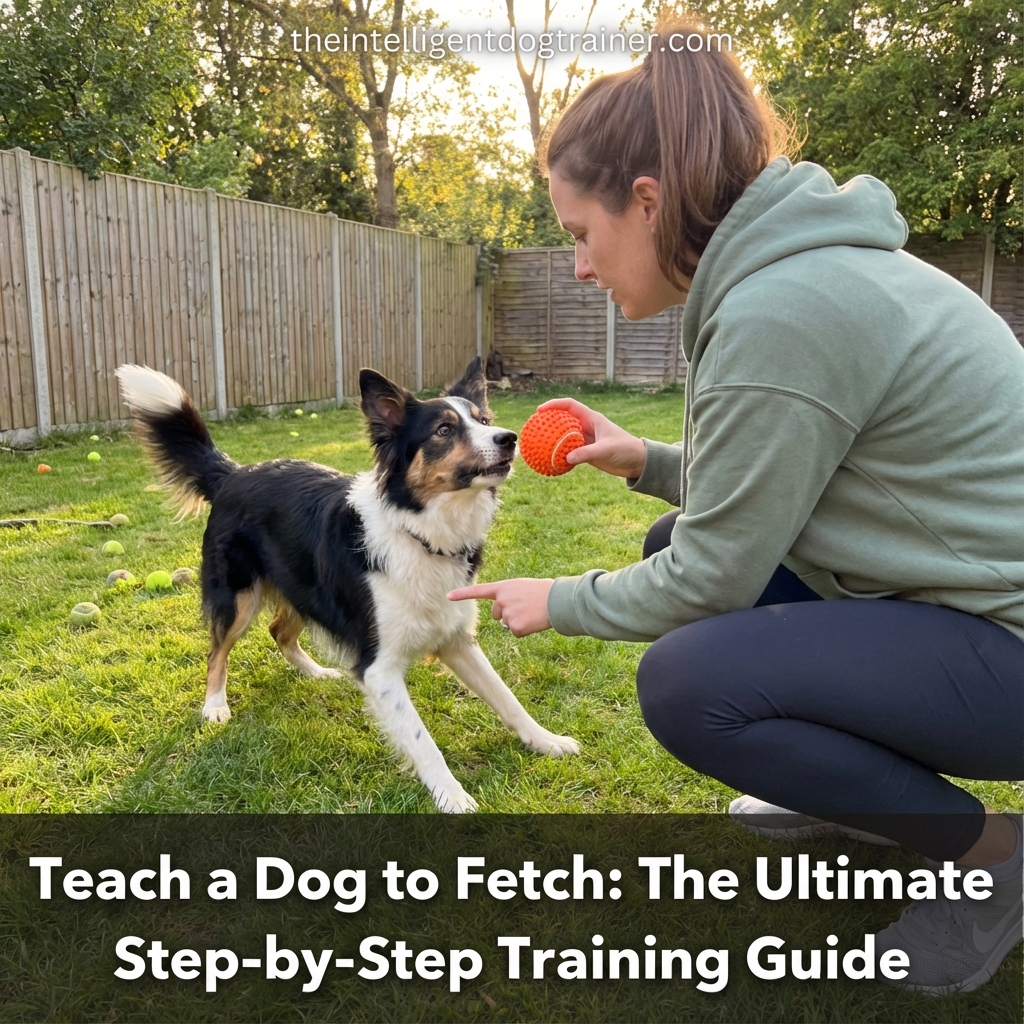
Helping your canine companion master the game of fetch is about so much more than just a bit of backyard fun; it represents a core exercise that strengthens your relationship while offering vital physical and mental engagement.
It is a common frustration for owners when a pet eagerly chases a ball but flatly refuses to bring it back, turning a coordinated retrieve into an exhausting game of “chase the dog.”
This guide is designed to deconstruct the mechanics of the game, allowing you to channel natural instincts into a polished, reliable skill.
Whether you are working with a vibrant young puppy or a seasoned older dog, adopting these methods in 2025 will ensure your playtime is productive, energy-burning, and genuinely fun for everyone involved.
Understanding the Basics of How to Train a Dog to Retrieve
Before you reach for that tennis ball, it is essential to recognize that a successful retrieve is actually a sequence of distinct actions: the chase, the pickup, the return, and the final release.
Many frustrated owners find themselves asking, why does my dog chase the ball but not bring it back? In most cases, this occurs because the dog identifies the “chase” as the ultimate prize and sees the “return” as the moment the fun ends.
To clear this hurdle, you have to make sure your pet links the act of returning to you with a highly positive result, like a favorite treat or the excitement of another throw.
When you start exploring how to train a dog to handle multi-step tasks, the most reliable strategy is to break the movement down into tiny, achievable goals.
You might begin by simply rewarding your dog for investigating or sniffing the toy. As noted by Wikipedia, leveraging positive reinforcement is the gold standard for fostering a strong desire to repeat specific behaviors.
You might also try “Backchaining”—a clever technique where you teach the final step, the drop, before anything else—which often produces results much faster than traditional “start-to-finish” methods.
Is fetch good exercise for all dog breeds? While the cardiovascular benefits are undeniable for most, it is important to be cautious with high-impact jumping, especially for breeds predisposed to joint complications.
For heavier dogs or seniors, stick to gentle, low-impact rolls across the grass to keep them moving safely as they learn the ropes.
Building Focus and High Toy Drive in Your Dog
It is a misconception that every dog is born with an innate obsession for chasing tennis balls. To effectively teach a dog to fetch, you often have to cultivate their “toy drive” from scratch.
This means making the object appear to be the most captivating thing in their world. Try dragging a toy along the ground like “prey” to spark interest, or hide it and act visibly thrilled when they track it down.
This high-energy engagement helps keep your dog locked on you rather than getting sidetracked by a passing neighbor or a squirrel.
If your dog is strictly motivated by snacks and seems indifferent to toys, you can close that gap by using a “prey dummy”—essentially a small pouch filled with treats—as your fetch object.
When they bring the pouch back, they get a small reward from inside. To really sharpen their focus, you could even clicker train a dog to pinpoint the exact second they secure the object in their mouth.
This level of clear communication fosters immense confidence.
How do I teach my dog to drop the toy during fetch? The trick is to avoid the temptation to physically pull the toy away, as this usually just triggers a “tug-of-war” reflex.
Instead, offer a trade for a treat or a second, identical ball. The moment they open their mouth to accept the new reward, they will naturally let go of the first one.
Fetch Training for Puppies Step by Step
While you can teach an old dog new tricks, starting early is fantastic, provided you keep the sessions brief to accommodate a puppy’s short attention span.
The process of fetch training for puppies step by step works best in a hallway or a narrow, confined space where the puppy has no choice but to head back toward you.
Start with a very modest toss—just a couple of feet away. When they pick it up, use a cheerful, high-pitched tone to coax them back to your side.
During these early months, it’s worth remembering that how to socialize a puppy involves getting them comfortable with various textures and weights.
Opt for soft plushies or lightweight rubber rings that are gentle on their developing teeth and gums. What are the best toys to use for fetch training? For the little ones, choose something soft and easy to carry, steering clear of hard plastics that might cause discomfort and discourage them.
If you are wondering, is it necessary to use treats when teaching a dog to fetch?, the answer for puppies is almost always a resounding yes.
Treats act as the ultimate proof that bringing the “prize” back to a human leads to something even better, which helps prevent “keep-away” habits from forming in the first place.
Effective Tips for Teaching a Dog to Bring the Ball Back
The most frequent obstacle in teaching a dog to bring the ball back is the infamous “victory lap,” where the dog circles you with the ball but refuses to close the distance.
An easy fix for this is always having a second ball visible. As your dog trots back with the first one, wiggle the second one to demonstrate that the game only continues if they come all the way in to “reset” the play.
If the hesitation persists, it might be time to brush up on their basic recall in a separate setting.
A dog that won’t return the ball often just needs a better grasp of how to train dog to come when called using high-value incentives.
Once “come” is a rock-solid command, you can weave it seamlessly into your fetch routine. Can fetch training help with other obedience commands? Definitely; it is a perfect way to reinforce “come,” “sit” (before the ball is thrown), and “drop it.”
For owners asking, how can I make fetch more challenging for an active dog?, try introducing obstacles like small hurdles or requiring a “stay” while the ball is already in the air.
This shifts the game from a simple sprint into a sophisticated exercise in impulse control that burns significant mental energy.
How to Stop a Dog From Playing Keep Away During Training
“Keep away” is a game dogs play because they find the human’s reaction—usually chasing them around—absolutely hilarious.
To learn how to stop a dog from playing keep away, you must strictly commit to not moving toward them. If they won’t come back, turn your back or walk away in the other direction.
Your dog will quickly realize that moving away from you ends the fun, while approaching you keeps the excitement going.
This is also the ideal window to teach a dog to drop it so they don’t feel the need to hold the toy hostage.
By using a “trade” approach, they learn that giving up an object isn’t a loss, but a transition to a reward. What should I do if my dog gets distracted during fetch? Try shortening the distance and moving back to a low-distraction environment.
Success is built on high repetition in “boring” zones like a living room or a quiet fenced yard.
How long does it typically take to train a dog to fetch reliably? Most dogs will grasp the core concept within a few weeks of daily, five-minute sessions, though achieving total reliability around heavy distractions may take a few months of steady reinforcement.
Creative Indoor Fetch Games for Small Dogs and Limited Spaces
You don’t actually need a sprawling park to teach a dog to fetch. For those living in apartments or owning smaller breeds, indoor fetch games for small dogs can be a total lifesaver during bad weather.
Using a long hallway creates a natural “lane” that keeps a dog focused on a straight return path. You can even roll a soft ball down a carpeted staircase to add a “climbing” component to the workout, assuming your dog is physically up for it.
When working indoors, it is a good idea to vary your dog training techniques to keep things fresh without risking the furniture. Use soft foam balls or lightweight toys.
You can even hide the object behind a pillow and ask the dog to “find it” before the retrieve, which adds a layer of scent-work to the physical exercise.
A common question is, can I teach an older dog to play fetch if they aren’t interested? You certainly can! While seniors might not have the explosive chase instinct of a puppy, you can spark their interest using food puzzles or toys subtly scented with something enticing.
“Fetch” doesn’t always have to be a long-distance sprint; for an older dog, a simple five-foot retrieve in the den is a wonderful way to keep their mind engaged and their joints moving.
Training a dog to fetch is truly a journey defined by patience and positive reinforcement. By viewing the retrieve as a logical series of steps—securing the toy, heading back to the owner, and releasing the object—you can easily navigate hurdles like keep-away or a lack of drive.
Whether you are using a clicker for clinical precision or high-value treats to build excitement, consistency is your greatest asset.
As you hone these skills throughout 2025, you’ll find fetch becomes more than just a game—it becomes a powerful language of communication and a lifelong habit of healthy activity.