
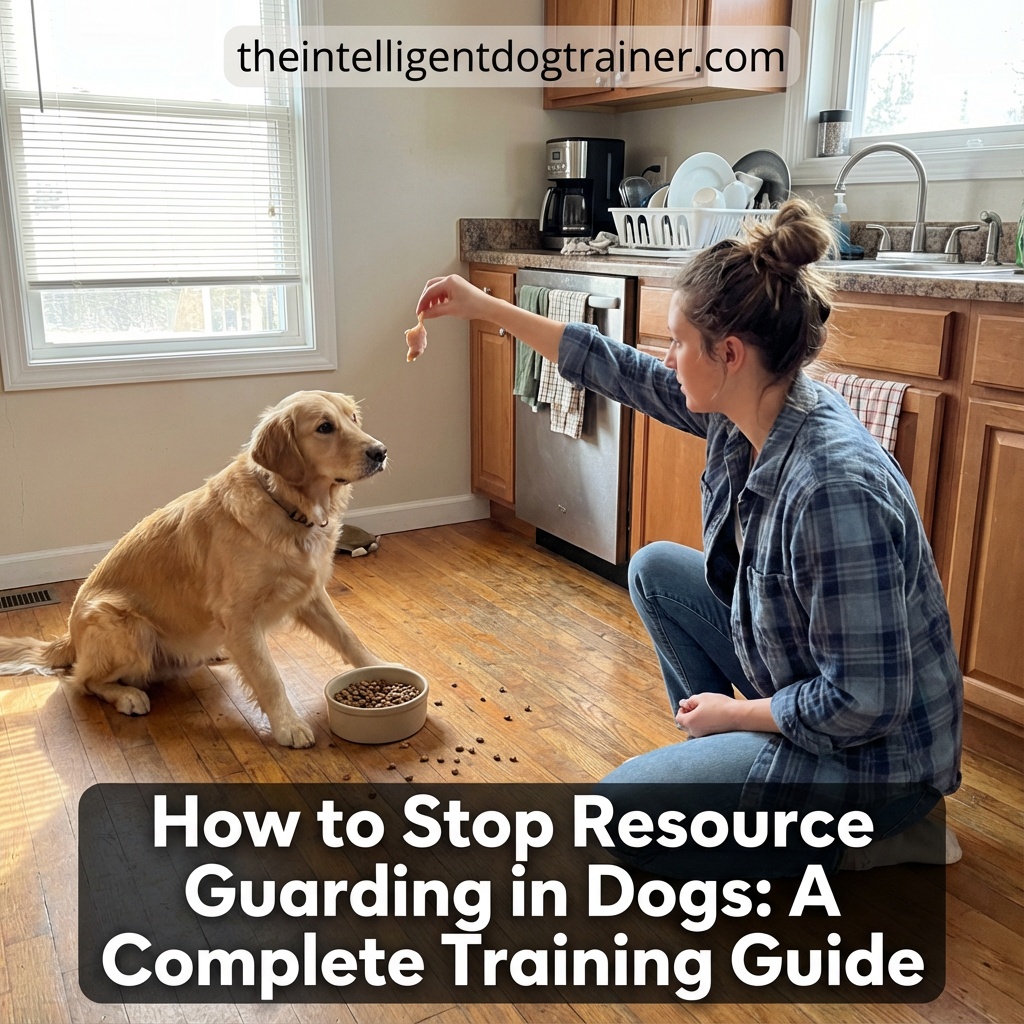
It is undeniably unsettling when a beloved pet snaps as you walk past their toy or growls defensively over a food bowl. This behavior, technically known as resource guarding, is actually a deeply ingrained survival instinct, though it quickly becomes a safety liability in a typical household.
Learning how to stop resource guarding in dogs is less about exercising dominance and more about fostering a sense of security; it involves convincing your dog that they have no reason to fear losing their treasures.
This guide breaks down how to pivot from these defensive reactions toward a more cooperative and trusting relationship.
Recognizing early signs of resource guarding in puppies
Identifying red flags early is the most effective strategy for preventing lifelong aggression. Owners frequently ask, “What are the most common warning signs of resource guarding?” Early indications are often subtle and easily overlooked.
You might notice a pup’s body go stiff, their eating pace accelerate as you walk by, or a “hard stare” focused on an object. These signs of resource guarding in puppies are occasionally mistaken for high-energy play, but the defining factor is the dog’s physical tension.
A playful puppy remains fluid and wiggly, whereas a guarding puppy becomes rigid and frozen. Healthy development requires more than basic housebreaking; it necessitates intentional exposure to diverse social situations.
If you detect these early warning signs, it is essential to properly socialize a puppy to ensure they feel confident rather than threatened in a social setting.
People often wonder, Are certain breeds more prone to guarding behaviors? While genetics can influence the protective instincts of certain breeds, any dog can develop these habits based on their history or a lack of early socialization.
Ultimately, knowing how can I tell the difference between play and real guarding comes down to observing body language; true guarding lacks the “give and take” of play and is defined by a tense, stationary posture.
Effective dog food aggression training techniques
For many dogs, food represents the ultimate prize, which makes the dinner bowl a common site for tension. When applying dog food aggression training techniques, your primary objective is to shift the dog’s emotional state from anxiety to anticipation.
Instead of looking at your approach as a threat to their meal, they should begin to see you as a provider of something even better.
A simple way to start is by casually tossing high-quality treats near their bowl from a safe distance while they eat, only closing the gap as the dog remains visibly relaxed.
What should I do if my dog snaps when I approach their bowl? If this happens, back away immediately to ensure everyone’s safety.
Protecting yourself is the priority, and using structured positive dog training techniques will allow you to slowly desensitize the dog at a pace they can handle.
One frequent concern is: Is it safe to punish a dog for growling over food or toys? The answer is a definitive no. Suppressing a growl through punishment merely removes the dog’s warning signal.
This often results in a dog that bites “out of nowhere” because their communication was silenced. The better path is building a positive link between your presence and their food.
How to fix possession aggression in dogs through management
Proactive management serves as your first line of defense, maintaining safety while you address the root causes of the behavior. Figuring out how to fix possession aggression in dogs starts with controlling the environment so the dog cannot rehearse the guarding habit.
This could involve feeding them in a quiet, separate room or using baby gates to block access for children and other pets during meal times.
What causes a dog to suddenly start guarding items? Unexpected guarding can sometimes be triggered by physical pain from a medical condition or heightened stress due to a recent change in the household.
If the guarding is intense or you feel at risk, it is vital to learn how to handle an aggressive dog under the eye of a professional.
Many owners ask: Can resource guarding be permanently cured in adult dogs? While you can drastically minimize the frequency and severity of these incidents through training and management, the tendency often requires lifelong awareness.
When should I contact a professional trainer for resource guarding? If there is a risk of injury, or if the dog starts defending empty spaces or moving objects, it is time to call in an expert to prevent things from escalating further.
Applying the object exchange protocol for dogs safely
A centerpiece of modern behavioral work is the object exchange protocol for dogs, often referred to as the “trade-up” method. This strategy replaces the confrontation of taking things by force with a fair deal.
How does the ‘trade-up’ method help stop resource guarding? It demonstrates to the dog that relinquishing an item leads to receiving something of higher value, such as a piece of chicken in exchange for a chew toy.
This reworks their mindset from one of loss to one of gain, naturally lowering their defensive walls. Executing this maneuver safely requires a solid foundation in basic skills.
It is helpful to train a dog to drop items on cue with low-value toys before attempting to trade for high-stakes items.
By leveraging classical conditioning, you transform what used to be a high-stress moment into a rewarding opportunity for the dog. In 2025, this focus on cooperation over conflict is the gold standard for achieving lasting behavioral success and maintaining a safe home.
Tips to stop dog guarding toys and bones from others
The guarding of “sentimental” items like tennis balls or marrow bones can be just as risky as food guarding.
To successfully stop dog guarding toys and bones, you need to be intentional about where and when these items are available. If a specific chew bone causes tension, only offer it when the dog is in their crate or a specific “safe zone” where they won’t be bothered by foot traffic.
This simple step removes the dog’s perceived need to protect their prize from others. Developing a reliable “Leave It” command is another fundamental tool for these scenarios.
When you teach a dog to leave an item, you are offering them a clear, alternative path that results in a reward. This breaks the cycle before the dog even picks the item up.
Keep in mind that consistency is your greatest asset; if the dog learns that growling occasionally “works” to keep an item, the habit will stick. By managing access and reinforcing the “leave it” cue, you maintain a calm household without constant friction.
Preventing resource guarding in multi-dog homes effectively
Living with multiple dogs requires a specialized approach to keep the peace. Preventing resource guarding in multi-dog homes usually involves feeding each dog in a separate space and putting away highly coveted toys if play starts to feel too competitive.
How should I manage resource guarding between two dogs in the same house? The most effective strategy is to eliminate the feeling of scarcity.
Ensure there are plenty of resources for everyone and that each dog’s space is respected by both humans and their canine housemates. Establishing clear routines is the best way to manage a multi-dog dynamic.
For instance, you can use the stay command to teach one dog to wait patiently while you give their sibling a treat. This helps dissolve the competitive “grab it before they do” mentality that often sparks guarding.
By applying behavior modification that rewards calm, neutral behavior around others, you can create a secure environment where every dog feels their needs are consistently met.
Ultimately, navigating resource guarding is about blending smart management with patient, positive training. By identifying the signs early and leaning into protocols like the trade-up method, you can help a defensive dog become a much more relaxed and confident member of the family.
While these instincts are natural, taking a proactive, science-based approach ensures that these tendencies don’t turn into dangerous habits, making your 2025 home a safer place for everyone.