
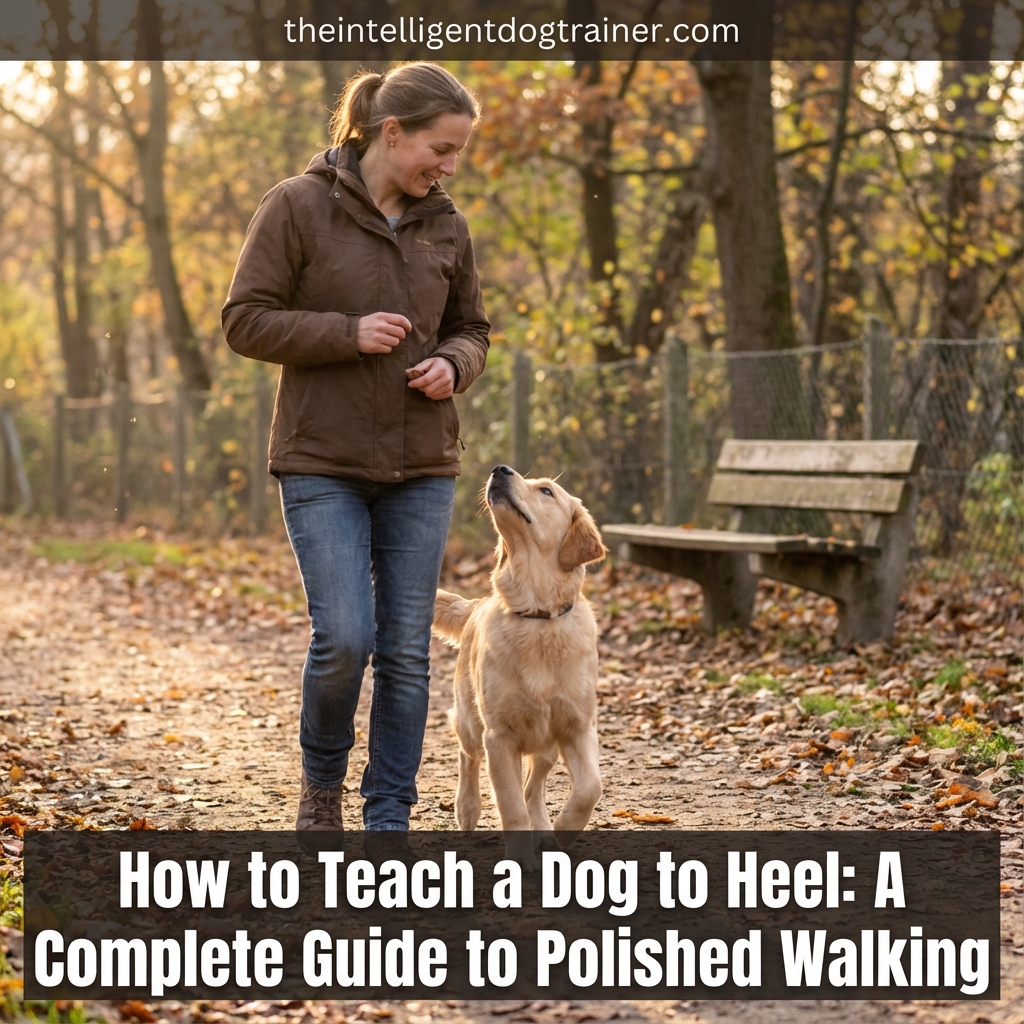
Heading out for a stroll with your dog should ideally be the crown jewel of your day—a serene window of time for connection and shared relaxation. Yet, for many pet parents, these outings often devolve into a taxing tug-of-war.
Mastering the art of how to teach a dog to heel is a complete game-changer, capable of evolving those frantic, arm-stretching excursions into a display of structured, graceful movement.
This specific skill is far more than just an impressive trick to show off; it represents a fundamental behavioral pillar that enhances safety and reflects a deep, sophisticated level of mutual respect between you and your companion.
In this guide, we will explore the subtle nuances of focused walking, beginning with the basics and progressing toward advanced engagement techniques to ensure your walks are fluid and enjoyable throughout 2025 and beyond.
Understanding the difference between loose leash walking and heeling
A question that almost always surfaces during training is: What is the difference between walking on a loose leash and heeling? While both concepts envision a dog that isn’t straining against the collar, they serve distinctly different roles in your daily routine.
Loose leash walking is essentially a casual, “me-time” behavior where your dog has the liberty to sniff, explore, and engage with the environment, provided the lead remains slack.
Conversely, to teach a dog to heel is to request a very precise position—traditionally with the dog’s shoulder aligned with your left knee—where they remain attuned to your every move for continuous guidance.
While the left side is the historical standard for obedience trials, many owners naturally wonder: Should I teach my dog to heel on the left or right side?
In a domestic setting, the specific side you choose matters far less than your own consistency. Picking one side and sticking to it prevents your dog from zig-zagging across your path and becoming a tripping hazard.
Establishing these clear spatial boundaries is an essential first step when figuring out how to train a dog to walk on leash without the persistent headache of leash tension.
Essential dog heel command training steps for beginners
Starting your journey with dog heel command training steps requires a healthy blend of patience and some high-value motivation. It is always a smart move to begin in a quiet, low-distraction environment like your living room or heading.
Try holding a tiny, delicious treat right at your hip to lure your dog into that “sweet spot” by your side. Use a clear, upbeat “Heel” cue and take a few tentative steps forward.
A common worry for new owners is: At what age should I start training my puppy to heel? You can actually introduce the concept as early as 8 weeks with brief, low-pressure, game-like sessions.
On the other hand, you might ask: Can I teach an older dog to heel if they pull on the leash? Absolutely; senior dogs are more than capable of overwriting old habits and can master this skill just as effectively as a young pup.
Many professional trainers find that using a clicker helps tremendously by marking the exact micro-second your dog hits the correct position.
If you want to sharpen your results, taking the time to clicker train a dog can significantly improve the precision of your timing.
This creates a clear “communication bridge” in the dog’s mind, making the process to teach a dog to heel far more efficient.
You might also wonder: Do I need a special collar to teach the heel command? Not necessarily; a standard flat collar or a well-fitted front-clip harness is usually more than sufficient while your dog is still in the learning phase.
Advanced techniques to teach your dog a focused heel
Once your dog has a solid understanding of where they should be standing, you can begin to raise the stakes and teach dog focused heel.
This advanced iteration of the command requires the dog to maintain steady, upward eye contact with you while you move together.
This intense level of engagement is fantastic because it naturally shields the dog from becoming overstimulated by the surrounding environment.
To encourage this connection, try slowly moving your treat reward from your hip up toward your chin, essentially “drawing” their eyes upward to meet yours.
When considering the rewards themselves, you may be thinking: What rewards work best for maintaining a focused heel?
While every dog is unique, high-value items like small bits of roast chicken or cheese usually perform best, though high-drive dogs might prefer a quick, enthusiastic tug on a favorite toy.
Integrating proven dog training techniques such as “shaping”—rewarding incremental steps toward the final goal—allows the dog to use their brain to solve the puzzle of what earns the prize.
This approach ensures the behavior emerges from a place of focused cooperation rather than just a mechanical habit.
Practical tips on how to get your dog to focus on every walk
The true litmus test of any training is how to get dog to focus on walk when the world is teeming with squirrels, bicycles, and other passing dogs.
If you notice your dog’s gaze starting to wander or drift, you might ask: How do I stop my dog from lagging behind when heeling? Often, lagging is simply a sign that the pace has become too predictable or sluggish.
Try picking up your speed or using an energized, melodic voice to recapture their interest. Building this kind of cognitive focus is the primary secret to a truly stress-free outdoor experience.
If distractions are proving to be a major hurdle, mastering how to stop dog pulling on leash is a vital prerequisite.
A dog that is constantly scanning the horizon for things to chase will find it nearly impossible to maintain a tight, disciplined heel.
To bridge this gap, practice frequent “check-ins” during your walks where you reward your dog any time they choose to look back at you of their own volition.
How do I transition from indoor heeling to outdoor distractions? The most successful strategy is a gradual one: start in your empty driveway, move to a quiet sidewalk, and only then attempt a busy park or a crowded urban street.
Effective training drills for competitive heeling success
For owners who have a burgeoning interest in training drills for competitive heeling, the focus shifts toward extreme precision and endurance.
A classic exercise is the “figure-eight” drill, where you navigate around two stationary markers to practice maintaining that tight shoulder-to-knee connection during various turns.
Another excellent tool is the “pace change” drill. By rapidly alternating between a slow crawl, a brisk walk, and a light jog, you teach your dog to mirror your body movements instantly without losing their place at your side.
In many ways, refining a reliable heel is quite similar to how to train a dog to stay, as it requires the dog to prioritize your instructions over their own immediate impulses.
You might find yourself wondering: How can I keep my dog motivated during long training sessions? The trick is actually to keep the sessions surprisingly short—perhaps five to ten minutes—and always conclude while the dog is still excited and having a great time.
Is daily practice necessary for maintaining a reliable heel? Yes, even just a few minutes of daily reinforcement helps to build the muscle memory required for that crisp, competition-level performance.
Phase-by-phase off-leash heel training for dogs
The ultimate goal for many enthusiasts is off-leash heel training for dogs. This is a significant milestone that should only be practiced in a securely fenced area once the on-leash version of the command is consistently flawless.
You might start by simply dropping the leash and letting it drag along the ground, gradually working up to removing it entirely.
This level of training requires a profound bond and a great deal of mutual trust. It shares several conceptual roots with how to train dog to come when called, because in both scenarios, the dog is making a conscious choice to stay with you rather than wandering off.
Based on the core principles of animal behavior, dogs will naturally repeat the actions that yield the most reinforcing results.
To successfully teach a dog to heel without the safety net of a leash, you must remain the most rewarding and interesting element in their immediate world.
Keep your rewards varied and your movement unpredictable to keep them engaged. Off-leash reliability is a privilege built on a foundation of clear communication and hundreds of successful repetitions.
In time, your dog will walk by your side with a sense of pride and focus, whether they are tethered to you or moving freely.
To truly master the heel, emphasize consistency and offer frequent rewards for the correct position.
We have explored the vital distinction between a casual walk and a formal heel, the entry-level steps for new trainers, and the advanced focus needed for high-level work.
By applying these systematic drills and slowly introducing more complex environments, you can ensure your dog stays attentive regardless of the world’s distractions.
Cultivating this skill takes a bit of time, but the reward is a much deeper connection and a walking experience that is genuinely pleasant for both ends of the leash.